
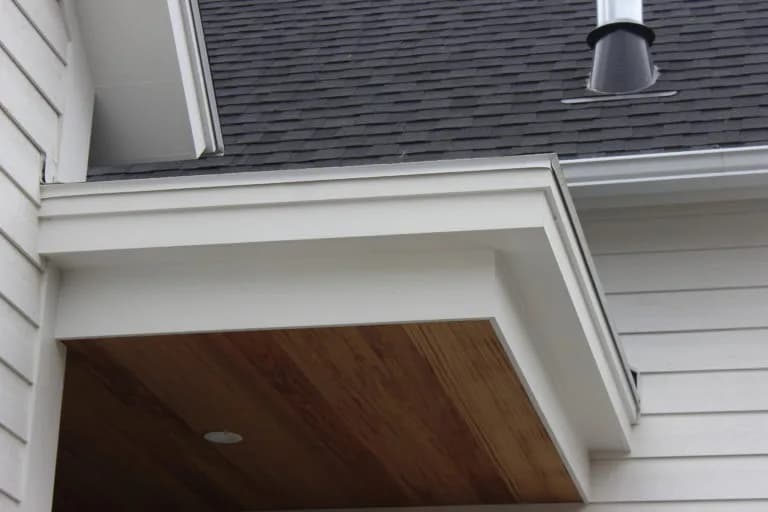
Roof Replacement in Harrison, Maine
Roof Replacement for Harrison homes from a family-owned Portland company. An owner measures on site and writes a fixed-price proposal.
- 5.0 · 8 Google reviews
- Fully licensed & insured
- Free estimates
- 20+ years combined experience
Roof Replacement for Harrison homes
Snow and ice dams are the biggest threats to a roof in Harrison. With seasonal snowfall at the nearest weather service office in Gray averaging about 84 inches, roofs carry weight for months, and every midwinter thaw sends meltwater down to cold eaves where it refreezes and backs up under the shingles. Low-slope camp roofs, porch roofs tied into a main house, and valleys where an addition meets the original building are the usual trouble spots.
A proper tear-off strips the roof to the deck so soft sheathing can be replaced, then rebuilds the system: ice barrier at the eaves and in valleys, synthetic underlayment, new drip edge and flashing, and ventilation that keeps the attic cold enough to limit melting in the first place. On older camps with little or no insulation, adding ridge and soffit venting is often as important as the roofing itself. Owners of seasonal homes should schedule the work for the months the house is in use, so a problem is spotted before winter rather than in spring. Because the Harrison permit ordinance exempts only routine maintenance, check with the Code Enforcement Department whether a full re-roof needs a permit on your property.
Harrison housing at a glance
Census estimates count about 1,800 housing units in Harrison, with a median year built of 1980. Roughly 20 percent went up before 1940 and about 26 percent before 1960, another 24 percent date from 1960 to 1979, and about 26 percent were built in 2000 or later. Close to 89 percent are single-family detached houses, and about 90 percent of occupied homes are owner-occupied. Nearly 500 units, a bit more than a quarter of the stock, are held for seasonal or recreational use, mostly camps and cottages on the lakes. In practice that means three kinds of houses: 19th-century capes and connected farmhouses in and around the villages, modest ranches and camps from the postwar decades, and larger year-round homes and rebuilt lake houses from the last 25 years. Many older camps have been winterized and added onto in stages.
Weather and exposure in Harrison
Harrison is inland lake country, well away from salt air, so cold and snow do the damage here. The closest National Weather Service normals come from the forecast office in Gray, which records about 84 inches of snow a year for 1991 to 2020, and Harrison sits farther north and inland still. Winters bring long stretches below freezing broken by thaws, which is the cycle that drives ice dams and splits old paint and caulk. Long Lake runs about 12 miles from end to end, so homes on the shore face wind that builds over open water. Lots set back in the woods have the opposite problem: shade and damp that keep siding, roof valleys and deck boards wet long after a storm.
Permits and design review in Harrison
Building permits come from the Harrison Code Enforcement Department at the Town Office on Front Street, whose officer is also the shoreland zoning administrator. The town Building Permit Requirements Ordinance requires a permit before anyone builds, modifies or adds to a structure, and names only routine minor maintenance, such as painting, as exempt, so ask the office before a residing or re-roofing job. The officer has 30 days to act on a complete application, and a permit lapses after a year without a substantial start. Inspections are booked 24 hours ahead. Near the lakes, the Shoreland Zoning Ordinance sets a 100-foot setback for new structures from great ponds.
What roof replacement involves
A roof replacement strips the old roofing down to the deck, repairs what is underneath, and rebuilds the whole system: underlayment, ice and water protection at the eaves and valleys, flashing at chimneys and walls, ventilation, and the new roofing itself. Maine roofs carry snow for months and see ice dams at the eaves, so the parts you never see do most of the work. The site covers architectural asphalt shingles, metal, cedar shake and flat or low-slope roofing.
- Old roofing is torn off to the deck and hauled away, with the yard and plantings protected.
- Soft or delaminated sheathing is replaced before anything new goes down.
- Ice and water shield goes at the eaves, valleys and penetrations; synthetic underlayment covers the rest.
- Drip edge, step and counter flashing, and pipe boots are installed new.
- Ridge and soffit venting are balanced, then the new roofing is installed and the site cleaned with magnets.
Signs it is time
- Curling, cracked, or missing shingles and granules in the gutters
- Ice dams along the eaves or water stains on ceilings after thaws
- Daylight or damp sheathing visible in the attic
- Sagging roof lines or spongy spots underfoot
- A roof at or past the age its material was made for
What affects the price of roof replacement
- Roof area, pitch and complexity: valleys, dormers, skylights, chimneys
- Number of existing layers to remove
- Sheathing repair found after tear-off
- Material: asphalt, metal, cedar or low-slope membrane
- Ventilation and flashing upgrades
Every job is priced from a free on-site visit. Typical ranges for the trade are on our roofing page, and the details of this service are on the roof replacement overview.
More in Harrison and nearby
Back to the Harrison exterior services overview, or see every town on our Cumberland County service areas page.
Other exterior work in Harrison
- Asphalt Shingle Roofing in Harrison
- Metal Roofing in Harrison
- Deck Building in Harrison
- Composite & PVC Decks in Harrison
- Deck Replacement in Harrison
- Siding Replacement in Harrison
- Vinyl Siding Installation in Harrison
- James Hardie Fiber Cement Siding in Harrison
- Cedar Siding & Shingles in Harrison
- Window Replacement in Harrison
- Bay & Picture Windows in Harrison
Get a free roof replacement estimate in Harrison
Tell us about the house and what you want changed. One of the owners will call to set up a visit, measure, and write a fixed-price proposal. No pressure, no obligation.
Need it today?Call Mike (207) 408-5388
or Bob at (207) 252-0759