

Vinyl Siding Installation in Cape Elizabeth, Maine
Vinyl Siding Installation for Cape Elizabeth homes from a family-owned Portland company. An owner measures on site and writes a fixed-price proposal.
- Google reviews
- Fully licensed & insured
- Free estimates
- 20+ years combined experience
Vinyl Siding Installation for Cape Elizabeth homes
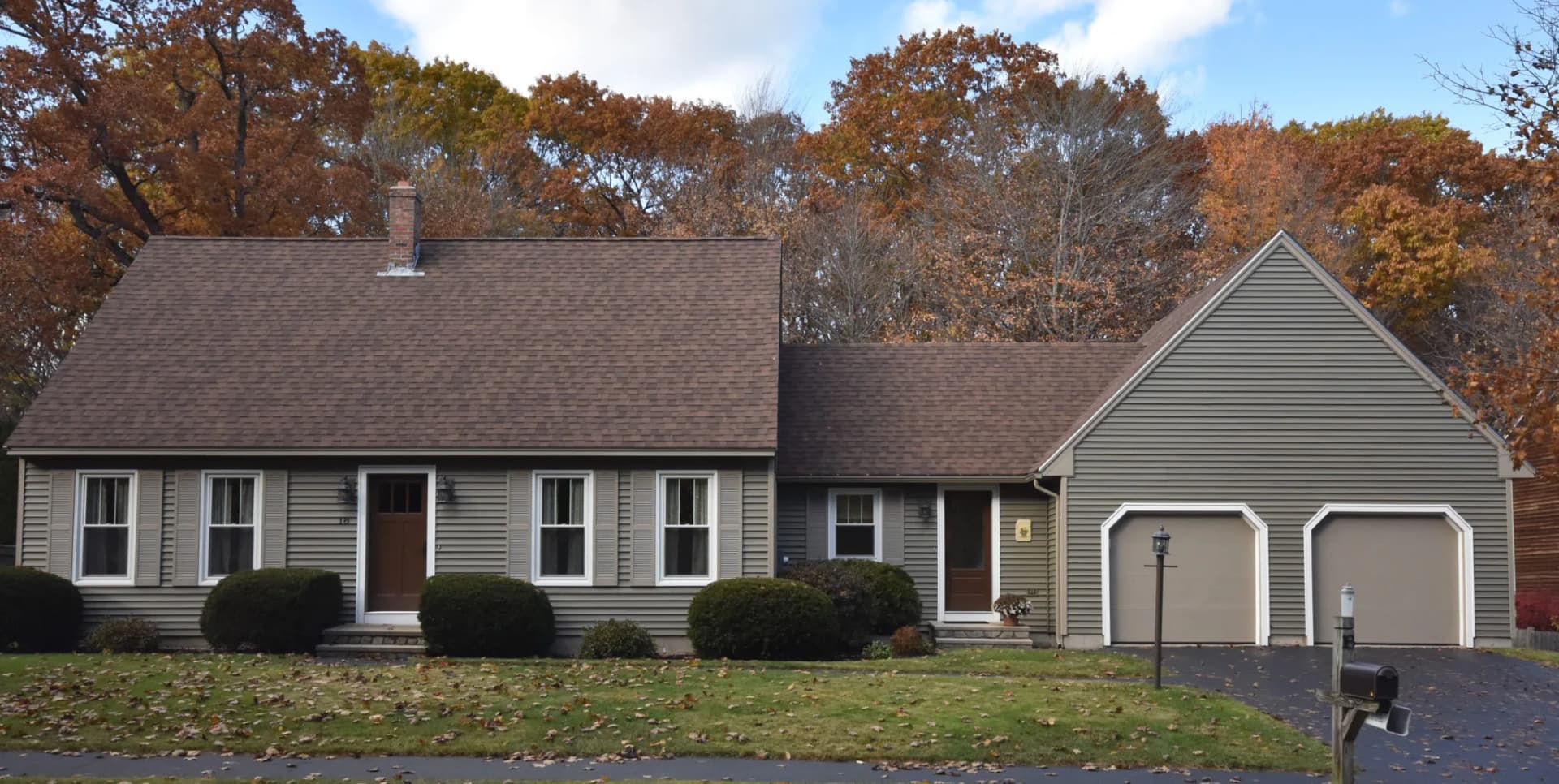
Vinyl makes the most sense on the town's mid-century and later houses. About a quarter of Cape Elizabeth homes were built between 1960 and 1979, and on those houses a low-maintenance cladding can replace tired wood or an earlier aluminum job without a painting schedule. Premium vinyl with a thicker panel and a stiffer lock holds up better to the wind gusts that roll inland from the ocean than the thin panels sold for sheltered sites.
Right on the water, vinyl needs more thought. Panels must be installed loose enough on the nail to move through the swing from summer sun to winter cold, and in a coastal gale a poorly locked course is the first thing to peel away. Vinyl also reads differently from the weathered shingles and painted trim on the older cottages near Delano Park and Cape Cottage, so owners of those houses often look at fiber cement or cedar instead. For a 1970s colonial or ranch a mile inland from the surf, vinyl remains a practical, cost-controlled choice that needs little more than an occasional wash.
How a Siding Wall Assembly Works
- Sheathing — the structural wall surface everything else attaches to
- Weather-resistive barrier — a wrapped membrane that stops bulk water while letting vapor escape
- Rainscreen gap — a drainage and drying space between the barrier and the siding
- Siding — the visible cladding, fastened over the furring strips
- Window flashing — tucked under the barrier above and lapped over the siding below, so water never gets behind it

Cape Elizabeth housing at a glance
The Census Bureau's 2020-2024 American Community Survey estimates about 3,980 housing units in Cape Elizabeth, and roughly 90 percent of them are single-family detached houses. About 88 percent of occupied homes are owner-occupied. The estimated median year built is 1967. Close to 40 percent of the stock predates 1960, including about one in five homes built before 1940, and another quarter went up between 1960 and 1979. Only around 7 percent was built in 2000 or later, so most houses here are old enough to have outlived at least one roof and one round of siding. The older layer includes summer houses from the late nineteenth century, when Portland architect John Calvin Stevens designed Shingle Style cottages along the Casco Bay shore. The survey also counts roughly 210 seasonal units, homes that may sit closed through the winter.
Weather and exposure in Cape Elizabeth
Cape Elizabeth has almost no shelter from the sea. The land faces open ocean to the east and south, so wind off the Gulf of Maine arrives with salt spray and nothing to break it, and nor'easters push rain sideways into siding joints, window heads and roof edges. Portland, just to the north, averages about 69 inches of snow a year, with large swings between winters, and storms that bring a foot or more are a regular part of the season. The ocean moderates temperatures near the shore, which means more winter days that hover around freezing and more freeze-thaw cycles on shingles, flashing and deck footings. Fog and damp air keep north-facing walls and shaded roofs wet longer than inland houses see.
Permits and design review in Cape Elizabeth
Permits run through the Cape Elizabeth Code Enforcement Office, 320 Ocean House Road, which has accepted building applications online since May 2025. Its FAQ states that a building permit is required to construct, structurally alter or enlarge a structure, and that no permit is required to replace siding or roofing. A new deck needs a building permit. The town's Shoreland Performance Overlay District covers land within 250 feet of tidal waters, Great Pond and the Spurwink River, with a 75-foot setback for new structures from most water bodies. Resource protection permits go through the Planning Office, and work in a mapped flood zone needs a Flood Hazard Permit.
Cape Elizabeth at a Glance
What the housing stock and local code enforcement mean for a siding, window, roofing or deck job here.
9,535
Population (ACS estimate)
Median year built: 1967
A mix of eras — original materials on some houses, postwar replacements on others.
State Building & Energy Code (MUBEC)
Enforced — population over 4,000
EPA Lead-Safe Rule (pre-1978 homes)
Applies to at least 39% of homes here
Shoreland Zoning
Applies near the water
Permits
Cape Elizabeth Code Enforcement Office
Codes & Permits for Vinyl Siding in Cape Elizabeth
In Cape Elizabeth, exterior-work permits come from the Cape Elizabeth Code Enforcement Office (320 Ocean House Road, Cape Elizabeth, ME 04107-0060, 207-799-1619). With 9,535 residents, over 4,000, Cape Elizabeth is required to enforce the Maine Uniform Building and Energy Code (MUBEC).
- Maine's adopted 2021 IRC (R703.11) governs vinyl siding and references ASTM D3679 as the vinyl-siding product standard. up.codes
- Vinyl siding fasteners must penetrate a minimum of 1.25 inches into sheathing and framing combined when installed over wood/wood-structural-panel sheathing (R703.3.4), with maximum fastener spacing of 16 inches on center per Table R703.3(1); additional rules apply when installed over foam plastic sheathing (R703.11.2). up.codes
- Maine's Shoreland Zoning Act creates a regulated shoreland zone extending 250 feet (horizontal distance) from the normal high-water line of any great pond, river, or coastal wetland, and 75 feet from certain streams; the Act's stated purposes include protecting buildings and land from flooding/erosion and controlling water pollution, and it governs deck and other structure setbacks and the expansion of nonconforming structures within that zone (specific setback/expansion rules are set at the municipal-ordinance level under the state's model guidelines). maine.gov
- By Maine law (25 M.R.S. §2373), 'the code must be enforced in a municipality that has more than 4,000 residents' (per the most recent federal census); municipalities at or below that population are not required to adopt/enforce MUBEC but may opt in locally, per the state's own program page: 'All municipalities with a population greater than 4,000 are required, by statute, to enforce the MUBEC. Municipalities with a population under 4,000 may choose to enforce the MUBEC.' mainelegislature.org
How Cardinal Exteriors Handles Vinyl Siding in Cape Elizabeth
- Cape Elizabeth's population (9,535) puts it above the threshold where Maine law requires full MUBEC enforcement, so this job is inspected against that code as well as the local permit.
- With 39% of Cape Elizabeth's housing built before 1960, a real share of that stock predates 1978 as well, which means EPA lead-safe containment is part of vinyl siding installation on an older Cape Elizabeth home more often than not.
- Because Cape Elizabeth has coastal, lake or river frontage, Maine's Mandatory Shoreland Zoning Act may apply to work close to the water, which can affect setbacks on a rebuild.
- We file for vinyl siding installation permits at the Cape Elizabeth Code Enforcement Office before work starts, not after.
Open farmland and marsh along Spurwink Avenue in inland Cape Elizabeth, away from the town's coastal lighthouses.
Street View © Google
What vinyl siding installation involves
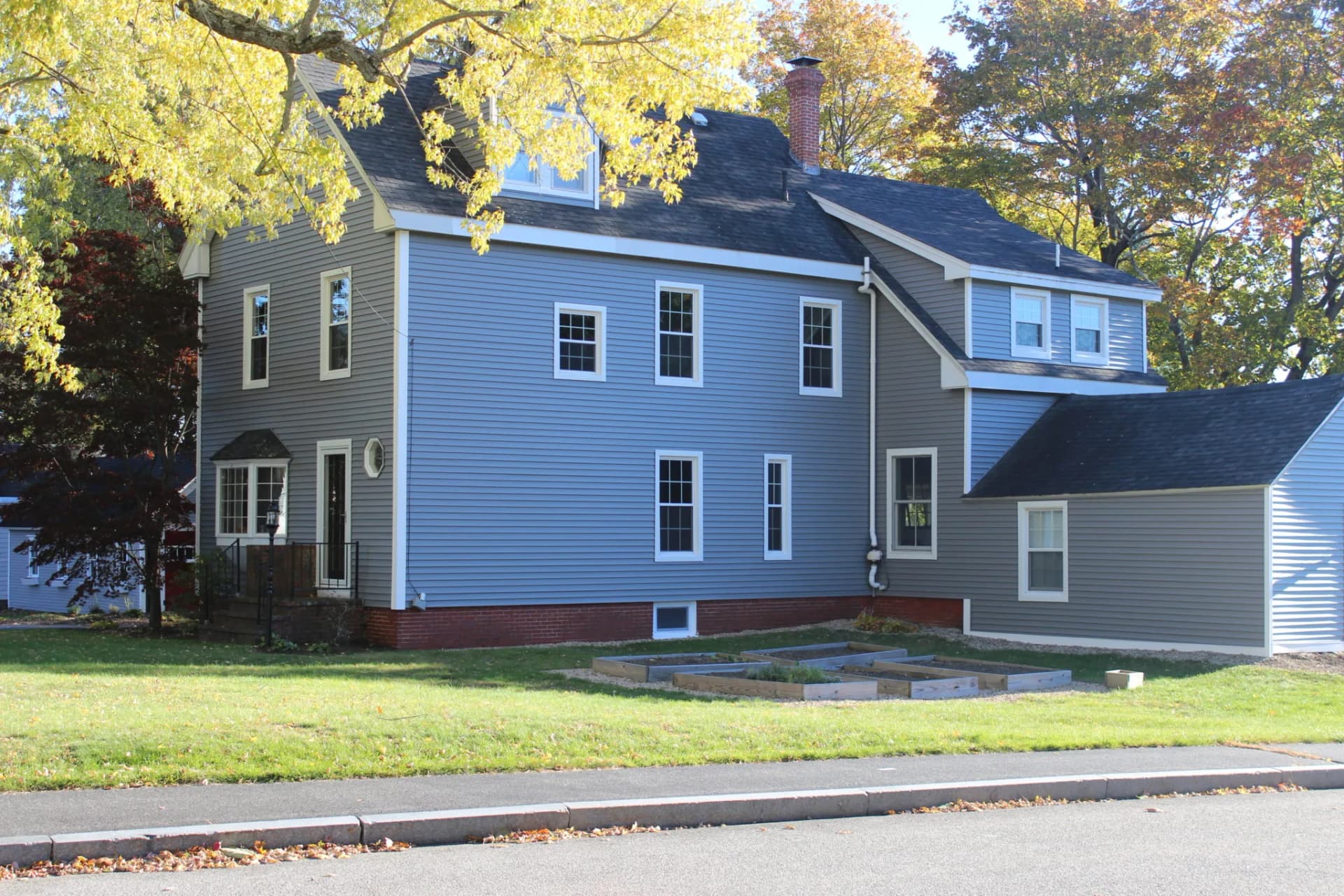
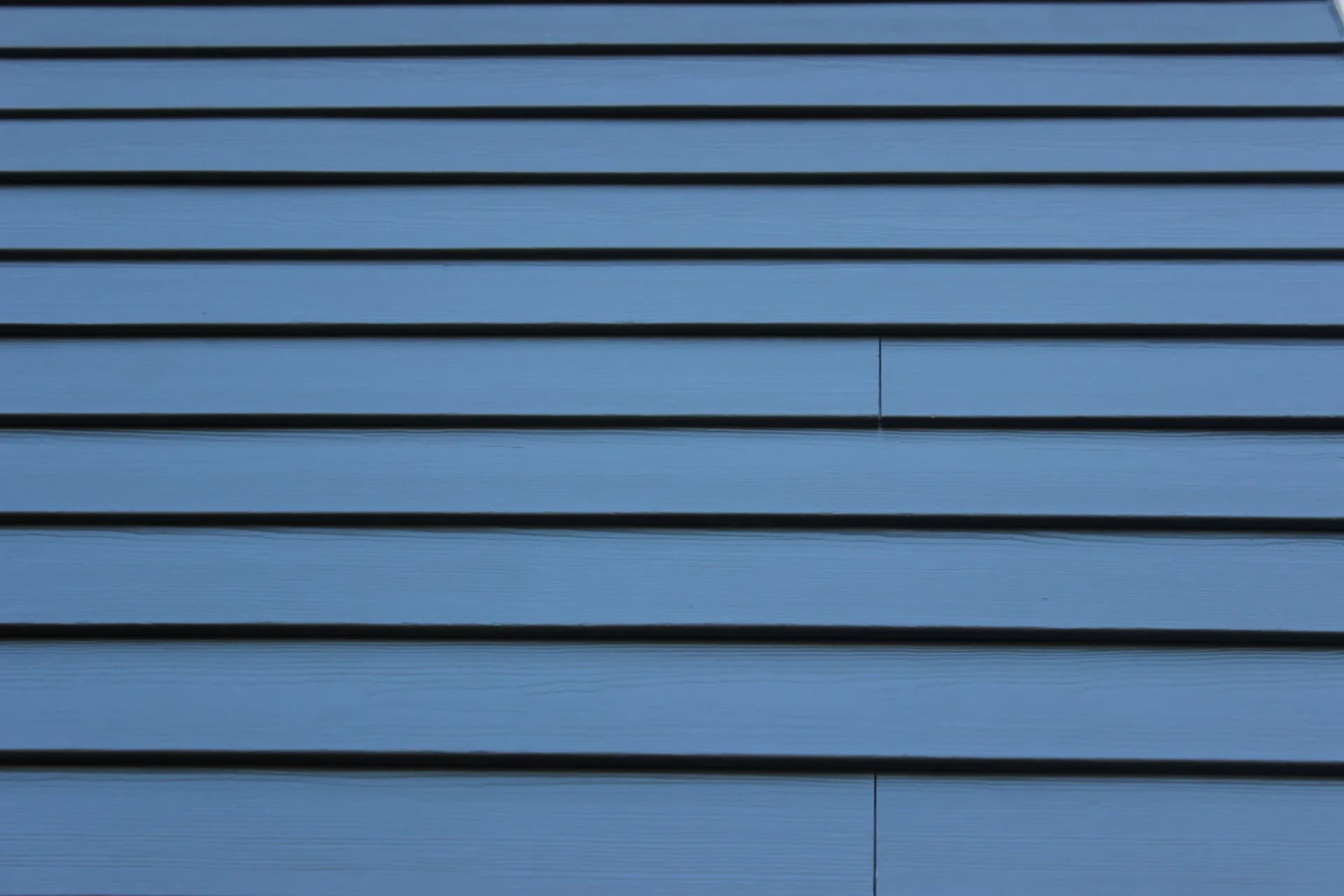
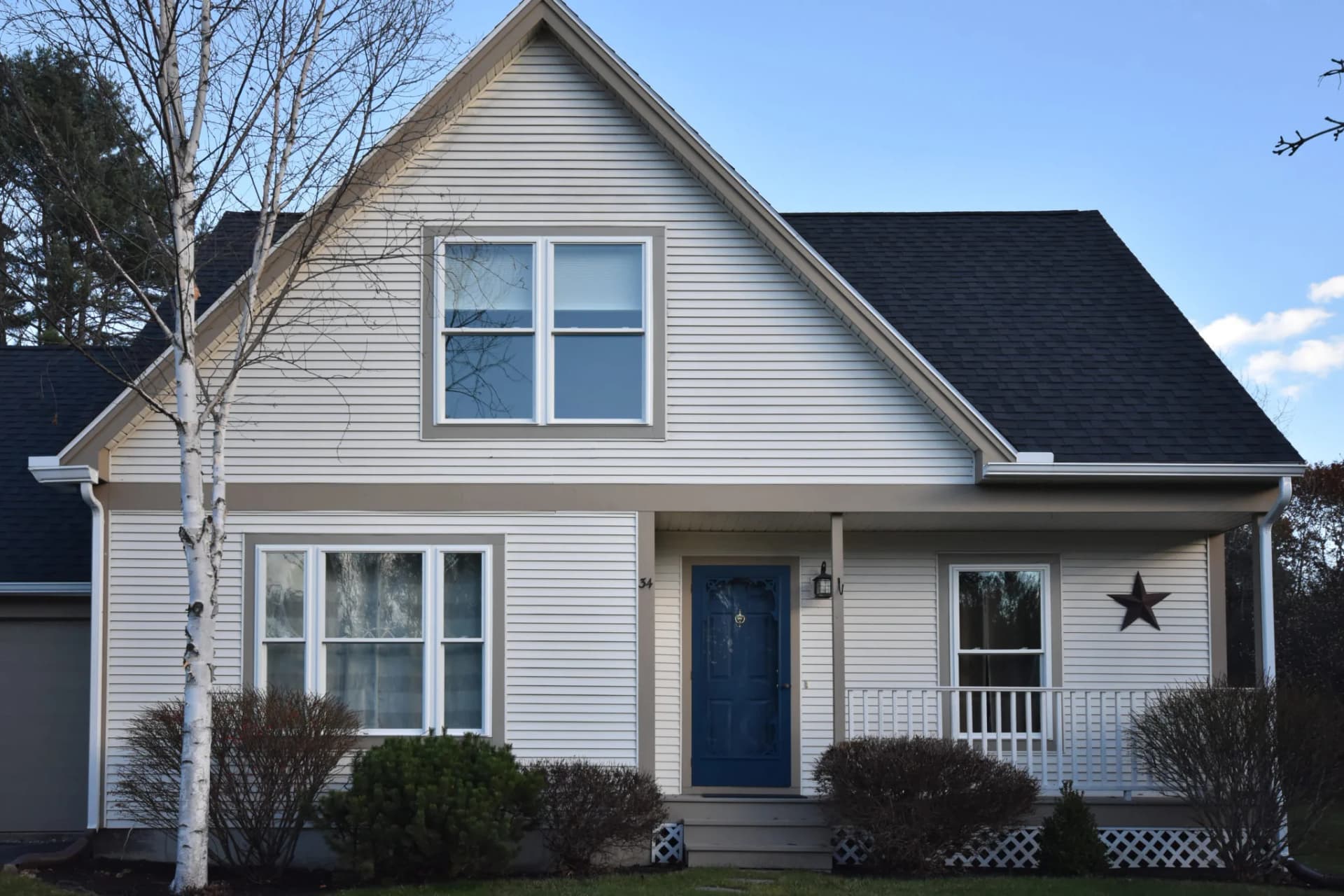
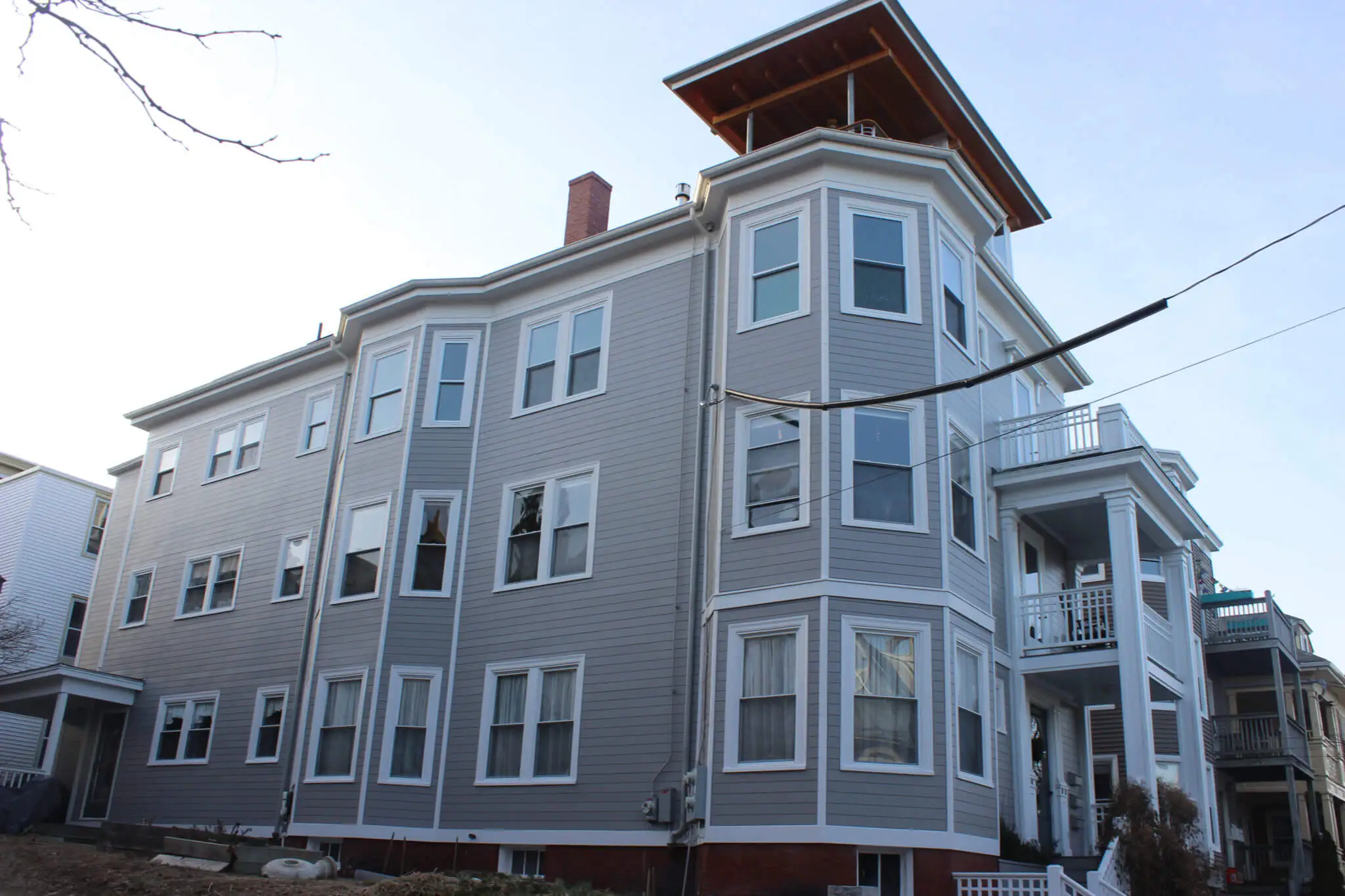
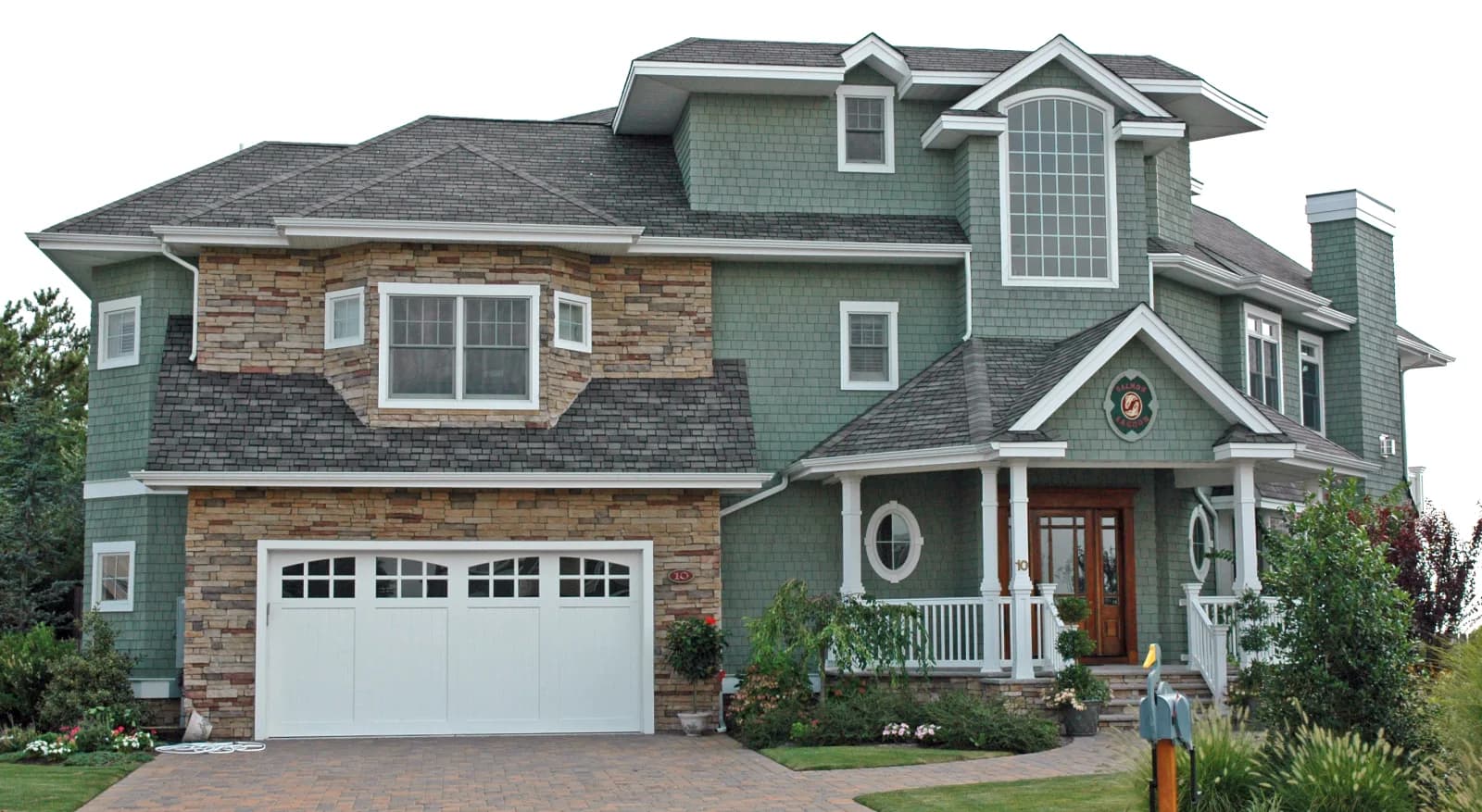
Premium vinyl siding is the fastest way to a tight, low-maintenance exterior. Today's thicker panels come in clapboard, Dutch lap, board-and-batten and shake profiles and in colors that were not possible a generation ago. The projects shown on this site include CertainTeed Monogram vinyl siding, used to replace rotting wood clapboards and 1970s metal siding on Portland homes. Vinyl moves with temperature, so how it is hung matters as much as which panel you pick.
- Old siding is removed and the wall is checked for soft sheathing and past leaks.
- House wrap and flashing go on first, with extra care around windows, doors and roof-to-wall joints.
- Starter strip, J-channel and corner posts are set straight and level so every course lines up.
- Panels are nailed in the center of the slots and left loose enough to expand and contract through a Maine winter and summer.
- Trim is wrapped or replaced with low-maintenance millwork so there is nothing left to paint.
Signs it is time
- You are tired of repainting wood clapboards every few years
- The existing vinyl is faded, cracked, or loose after wind storms
- The budget needs a whole-house result rather than one premium wall
- You want an insulated panel to take the edge off drafty walls
What affects the price of vinyl siding installation
- Panel grade and thickness, and whether it is insulated
- Profile: clapboard, Dutch lap, board-and-batten or shake
- Amount of trim, soffit and fascia wrapped or replaced
- Tear-off and sheathing repairs
- House height and access
Every job is priced from a free on-site visit. Typical ranges for the trade are on our siding page, and the details of this service are on the vinyl siding installation overview.
For a deeper walkthrough of materials, code details and photos, see our full Vinyl Siding Installation: Built to Move With a Maine Winter guide.
More in Cape Elizabeth and nearby
Back to the Cape Elizabeth exterior services overview, or see every town on our service areas page.
Other exterior work in Cape Elizabeth
- James Hardie Fiber Cement Siding in Cape Elizabeth
- Cedar Siding & Shingles in Cape Elizabeth
- Window Replacement in Cape Elizabeth
- Bay & Picture Windows in Cape Elizabeth
- Roof Replacement in Cape Elizabeth
- Asphalt Shingle Roofing in Cape Elizabeth
- Metal Roofing in Cape Elizabeth
- Deck Building in Cape Elizabeth
- Composite & PVC Decks in Cape Elizabeth
- Deck Replacement in Cape Elizabeth
- Siding Replacement in Cape Elizabeth
Get a free vinyl siding installation estimate in Cape Elizabeth
Tell us about the house and what you want changed. One of the owners will call to set up a visit, measure, and write a fixed-price proposal. No pressure, no obligation.
Need it today?Call Mike (207) 408-5388
or Bob at (207) 252-0759
More ways we can help
Google reviewsServices
16Homeowners often pair this with our other work, including…
Service Areas
38We also serve homeowners in…