
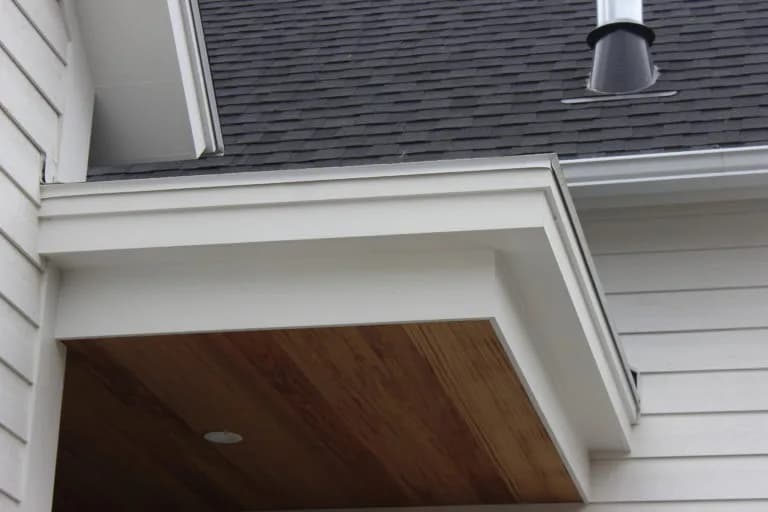
Roof Replacement in Cape Elizabeth, Maine
Roof Replacement for Cape Elizabeth homes from a family-owned Portland company. An owner measures on site and writes a fixed-price proposal.
- 5.0 · 8 Google reviews
- Fully licensed & insured
- Free estimates
- 20+ years combined experience
Roof Replacement for Cape Elizabeth homes
The median Cape Elizabeth house dates to 1967, and many of those roofs have been replaced at least once already. When a second layer is nearing the end of its life, a full tear-off is the sound approach here. It exposes decking that may have absorbed years of wind-driven rain, allows new ice barrier along the eaves and valleys, and lets the roof be re-flashed at chimneys and walls. The Code Enforcement Office does not require a permit to replace roofing, but the residential code in force still sets the standard for the work.
Snow and wind decide how a roof fails on this headland. Ice dams form on low-slope sections and along the eaves of older homes with little attic insulation, and nor'easter gusts lift shingle tabs and flashing on the windward side. Complex roofs on Shingle Style cottages, with intersecting gables, dormers and porch roofs, need careful valley and step-flashing work. Cardinal Exteriors replaces roofs in architectural asphalt, metal, cedar shake and low-slope membranes, and an owner writes up the scope and price after inspecting the roof.
Cape Elizabeth housing at a glance
The Census Bureau's 2020-2024 American Community Survey estimates about 3,980 housing units in Cape Elizabeth, and roughly 90 percent of them are single-family detached houses. About 88 percent of occupied homes are owner-occupied. The estimated median year built is 1967. Close to 40 percent of the stock predates 1960, including about one in five homes built before 1940, and another quarter went up between 1960 and 1979. Only around 7 percent was built in 2000 or later, so most houses here are old enough to have outlived at least one roof and one round of siding. The older layer includes summer houses from the late nineteenth century, when Portland architect John Calvin Stevens designed Shingle Style cottages along the Casco Bay shore. The survey also counts roughly 210 seasonal units, homes that may sit closed through the winter.
Weather and exposure in Cape Elizabeth
Cape Elizabeth has almost no shelter from the sea. The land faces open ocean to the east and south, so wind off the Gulf of Maine arrives with salt spray and nothing to break it, and nor'easters push rain sideways into siding joints, window heads and roof edges. Portland, just to the north, averages about 69 inches of snow a year, with large swings between winters, and storms that bring a foot or more are a regular part of the season. The ocean moderates temperatures near the shore, which means more winter days that hover around freezing and more freeze-thaw cycles on shingles, flashing and deck footings. Fog and damp air keep north-facing walls and shaded roofs wet longer than inland houses see.
Permits and design review in Cape Elizabeth
Permits run through the Cape Elizabeth Code Enforcement Office, 320 Ocean House Road, which has accepted building applications online since May 2025. Its FAQ states that a building permit is required to construct, structurally alter or enlarge a structure, and that no permit is required to replace siding or roofing. A new deck needs a building permit. The town's Shoreland Performance Overlay District covers land within 250 feet of tidal waters, Great Pond and the Spurwink River, with a 75-foot setback for new structures from most water bodies. Resource protection permits go through the Planning Office, and work in a mapped flood zone needs a Flood Hazard Permit.
What roof replacement involves
A roof replacement strips the old roofing down to the deck, repairs what is underneath, and rebuilds the whole system: underlayment, ice and water protection at the eaves and valleys, flashing at chimneys and walls, ventilation, and the new roofing itself. Maine roofs carry snow for months and see ice dams at the eaves, so the parts you never see do most of the work. The site covers architectural asphalt shingles, metal, cedar shake and flat or low-slope roofing.
- Old roofing is torn off to the deck and hauled away, with the yard and plantings protected.
- Soft or delaminated sheathing is replaced before anything new goes down.
- Ice and water shield goes at the eaves, valleys and penetrations; synthetic underlayment covers the rest.
- Drip edge, step and counter flashing, and pipe boots are installed new.
- Ridge and soffit venting are balanced, then the new roofing is installed and the site cleaned with magnets.
Signs it is time
- Curling, cracked, or missing shingles and granules in the gutters
- Ice dams along the eaves or water stains on ceilings after thaws
- Daylight or damp sheathing visible in the attic
- Sagging roof lines or spongy spots underfoot
- A roof at or past the age its material was made for
What affects the price of roof replacement
- Roof area, pitch and complexity: valleys, dormers, skylights, chimneys
- Number of existing layers to remove
- Sheathing repair found after tear-off
- Material: asphalt, metal, cedar or low-slope membrane
- Ventilation and flashing upgrades
Every job is priced from a free on-site visit. Typical ranges for the trade are on our roofing page, and the details of this service are on the roof replacement overview.
More in Cape Elizabeth and nearby
Back to the Cape Elizabeth exterior services overview, or see every town on our Cumberland County service areas page.
Other exterior work in Cape Elizabeth
- Asphalt Shingle Roofing in Cape Elizabeth
- Metal Roofing in Cape Elizabeth
- Deck Building in Cape Elizabeth
- Composite & PVC Decks in Cape Elizabeth
- Deck Replacement in Cape Elizabeth
- Siding Replacement in Cape Elizabeth
- Vinyl Siding Installation in Cape Elizabeth
- James Hardie Fiber Cement Siding in Cape Elizabeth
- Cedar Siding & Shingles in Cape Elizabeth
- Window Replacement in Cape Elizabeth
- Bay & Picture Windows in Cape Elizabeth
Get a free roof replacement estimate in Cape Elizabeth
Tell us about the house and what you want changed. One of the owners will call to set up a visit, measure, and write a fixed-price proposal. No pressure, no obligation.
Need it today?Call Mike (207) 408-5388
or Bob at (207) 252-0759