

Deck Building in Frye Island, Maine
Deck Building for Frye Island homes from a family-owned Portland company. An owner measures on site and writes a fixed-price proposal.
- Google reviews
- Fully licensed & insured
- Free estimates
- 20+ years combined experience
Deck Building for Frye Island homes
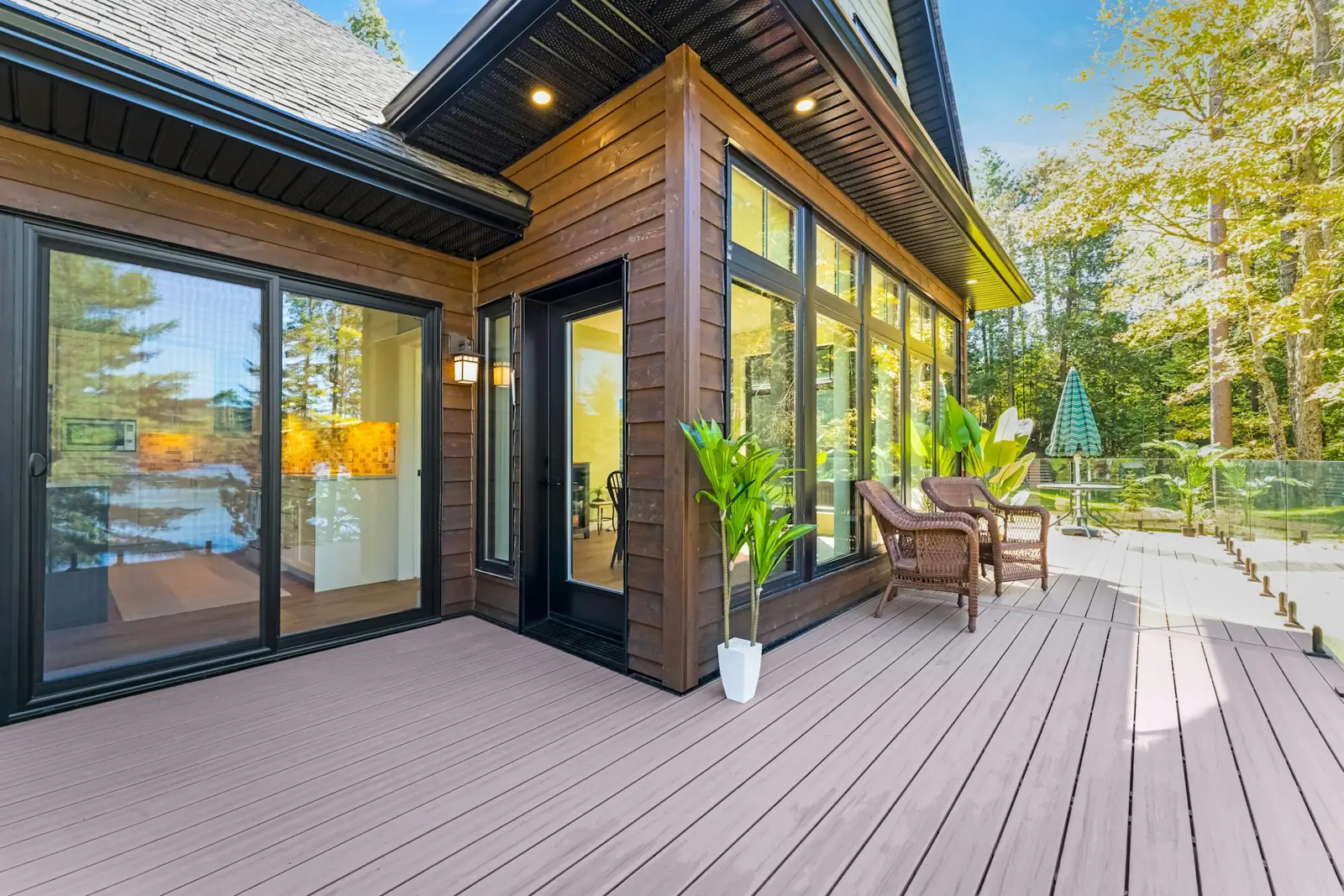
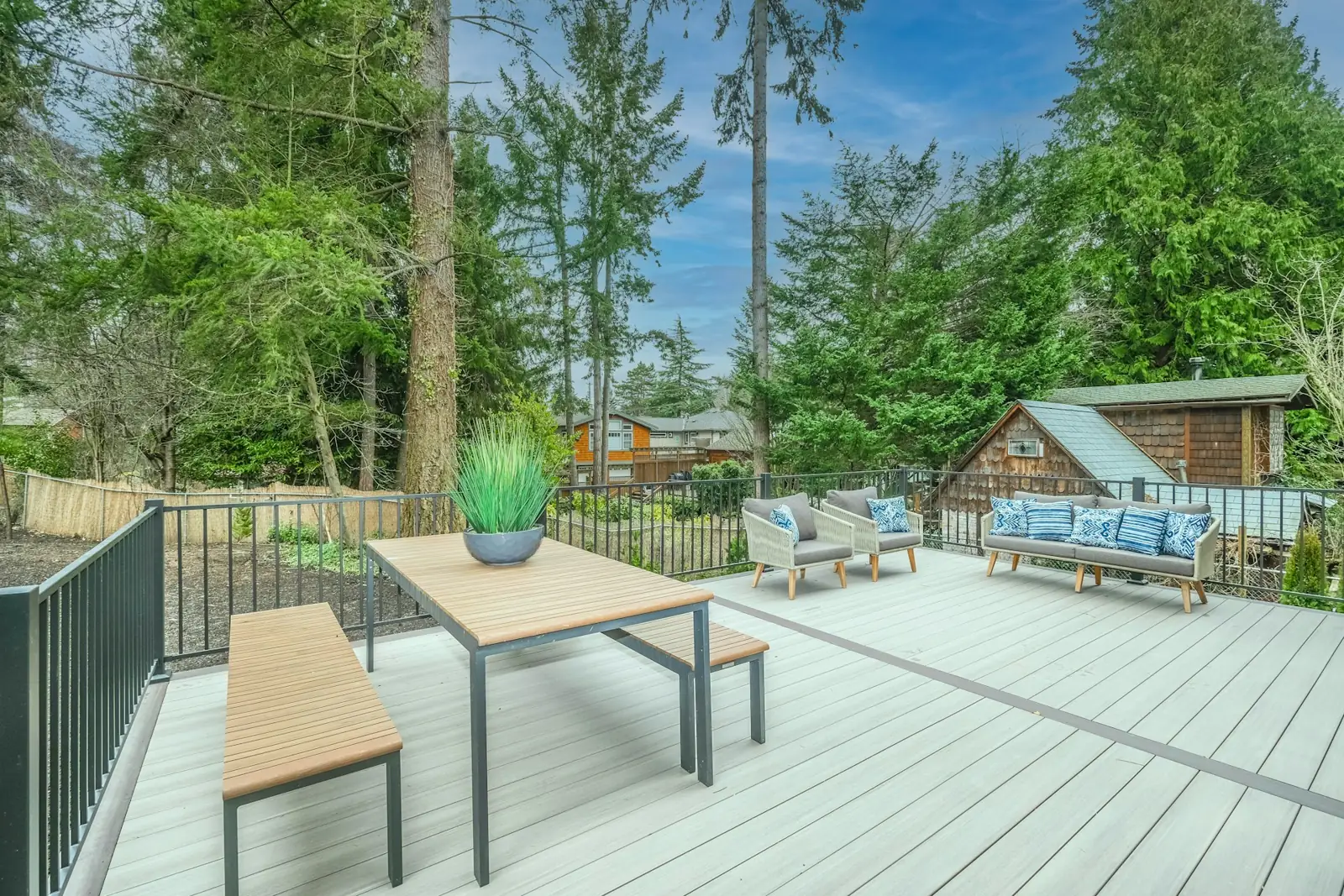
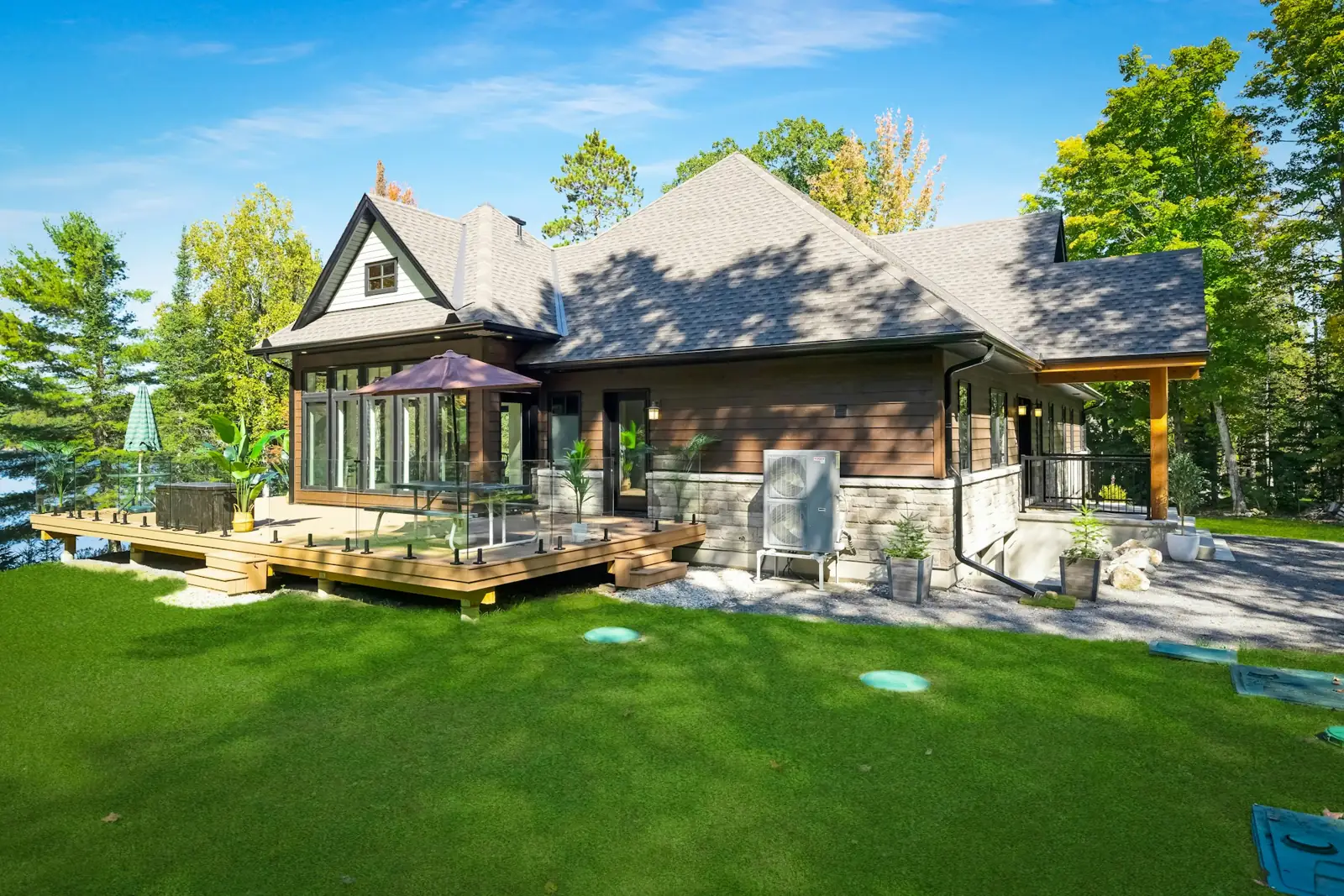
On Frye Island a deck is where the summer happens, usually facing the lake and sized for more guests than the house holds indoors. Lots are wooded and often slope toward the water, so a deck may need tall posts on the low side, bracing and stairs broken with landings down to a path or dock.
Planning starts with the rules and the trees. Sebago is a great pond, and Maine shoreland zoning generally keeps new structures back from the high-water line, so where a deck can go near the shore must be confirmed with the Frye Island Code Enforcement Office before design. The town requires a free tree removal permit for any tree over 4 inches in diameter, which comes up often when a deck needs space among the pines. A building and construction permit application goes to the same office. Footings have to go below the frost line, and on the island the concrete, forms and lumber all arrive by ferry, so compact footing systems can simplify the work. Framing is pressure-treated, with composite, PVC, pressure-treated or cedar decking and railings chosen for the site. The build must be finished before the ferry stops for winter, and the deck should be designed to carry snow that no one will shovel.
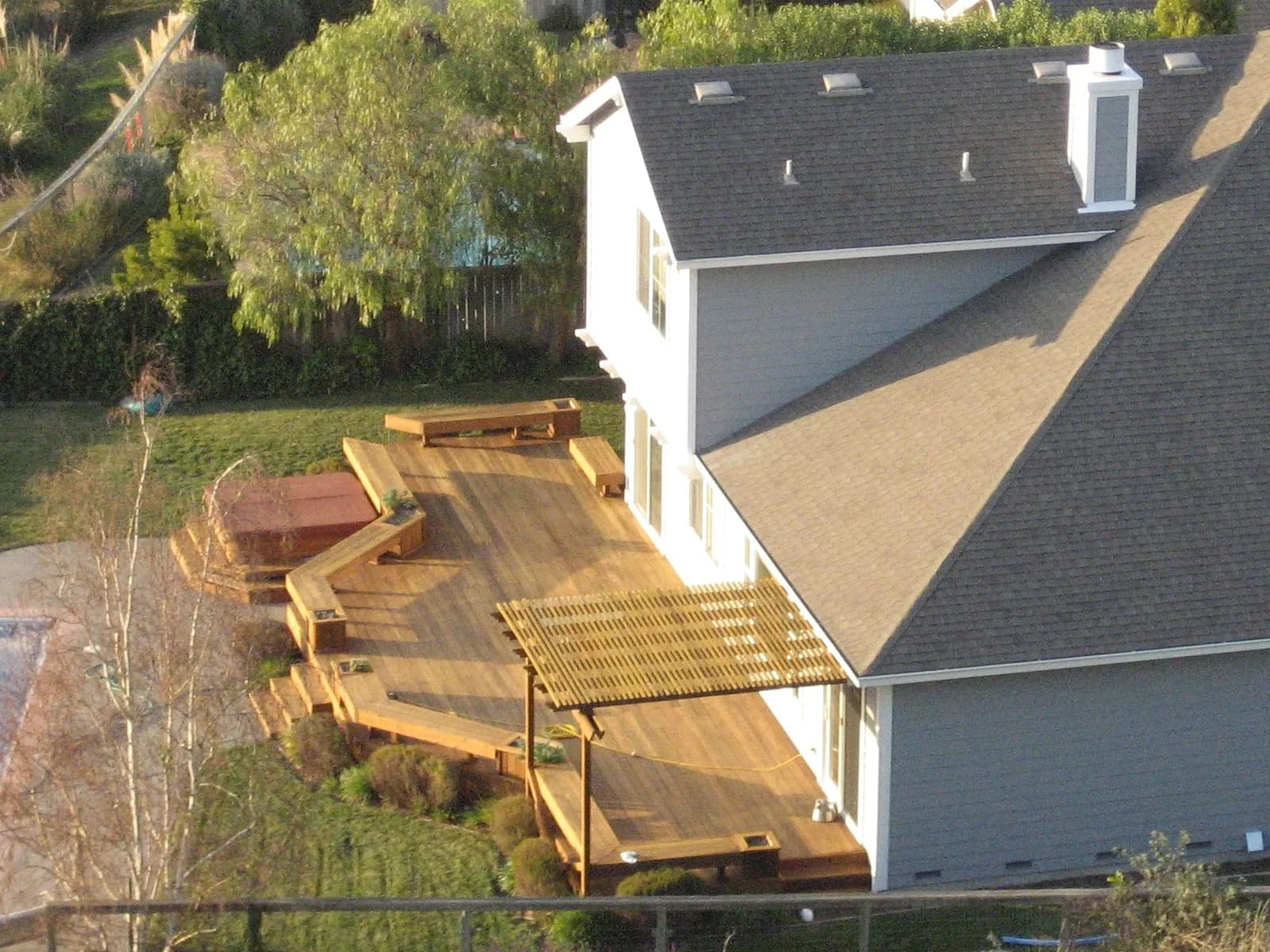
How a Deck Structure Is Built
- Footing — poured below Maine’s frost line so winter heaving cannot move it
- Post — carries the beam load down to the footing
- Beam — spans between posts and carries the outer ends of the joists
- Ledger — bolted to the house framing, with flashing that diverts water away from the wall
- Joists — span from the ledger to the beam, sized and spaced to the decking and the load
- Decking — the walking surface, fastened on top with spacing for drainage
Frye Island housing at a glance
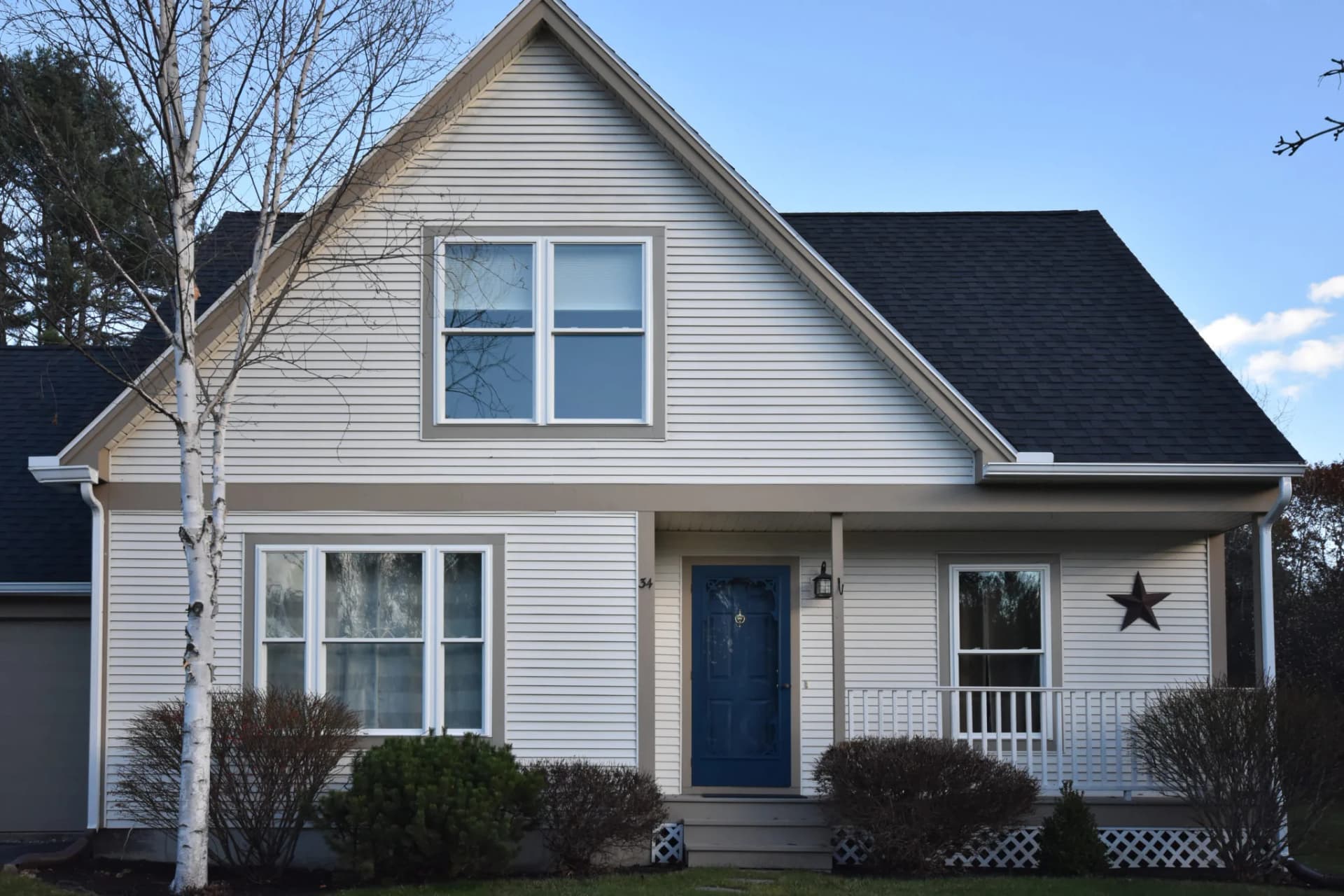
Census estimates for Frye Island are rough, because so few people live there year-round, but the picture is clear. The survey counts about 575 housing units with a median year built of 1990, and almost all of them, about 560, are held for seasonal or recreational use. The 2020 census counted just 32 residents. Nearly every unit is a single-family detached house, none of the counted stock predates 1960, about 28 percent went up between 1960 and 1979, and about a third date from 2000 or later. On the ground that means wooded lots of summer cottages and camp-style houses, a steady stream of newer and larger seasonal homes, and a lot of houses that have been enlarged since they were first built.
Permits and design review in Frye Island
Permits go through the Frye Island Code Enforcement Office in the new Town Hall at 10 Fairway Lane, open Tuesdays and Thursdays. The town posts separate applications for building and construction, electrical, plumbing, septic and tree removal. Completed forms go in the town office drop box or by email, and the officer sets the fee after review. Any tree over 4 inches in diameter needs a free tree removal permit before it is cut, which matters when clearing space for a deck. Since February 2024 an impact fee applies to new dwelling units. Sebago is a great pond, so state shoreland zoning rules apply near the water.
Weather and exposure in Frye Island
Sebago Lake shapes everything about the weather here. It is the deepest lake in Maine at 316 feet and covers about 30,500 acres, and it rarely freezes over completely, so wind crosses open water well into winter and hits the shoreline houses on every side of the island. Weather around the lake can change suddenly in any season. The National Weather Service office in nearby Gray averages about 84 inches of snow a year. On Frye Island that snow sits on roofs and decks all winter with nobody there to clear it, and the island's roughly 1,000 wooded acres keep walls and decking shaded and damp.
Frye Island at a Glance
What the housing stock and local code enforcement mean for a siding, window, roofing or deck job here.
34
Population (ACS estimate)
Median year built: 1990
Mostly vinyl or fiber-cement siding and insulated replacement windows from recent decades.
State Building & Energy Code (MUBEC)
Local option — population under 4,000
EPA Lead-Safe Rule (pre-1978 homes)
Applies to at least 0% of homes here
Shoreland Zoning
Applies, plus island delivery logistics
Codes & Permits for Deck Builder in Frye Island
In Frye Island, exterior-work permits come from the town's code office. Frye Island sits at or under the 4,000-resident line where MUBEC enforcement is a local option rather than a state mandate.
- Maine's adopted 2021 IRC (R507.2.4) requires deck ledger/flashing to be corrosion-resistant metal at least 0.019 inch thick, or an approved nonmetallic material compatible with both the house's substrate and the decking material. up.codes
- Deck footing size is based on tributary area and soil-bearing pressure per Table R507.3.1, but the actual frost-line depth used to set footing depth is filled in locally by each Maine jurisdiction (per Table R301.2's instruction that 'the jurisdiction shall fill in the frost line depth column'), so contractors must confirm the specific required footing depth with each town's code office rather than assume one statewide number. up.codes
- Metal fasteners and connectors for all decks must comply with Section R317.3 (corrosion protection for preservative-treated wood) and Table R507.2.3. up.codes
- Maine's Shoreland Zoning Act creates a regulated shoreland zone extending 250 feet (horizontal distance) from the normal high-water line of any great pond, river, or coastal wetland, and 75 feet from certain streams; the Act's stated purposes include protecting buildings and land from flooding/erosion and controlling water pollution, and it governs deck and other structure setbacks and the expansion of nonconforming structures within that zone (specific setback/expansion rules are set at the municipal-ordinance level under the state's model guidelines). maine.gov
How Cardinal Exteriors Handles Deck Builder in Frye Island
- Maine's adopted deck code (R507.2.4) requires a corrosion-resistant ledger flashing at least 0.019 inch thick, or an approved nonmetallic equivalent — every ledger-attached deck we build in Frye Island gets it.
- We set every Frye Island deck's footings below frost depth and size them to the actual load, following Maine's adopted residential code rather than a rule of thumb.
- Frye Island's shoreline, lake or river frontage falls under Maine's Mandatory Shoreland Zoning Act, so we check setback rules before work starts near the water.
- Reached only by car ferry from a landing in Raymond; the ferry closes roughly November through April. We build the schedule around that before ordering materials.
- With 34 residents, Frye Island falls below the threshold for mandatory statewide code enforcement, but that doesn't change the permit and inspection Cardinal builds to on every job here.
- Frye Island has no individually named code office in our records, so we confirm the right permit contact before deck building starts.
What new deck building involves
A new deck starts below ground. Footings have to reach below the frost line so the deck does not heave, the ledger that ties the deck to the house has to be flashed so it never rots the rim, and the framing has to carry snow as well as people. On top of that structure goes the part you see: composite and PVC boards, pressure-treated lumber or cedar, with railings, stairs and landings. Cardinal Exteriors builds new decks and full replacements only; it does not take on deck repairs or staining.
- An owner visits, looks at the yard and the house, and talks through size, layout, stairs and material.
- Permits are pulled where the town requires them.
- Footings are dug or set below frost; posts, beams and joists are framed to span and load.
- The ledger is flashed and fastened with structural fasteners, or the deck is built freestanding.
- Decking, railings, stairs and landings go on, with hidden or face fasteners to suit the boards.
Signs it is time
- You want outdoor living space where there is none
- An existing deck is too small or poorly laid out for how you use it
- A new door, addition or view calls for a deck to reach it
What affects the price of new deck building
- Deck size, height and shape
- Decking material: composite, PVC, pressure-treated or cedar
- Railing style and stair runs
- Footing type and site conditions: ledge, slope, access
- Permits and any shoreland or setback requirements
Every job is priced from a free on-site visit. Typical ranges for the trade are on our deck building page, and the details of this service are on the new deck building overview.
For a deeper walkthrough of materials, code details and photos, see our full Deck Building in Maine: Frost-Depth Footings and Ledger Flashing guide.
More in Frye Island and nearby
Back to the Frye Island exterior services overview, or see every town on our service areas page.
Other exterior work in Frye Island
- Composite & PVC Decks in Frye Island
- Deck Replacement in Frye Island
- Siding Replacement in Frye Island
- Vinyl Siding Installation in Frye Island
- James Hardie Fiber Cement Siding in Frye Island
- Cedar Siding & Shingles in Frye Island
- Window Replacement in Frye Island
- Bay & Picture Windows in Frye Island
- Roof Replacement in Frye Island
- Asphalt Shingle Roofing in Frye Island
- Metal Roofing in Frye Island
Get a free new deck building estimate in Frye Island
Tell us about the house and what you want changed. One of the owners will call to set up a visit, measure, and write a fixed-price proposal. No pressure, no obligation.
Need it today?Call Mike (207) 408-5388
or Bob at (207) 252-0759
More ways we can help
Google reviewsService Areas
38We proudly serve 38 towns from Cumberland County to Saco Bay and Bath, including…
Services
16Explore the rest of what we do, from…