
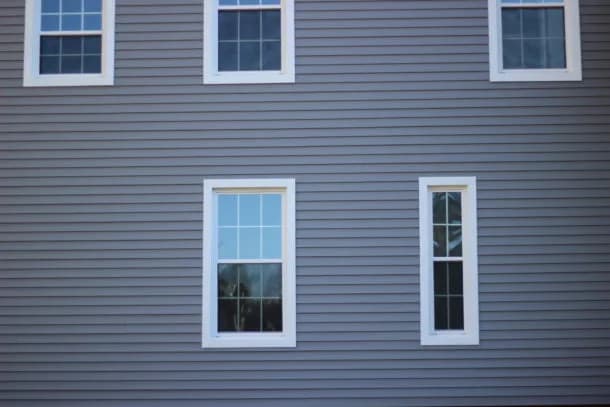
Cedar Siding & Shingles in Westbrook, Maine
Cedar Siding & Shingles for Westbrook homes from a family-owned Portland company. An owner measures on site and writes a fixed-price proposal.
- 5.0 · 8 Google reviews
- Fully licensed & insured
- Free estimates
- 20+ years combined experience
Cedar Siding & Shingles for Westbrook homes
Real wood still has a place on Westbrook houses. Some owners of older homes want real wood clapboard to keep the character of a house like those in the Cumberland Mills Historic District, and cedar shingles give a warm, natural wall to a newer house on a wooded lot near Prides Corner or out toward the Windham and Gorham lines. Cedar is naturally rot-resistant and stable, and it takes paint or stain well. Clear-grade clapboard costs more than knotty stock but holds its finish longer on a south wall.
Inland conditions change the upkeep. Without salt air, cedar weathers more slowly and evenly, but walls shaded by trees stay damp and can grow mildew, and snow piled against the lower courses wets the bottom of the siding for months. A rainscreen gap behind the cedar, clearance above grade and a quality finish applied to all sides of each board make the difference between siding that lasts decades and siding that cups and splits. Cardinal Exteriors installs cedar clapboard and shingles as part of new siding projects.
Westbrook housing at a glance
The Census Bureau's 2020-2024 American Community Survey estimates about 9,580 housing units in Westbrook, with a median year built of 1975. The stock splits into two eras. About a quarter of homes were built before 1940 and roughly 37 percent before 1960, while close to a quarter were built in 2000 or later, reflecting the city's recent growth. Only about 44 percent of units are single-family detached houses; the rest are duplexes, apartment buildings, condominiums and other attached housing. Around 61 percent of occupied homes are owner-occupied. The older layer includes the mill housing inside the Cumberland Mills Historic District and wood-frame homes like the 1914 Vallee Family House on Monroe Avenue, a clapboard American Foursquare with a hip roof and full front porch.
Weather and exposure in Westbrook
Westbrook sits a few miles inland from Casco Bay at an elevation of about 105 feet, so it misses most of the direct salt spray that coastal towns deal with but gets the full weight of southern Maine winters. Portland, on the city's eastern border, averages about 69 inches of snow a year, with seasons ranging far above and below that, and nor'easters regularly bring a foot or more with strong wind. Away from the ocean's moderating influence, nights run colder, frost goes deeper and freeze-thaw cycles work hard on roofs, flashing and deck footings. The city's own code office sets foundations at four feet below grade for frost protection, a useful benchmark for any new footing.
Permits and design review in Westbrook
Westbrook's Code Enforcement Department at City Hall, 2 York Street, issues building permits. The department publishes a building permit application specifically for basic renovations, alterations, sheds and decks, and enforces the Maine Uniform Building and Energy Code: the 2021 International Residential Code and the 2021 International Existing Building Code. Inspections should be booked 48 to 72 hours ahead, and a permit lapses if work does not start within six months. The city also has a Flood Hazard Permit for work in mapped flood zones, and lots near the Presumpscot River may fall within Maine's mandatory shoreland zone, which covers land within 250 feet of a river.
What cedar siding and shingles involves
Cedar clapboards and shingles are the original New England exterior, and for shingle-style cottages, capes and historic homes nothing else looks quite right. Cedar is naturally rot-resistant and light, but it is wood: it needs airflow behind it and a finish that suits the exposure. Pre-finished shingles, such as the Maibec shingles on several projects shown on this site, arrive stained or primed on all sides, which cuts the upkeep and evens out the color.
- Walls are stripped, repaired and wrapped; where it helps drying, a ventilated or drainage layer goes behind the cedar.
- Shingles are coursed and laid out so exposure lines up at windows, doors and corners.
- Stainless or hot-dipped galvanized fasteners are used so they do not stain or corrode.
- Corners are woven or finished with boards, and trim is detailed to shed water.
- Pre-finished product is touched up at cuts; natural cedar is left to weather or finished as you choose.
Signs it is time
- The house is a cape, shingle-style cottage or historic home where cedar belongs
- Existing shingles are cupped, split, missing or black with mildew
- A historic district or your own taste calls for real wood
- You want a natural finish that weathers to silver-gray
What affects the price of cedar siding and shingles
- Clapboard versus shingle, and grade of cedar
- Pre-finished versus natural or site-finished
- Coursing detail, corner treatment and trim
- Wall area, height and tear-off
- Any rainscreen or drainage layer behind the siding
Every job is priced from a free on-site visit. Typical ranges for the trade are on our siding page, and the details of this service are on the cedar siding and shingles overview.
More in Westbrook and nearby
Back to the Westbrook exterior services overview, or see every town on our Cumberland County service areas page.
Other exterior work in Westbrook
- Window Replacement in Westbrook
- Bay & Picture Windows in Westbrook
- Roof Replacement in Westbrook
- Asphalt Shingle Roofing in Westbrook
- Metal Roofing in Westbrook
- Deck Building in Westbrook
- Composite & PVC Decks in Westbrook
- Deck Replacement in Westbrook
- Siding Replacement in Westbrook
- Vinyl Siding Installation in Westbrook
- James Hardie Fiber Cement Siding in Westbrook
Get a free cedar siding and shingles estimate in Westbrook
Tell us about the house and what you want changed. One of the owners will call to set up a visit, measure, and write a fixed-price proposal. No pressure, no obligation.
Need it today?Call Mike (207) 408-5388
or Bob at (207) 252-0759