
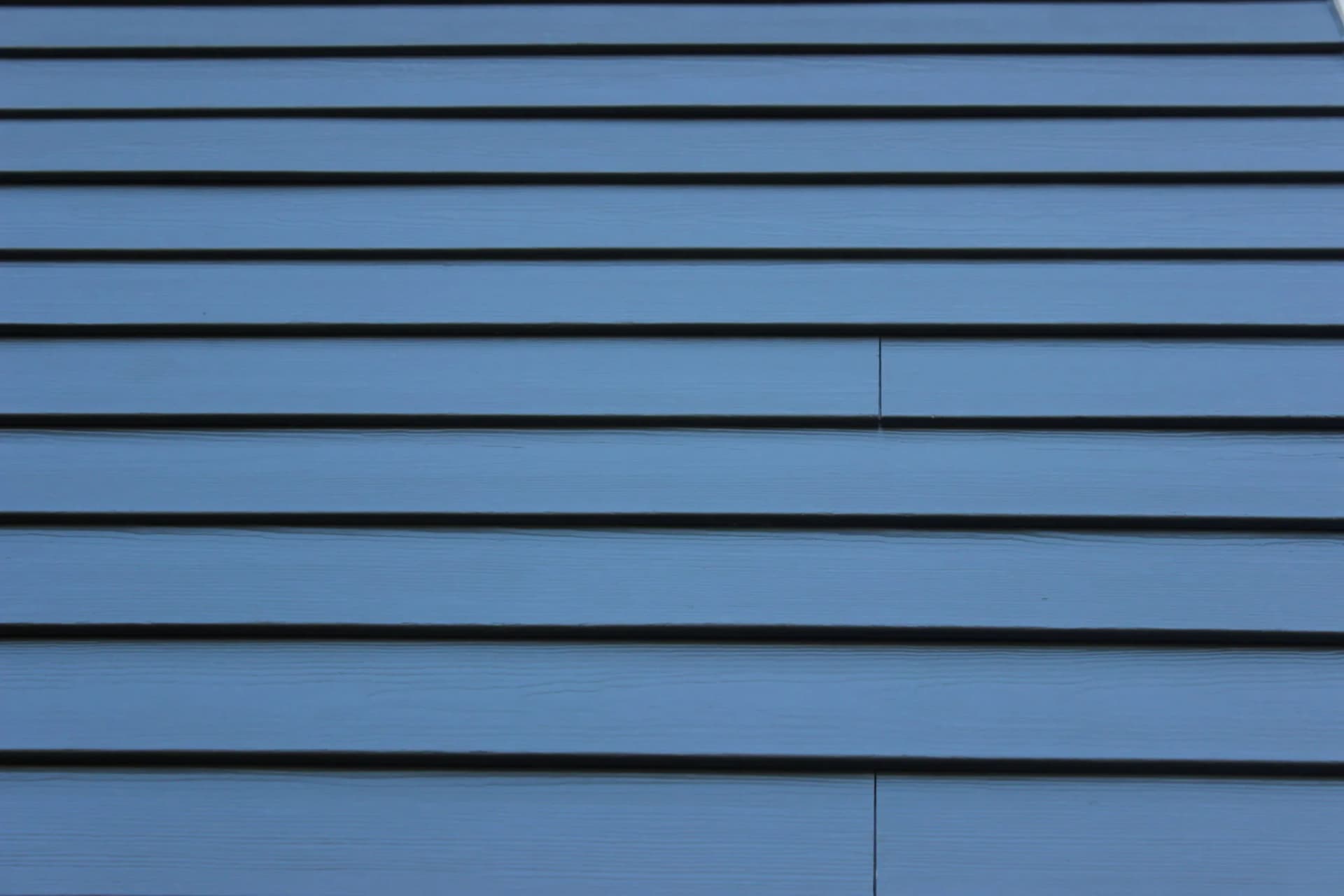
James Hardie Fiber Cement Siding in Bridgton, Maine
James Hardie Fiber Cement Siding for Bridgton homes from a family-owned Portland company. An owner measures on site and writes a fixed-price proposal.
- 5.0 · 8 Google reviews
- Fully licensed & insured
- Free estimates
- 20+ years combined experience
James Hardie Fiber Cement Siding for Bridgton homes
James Hardie fiber cement answers two of Bridgton's conditions at once. It shrugs off the soak-and-freeze cycle that cups and splits wood clapboard on shaded lakefront walls, and it does not burn, which counts for a camp set deep in pine woods at the end of a long private road. It also resists woodpeckers and insects, a real consideration for buildings that sit unoccupied for months at a stretch.
On Main Street and in the older neighborhoods around it, fiber cement is the closest thing to painted wood clapboard that does not need painting every few years. A smooth-faced board with a narrow reveal suits houses like the Italianate and Federal homes near downtown, and prefinished colors are baked on at the factory. Installation is exacting: the manufacturer requires clearances above grade, above roofs where a wall meets a lower roof, and above deck surfaces, plus kickout flashing and properly treated cut edges. Those details matter on lakefront houses where snow drifts against the walls and spring meltwater runs along the foundation for weeks.
Bridgton housing at a glance
Census estimates count about 4,620 housing units in Bridgton, with a median year built of 1985. About 11 percent predate 1940 and roughly 18 percent predate 1960, while about 22 percent were built between 1960 and 1979 and close to a third since 2000. Around 74 percent are single-family detached homes, and about 89 percent of occupied homes are owner-occupied. The standout figure is seasonal use: roughly 2,200 units, close to half the town's housing, are held for seasonal or recreational occupancy, from cabins on Highland Lake to second homes on Long Lake. The town's land use code describes the neighborhoods around downtown as a mix of classic New England homes, converted multifamily dwellings and single-family houses. The older layer includes the Federal-style Benjamin Cleaves House of 1828 and the Italianate-Second Empire William F. Perry House on Main Street.
Weather and exposure in Bridgton
Bridgton is lake-and-mountain country rather than coast, so the forces on a house here are snow, cold and wind across open water, not salt. The nearest long-term weather record, from the National Weather Service office in Gray, averages about 84 inches of snow a year for 1991-2020, and western Bridgton rises toward Pleasant Mountain. Summers can swing hard the other way: North Bridgton holds Maine's record high temperature of 105 degrees. Houses on the Bridgton shore of Long Lake, a twelve-mile lake, face open water to the east, and wind builds across it. Around Highland Lake and the smaller ponds, tall pines shade roofs and decks, keep them damp and drop needles into valleys and gutters.
Permits and design review in Bridgton
The Bridgton Code Enforcement Department, which the town calls its building department, works by appointment from the town office at Three Chase Street and asks for 48 hours notice on inspections. Since April 7, 2025 it enforces the 2021 I-codes under Maine's uniform building code. The Bridgton Land Use Code requires a building permit before building or replacing a structure, but lists repair and improvement within a structure's footprint, including re-roofing and replacement windows and doors, among activities that need no permit under that code, subject to shoreland rules. In the shoreland zone, decks must sit 100 feet back from great ponds.
What James Hardie fiber cement siding involves
Fiber cement is a mix of cement, sand and cellulose fiber pressed into planks, shingles and panels. It does not rot, insects do not eat it, it will not burn, and factory-applied finishes hold color far longer than site-painted wood. It is heavier and more exacting to install than vinyl, which is exactly why installation quality shows. The Back Cove home on this site was re-sided with a complete James Hardie package of wood-grain plank.
- Walls are stripped, repaired and wrapped, with flashing at every opening and roof-to-wall joint.
- Boards are cut with dust-controlled tools and fastened to the manufacturer's nailing schedule.
- Required clearances are held above roofs, decks and grade so the ends never sit in water or snow.
- Butt joints get flashing behind them, and cut ends are sealed or primed as the manufacturer specifies.
- Trim, caulk lines and touch-up are finished so the pre-finished color stays uniform.
Signs it is time
- You want the look of painted clapboard without the paint cycle
- Wood siding keeps rotting at the bottom courses and around trim
- The house sits in wind and salt exposure that punishes other materials
- You want a non-combustible exterior
What affects the price of James Hardie fiber cement siding
- Product line and profile: lap plank, shingle, panel or board-and-batten
- Pre-finished color versus site painting
- Trim package and detailing
- Tear-off, sheathing repair and house height
- Number of windows, doors and corners to flash and trim
Every job is priced from a free on-site visit. Typical ranges for the trade are on our siding page, and the details of this service are on the James Hardie fiber cement siding overview.
More in Bridgton and nearby
Back to the Bridgton exterior services overview, or see every town on our Cumberland County service areas page.
Other exterior work in Bridgton
- Cedar Siding & Shingles in Bridgton
- Window Replacement in Bridgton
- Bay & Picture Windows in Bridgton
- Roof Replacement in Bridgton
- Asphalt Shingle Roofing in Bridgton
- Metal Roofing in Bridgton
- Deck Building in Bridgton
- Composite & PVC Decks in Bridgton
- Deck Replacement in Bridgton
- Siding Replacement in Bridgton
- Vinyl Siding Installation in Bridgton
Get a free James Hardie fiber cement siding estimate in Bridgton
Tell us about the house and what you want changed. One of the owners will call to set up a visit, measure, and write a fixed-price proposal. No pressure, no obligation.
Need it today?Call Mike (207) 408-5388
or Bob at (207) 252-0759