
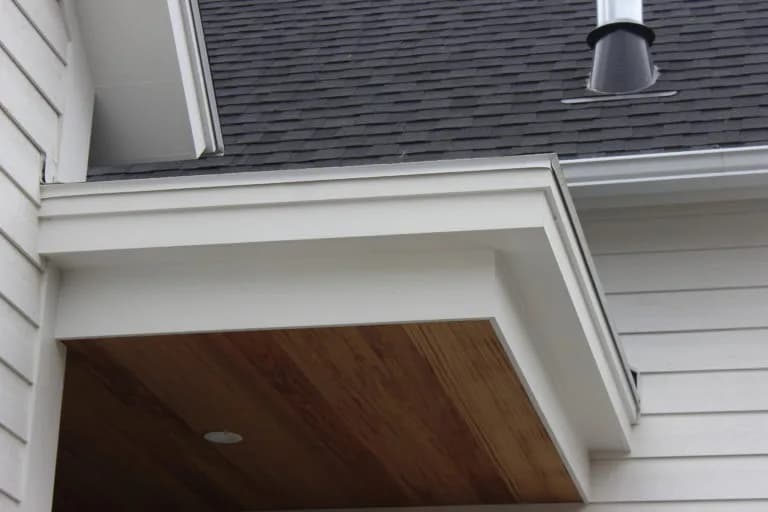
Metal Roofing in Cumberland, Maine
Metal Roofing for Cumberland homes from a family-owned Portland company. An owner measures on site and writes a fixed-price proposal.
- 5.0 · 8 Google reviews
- Fully licensed & insured
- Free estimates
- 20+ years combined experience
Metal Roofing for Cumberland homes
Metal handles Cumberland's snow better than any other roof, and that is the first thing to plan for. A standing seam or metal shingle roof releases snow in large slides, so snow guards should protect doorways, walkways, decks and cars below. Porches and low roofs beneath a metal main roof need to be designed to handle the snow that lands on them.
Metal suits the barns, sheds and farm outbuildings that still dot West Cumberland, and homeowners in wooded areas choose it because moss and debris do not cling to it as they do to shingles. On the Foreside, near salt water, the panel material and paint system should be selected for coastal exposure, with fasteners that will not corrode. Concealed-fastener standing seam avoids exposed screws that can loosen over years of freezing and thawing, while metal shingles offer a more traditional texture for an older house. Metal expands and contracts more than asphalt, so the panels need clips that allow movement and flashing designed for metal at valleys, walls and chimneys. Done right, it can outlast several asphalt roofs.
Cumberland housing at a glance
Census estimates for 2020 to 2024 put Cumberland at about 3,300 housing units, with a median year built of 1984. About 15 percent predate 1940, roughly 24 percent were built between 1960 and 1979, about 26 percent in the 1980s and 1990s, and about 29 percent in 2000 or later. Around 91 percent of occupied homes are owner-occupied, and about 82 percent of units are single-family detached houses; only about 60 are held for seasonal use. The town's 2025 draft comprehensive plan counts 27 houses built before 1800 and another 190 built during the 1800s, about 7 percent of the stock. Most recent building has come as conservation or cluster subdivisions, such as the 72 homes of Mineral Springs in West Cumberland, plus condominiums and apartments near Route 1.
Weather and exposure in Cumberland
Cumberland has no official weather station; the long-term record for the area comes from Portland International Jetport, where 1991 to 2020 normals put average snowfall at about 69 inches a year and February lows around 17 degrees. The town rises from sea level on the Foreside to about 184 feet at Cumberland Center, so the inland villages see similar snow but little salt. Houses on the Foreside, between Route 1 and the bay, take wind and salt spray from northeast storms, and the draft comprehensive plan lists storm surge and rising seas as coastal concerns. Inland, freeze and thaw cycles and shade from woods do most of the damage to roofs and wood.
Permits and design review in Cumberland
The Cumberland Code Enforcement Office handles building permits and inspections, which it schedules Monday through Thursday, and applications can be sent by email. Construction must meet the 2021 International Residential Code, the 2021 International Building Code and the 2021 International Energy Conservation Code under the Maine Uniform Building and Energy Code. The Shoreland Overlay District generally reaches 250 feet from rivers, streams, saltwater and associated wetlands, and 75 feet from certain streams; any building permit there needs a Shoreland Zoning Permit first or alongside it. The town has no historic preservation ordinance, though the draft comprehensive plan asks the council to consider one.
What metal roofing involves
Metal roofs shed snow, shrug off wind, and outlast most other roofing. Standing seam panels run from eave to ridge with raised, concealed-fastener seams; metal shingle systems give a more traditional look. The site lists metal roofing systems among its roofing options. Because snow slides off metal in sheets, planning where it lands, over doors, walks, decks and lower roofs, is part of the design.
- Tear-off to the deck and repair, or preparation of the existing deck as the system requires.
- High-temperature underlayment and ice and water protection where needed.
- Panels or metal shingles installed with clips or fasteners that allow thermal movement.
- Trim, ridge, eave and valley flashings formed and installed.
- Snow guards placed where sliding snow would land on entries, decks or lower roofs.
Signs it is time
- You want the last roof you put on the house
- Heavy snow loads and ice dams on a low-pitch or shaded roof
- A camp, barn or outbuilding where low upkeep matters most
- Repeated shingle blow-offs in wind
What affects the price of metal roofing
- Standing seam versus metal shingle, and gauge and finish
- Roof area, pitch and number of penetrations
- Tear-off and deck preparation
- Snow guard layout
- Trim, valley and flashing detail
Every job is priced from a free on-site visit. Typical ranges for the trade are on our roofing page, and the details of this service are on the metal roofing overview.
More in Cumberland and nearby
Back to the Cumberland exterior services overview, or see every town on our Cumberland County service areas page.
Other exterior work in Cumberland
- Deck Building in Cumberland
- Composite & PVC Decks in Cumberland
- Deck Replacement in Cumberland
- Siding Replacement in Cumberland
- Vinyl Siding Installation in Cumberland
- James Hardie Fiber Cement Siding in Cumberland
- Cedar Siding & Shingles in Cumberland
- Window Replacement in Cumberland
- Bay & Picture Windows in Cumberland
- Roof Replacement in Cumberland
- Asphalt Shingle Roofing in Cumberland
Get a free metal roofing estimate in Cumberland
Tell us about the house and what you want changed. One of the owners will call to set up a visit, measure, and write a fixed-price proposal. No pressure, no obligation.
Need it today?Call Mike (207) 408-5388
or Bob at (207) 252-0759