


Vinyl Siding Installation in Gray, Maine
Vinyl Siding Installation for Gray homes from a family-owned Portland company. An owner measures on site and writes a fixed-price proposal.
- Google reviews
- Fully licensed & insured
- Free estimates
- 20+ years combined experience
Vinyl Siding Installation for Gray homes
Vinyl is the practical fit for much of Gray's newer housing. More than a quarter of the town's homes were built in 2000 or later, many in subdivisions where the original builder-grade vinyl has now faded, chalked or cracked around the corners and J-channel. A thicker premium panel restores a straight line and a stronger lock at the nailing hem, which matters when a January night averages about 14 degrees and thin vinyl turns brittle enough to crack from a stray baseball or a snowblower's thrown ice.
Premium vinyl also suits the seasonal camps on Little Sebago and Crystal Lake, where owners want a wall that needs little more than a rinse each spring. Two cautions apply. In the Village Center and Village Center Proper districts, check with the town whether its design standards reach your project before settling on a profile and color. And on the older farmhouses along the state routes, vinyl can bury the corner boards, frieze and window casings that give those houses their proportions, so the trim deserves as much thought as the panel itself.
How a Siding Wall Assembly Works
- Sheathing — the structural wall surface everything else attaches to
- Weather-resistive barrier — a wrapped membrane that stops bulk water while letting vapor escape
- Rainscreen gap — a drainage and drying space between the barrier and the siding
- Siding — the visible cladding, fastened over the furring strips
- Window flashing — tucked under the barrier above and lapped over the siding below, so water never gets behind it

Gray housing at a glance
The Census Bureau's American Community Survey estimates about 4,440 housing units in Gray, with a median year built of 1983. Roughly 12 percent predate 1940 and about 18 percent predate 1960, so most of the town is younger than its village center suggests. Two building waves stand out in the data: about 29 percent of homes went up between 1960 and 1979, and about 27 percent in 2000 or later, the years of subdivision growth off the state routes. Close to 78 percent of units are single-family detached houses, and about 82 percent of occupied homes are owner-occupied. The survey also counts roughly 630 seasonal units, around one in seven, which fits the camps and cottages along the town's lake frontage. The older stock runs to Capes and farmhouses, such as the Freeman Farm's circa-1812 Cape with its long ell and 1830s bank barn.
Weather and exposure in Gray
Gray is inland, with a town center about 256 feet above sea level, and it gets noticeably more snow than the coast. The town is home to the National Weather Service office that forecasts for western Maine and New Hampshire, and NOAA's 1991-2020 normals for the Gray station list about 84 inches of snow a year, with December, January and February each averaging roughly 18 to 21 inches. January averages about 22 degrees with a typical low near 14, and the coldest night of an average winter falls below zero. Salt air is not a factor here. The loads on a Gray exterior are freeze-thaw cycling, deep snow sitting on roofs and decks for weeks, ice dams at cold eaves, and wind across open fields and lake coves.
Permits and design review in Gray
Building permits in Gray go through the Community Development Department at the Henry Pennell Municipal Complex, 24 Main Street. The town's residential permit application lists decks as a structure type, asks for a plot plan and building plans, and asks for a Dig Safe number from calling 811 before digging. In the Village Center and Village Center Proper zoning districts, the design standards in Section 402.8.3 of the zoning ordinance, amended in 2021, require a Design Standard Certificate before a building permit is issued for development. Land within 250 feet of a great pond falls under Maine's mandatory shoreland zoning. Confirm what applies with the code office before work starts.
Gray at a Glance
What the housing stock and local code enforcement mean for a siding, window, roofing or deck job here.
8,269
Population (ACS estimate)
Median year built: 1983
Mostly vinyl or fiber-cement siding and insulated replacement windows from recent decades.
State Building & Energy Code (MUBEC)
Enforced — population over 4,000
EPA Lead-Safe Rule (pre-1978 homes)
Applies to at least 18% of homes here
Shoreland Zoning
Applies near the water
Permits
Gray Code Enforcement Office
Codes & Permits for Vinyl Siding in Gray
In Gray, exterior-work permits come from the Gray Code Enforcement Office (Henry Pennell Municipal Complex, 24 Main Street, Gray, ME 04039, (207) 657-3339). With 8,269 residents, over 4,000, Gray is required to enforce the Maine Uniform Building and Energy Code (MUBEC).
- Maine's adopted 2021 IRC (R703.11) governs vinyl siding and references ASTM D3679 as the vinyl-siding product standard. up.codes
- Vinyl siding fasteners must penetrate a minimum of 1.25 inches into sheathing and framing combined when installed over wood/wood-structural-panel sheathing (R703.3.4), with maximum fastener spacing of 16 inches on center per Table R703.3(1); additional rules apply when installed over foam plastic sheathing (R703.11.2). up.codes
- Maine's Shoreland Zoning Act creates a regulated shoreland zone extending 250 feet (horizontal distance) from the normal high-water line of any great pond, river, or coastal wetland, and 75 feet from certain streams; the Act's stated purposes include protecting buildings and land from flooding/erosion and controlling water pollution, and it governs deck and other structure setbacks and the expansion of nonconforming structures within that zone (specific setback/expansion rules are set at the municipal-ordinance level under the state's model guidelines). maine.gov
- By Maine law (25 M.R.S. §2373), 'the code must be enforced in a municipality that has more than 4,000 residents' (per the most recent federal census); municipalities at or below that population are not required to adopt/enforce MUBEC but may opt in locally, per the state's own program page: 'All municipalities with a population greater than 4,000 are required, by statute, to enforce the MUBEC. Municipalities with a population under 4,000 may choose to enforce the MUBEC.' mainelegislature.org
How Cardinal Exteriors Handles Vinyl Siding in Gray
- With 8,269 residents, Gray is over Maine's 4,000-resident line, so the town enforces the statewide Uniform Building and Energy Code (MUBEC) on top of its own permit process.
- At least 18% of Gray's homes predate 1960 — well ahead of 1978, when the EPA's lead-safe renovation rule kicks in — so we plan for lead-safe work practices on vinyl siding installation whenever painted surfaces come off an older house here.
- Because Gray has coastal, lake or river frontage, Maine's Mandatory Shoreland Zoning Act may apply to work close to the water, which can affect setbacks on a rebuild.
- Anything that needs a permit for vinyl siding installation goes through the Gray Code Enforcement Office.
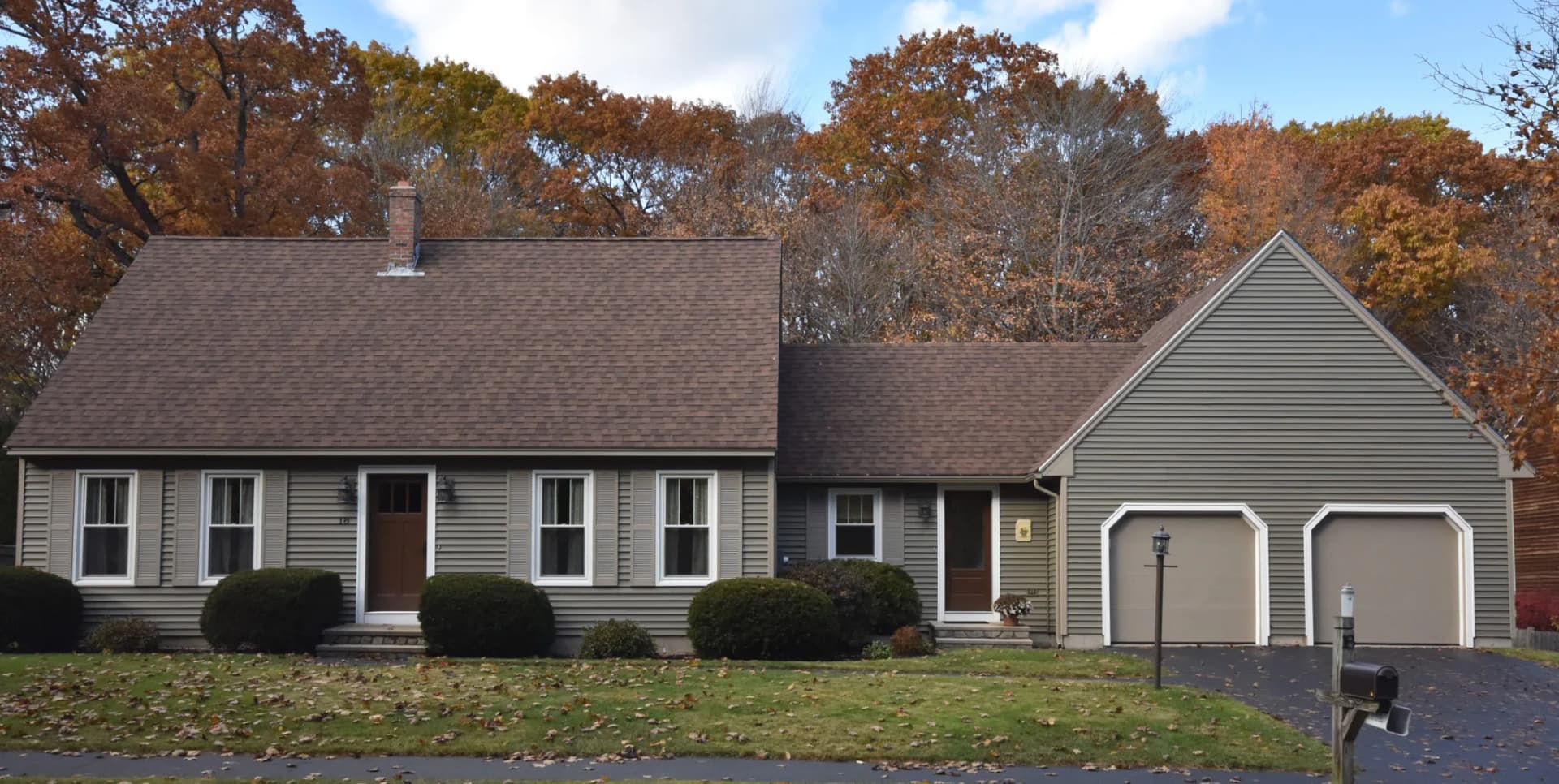
A Cape-style home along Lawrence Road in Gray.
Street View © Google
What vinyl siding installation involves
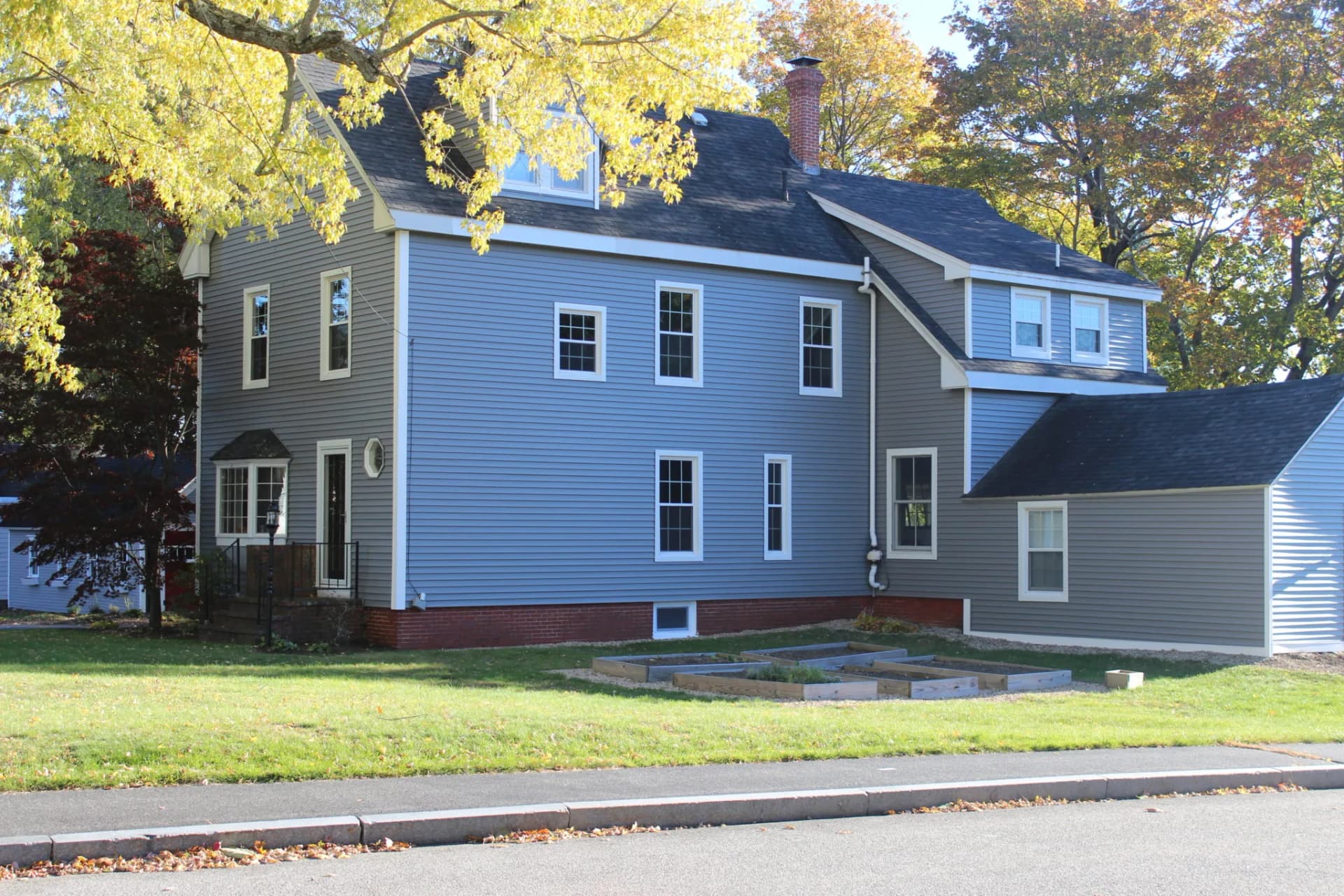
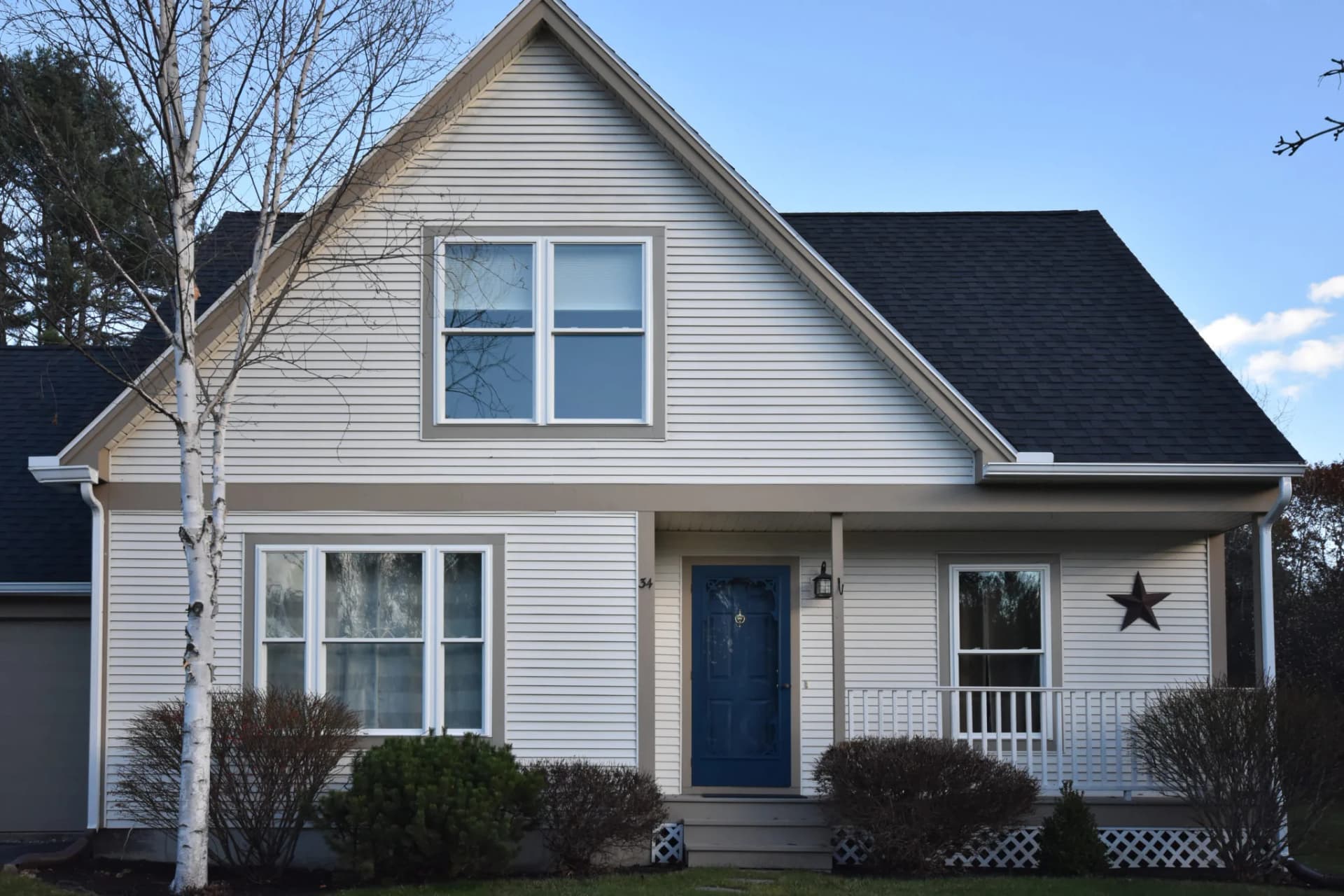
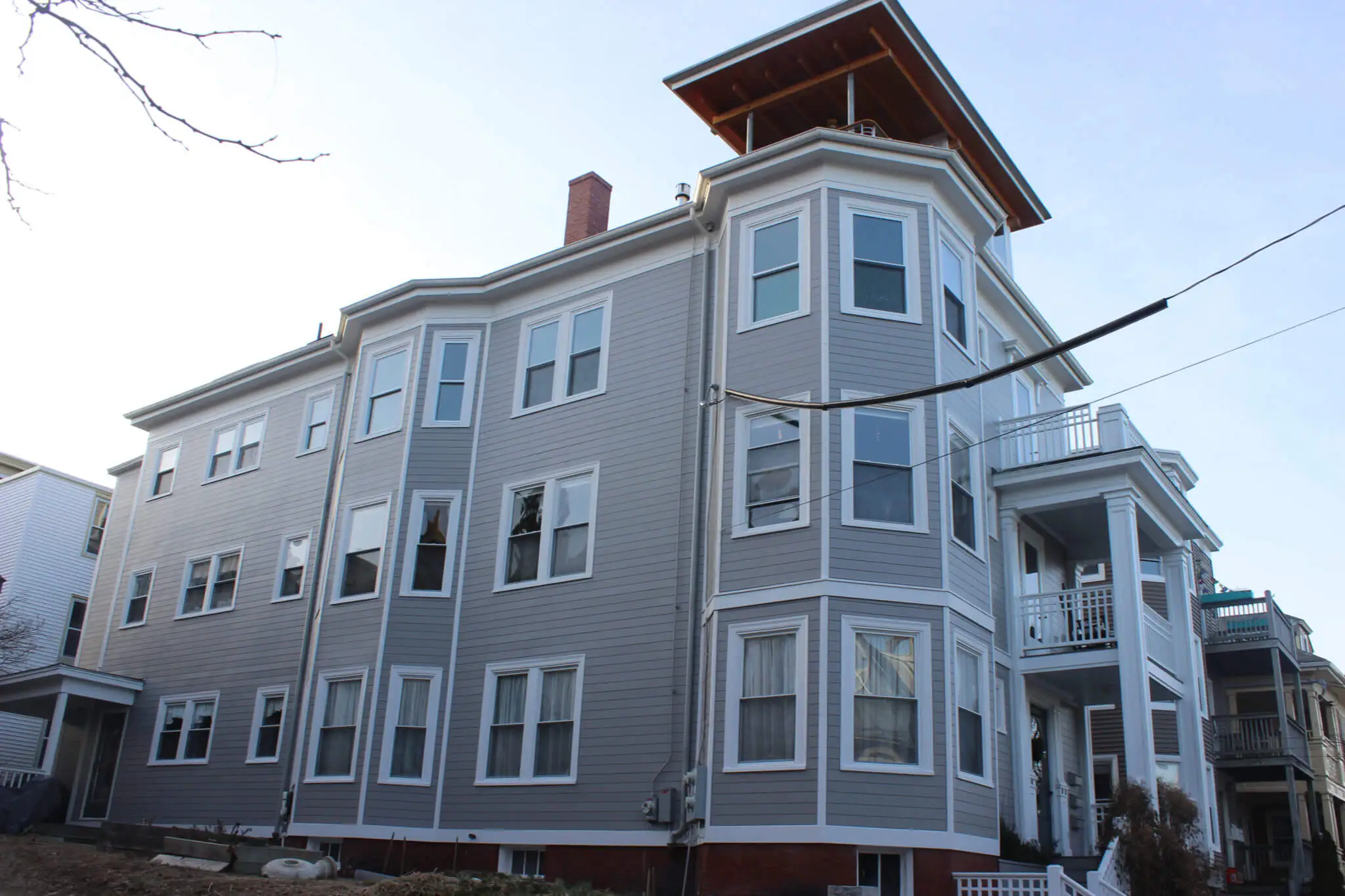
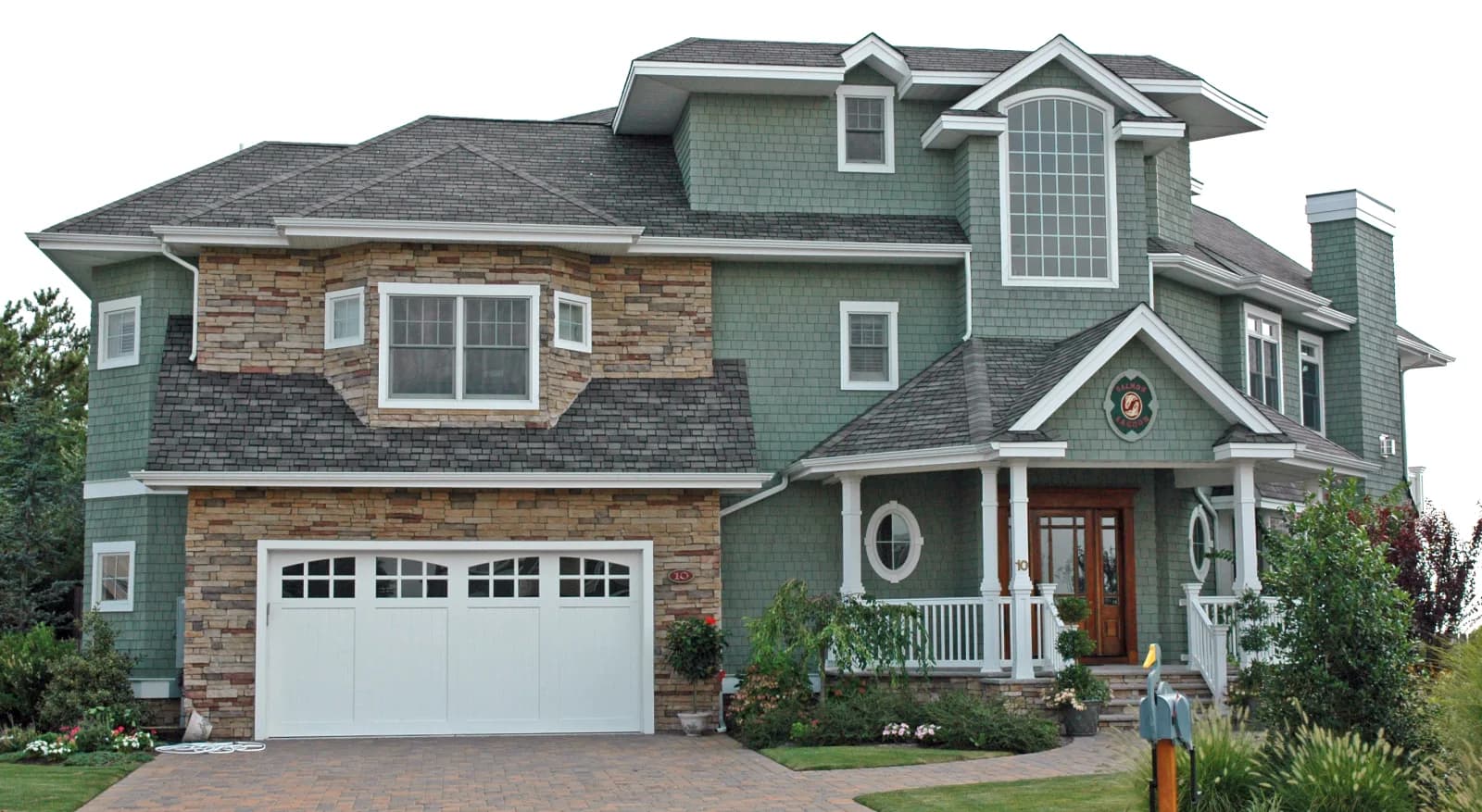
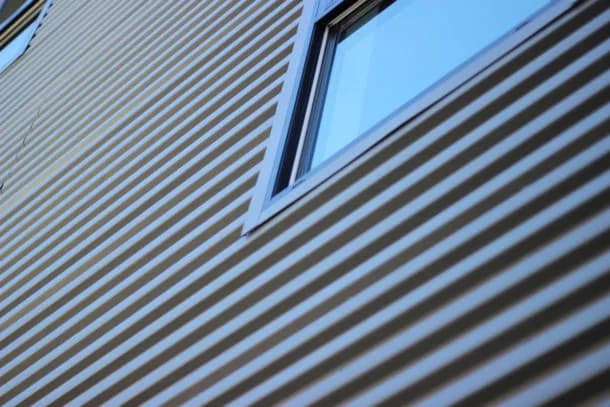
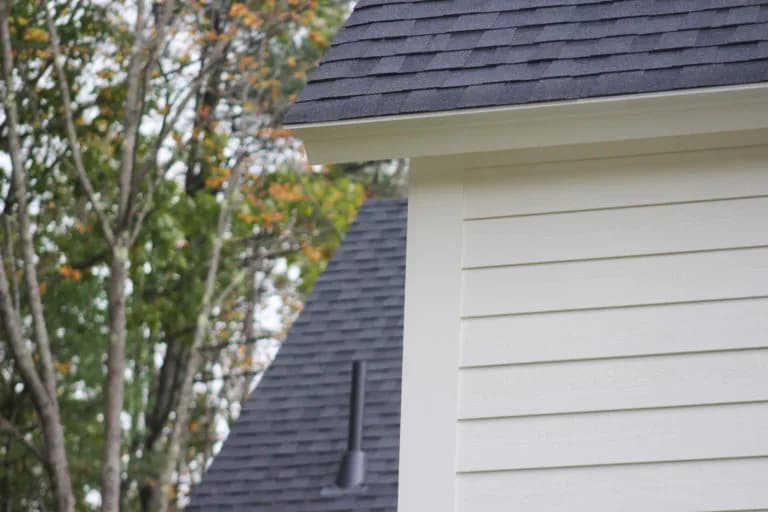
Premium vinyl siding is the fastest way to a tight, low-maintenance exterior. Today's thicker panels come in clapboard, Dutch lap, board-and-batten and shake profiles and in colors that were not possible a generation ago. The projects shown on this site include CertainTeed Monogram vinyl siding, used to replace rotting wood clapboards and 1970s metal siding on Portland homes. Vinyl moves with temperature, so how it is hung matters as much as which panel you pick.
- Old siding is removed and the wall is checked for soft sheathing and past leaks.
- House wrap and flashing go on first, with extra care around windows, doors and roof-to-wall joints.
- Starter strip, J-channel and corner posts are set straight and level so every course lines up.
- Panels are nailed in the center of the slots and left loose enough to expand and contract through a Maine winter and summer.
- Trim is wrapped or replaced with low-maintenance millwork so there is nothing left to paint.
Signs it is time
- You are tired of repainting wood clapboards every few years
- The existing vinyl is faded, cracked, or loose after wind storms
- The budget needs a whole-house result rather than one premium wall
- You want an insulated panel to take the edge off drafty walls
What affects the price of vinyl siding installation
- Panel grade and thickness, and whether it is insulated
- Profile: clapboard, Dutch lap, board-and-batten or shake
- Amount of trim, soffit and fascia wrapped or replaced
- Tear-off and sheathing repairs
- House height and access
Every job is priced from a free on-site visit. Typical ranges for the trade are on our siding page, and the details of this service are on the vinyl siding installation overview.
For a deeper walkthrough of materials, code details and photos, see our full Vinyl Siding Installation: Built to Move With a Maine Winter guide.
More in Gray and nearby
Back to the Gray exterior services overview, or see every town on our service areas page.
Other exterior work in Gray
- James Hardie Fiber Cement Siding in Gray
- Cedar Siding & Shingles in Gray
- Window Replacement in Gray
- Bay & Picture Windows in Gray
- Roof Replacement in Gray
- Asphalt Shingle Roofing in Gray
- Metal Roofing in Gray
- Deck Building in Gray
- Composite & PVC Decks in Gray
- Deck Replacement in Gray
- Siding Replacement in Gray
Get a free vinyl siding installation estimate in Gray
Tell us about the house and what you want changed. One of the owners will call to set up a visit, measure, and write a fixed-price proposal. No pressure, no obligation.
Need it today?Call Mike (207) 408-5388
or Bob at (207) 252-0759
More ways we can help
Google reviewsCompany
6Learn more about how we work, starting with…
Services
16We also cover related services across Greater Portland, such as…
Service Areas
38You will find our crews working in towns including…