
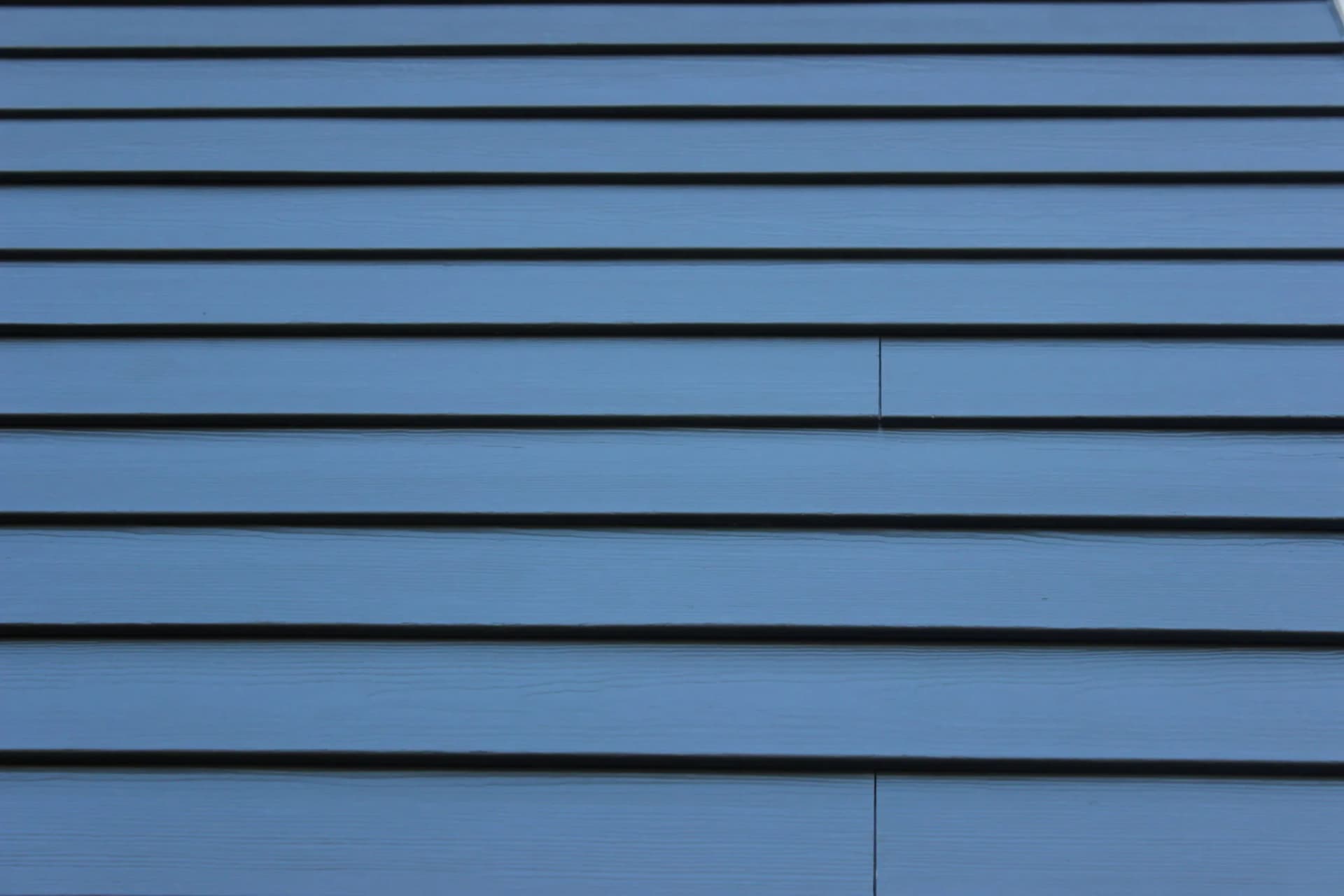
James Hardie Fiber Cement Siding in Gray, Maine
James Hardie Fiber Cement Siding for Gray homes from a family-owned Portland company. An owner measures on site and writes a fixed-price proposal.
- 5.0 · 8 Google reviews
- Fully licensed & insured
- Free estimates
- 20+ years combined experience
James Hardie Fiber Cement Siding for Gray homes
James Hardie fiber cement handles what Gray winters do most: freeze, thaw and freeze again. The board is dimensionally stable, so it does not swell like hardboard or move like vinyl through a season that swings from below zero to a January thaw, and it will not rot where snow sits against the bottom course for weeks. Because it does not burn, it is also a sensible choice on wooded house lots and lake properties where the back wall faces pine and oak.
Fiber cement earns its keep on the older houses too. A smooth clapboard profile with a narrow reveal, painted a traditional color, reads like painted wood on a Cape or a connected farmhouse near the village, without the scraping cycle wood demands. Hardie's factory-applied finish is an option for owners who would rather not repaint at all. Installation matters more than with vinyl: butt joints need flashing, clearances above roofs and decks have to be kept, and cut edges should be sealed, especially on walls facing open fields that take wind-driven snow. Done that way, it is a siding you can largely stop thinking about.
Gray housing at a glance
The Census Bureau's American Community Survey estimates about 4,440 housing units in Gray, with a median year built of 1983. Roughly 12 percent predate 1940 and about 18 percent predate 1960, so most of the town is younger than its village center suggests. Two building waves stand out in the data: about 29 percent of homes went up between 1960 and 1979, and about 27 percent in 2000 or later, the years of subdivision growth off the state routes. Close to 78 percent of units are single-family detached houses, and about 82 percent of occupied homes are owner-occupied. The survey also counts roughly 630 seasonal units, around one in seven, which fits the camps and cottages along the town's lake frontage. The older stock runs to Capes and farmhouses, such as the Freeman Farm's circa-1812 Cape with its long ell and 1830s bank barn.
Weather and exposure in Gray
Gray is inland, with a town center about 256 feet above sea level, and it gets noticeably more snow than the coast. The town is home to the National Weather Service office that forecasts for western Maine and New Hampshire, and NOAA's 1991-2020 normals for the Gray station list about 84 inches of snow a year, with December, January and February each averaging roughly 18 to 21 inches. January averages about 22 degrees with a typical low near 14, and the coldest night of an average winter falls below zero. Salt air is not a factor here. The loads on a Gray exterior are freeze-thaw cycling, deep snow sitting on roofs and decks for weeks, ice dams at cold eaves, and wind across open fields and lake coves.
Permits and design review in Gray
Building permits in Gray go through the Community Development Department at the Henry Pennell Municipal Complex, 24 Main Street. The town's residential permit application lists decks as a structure type, asks for a plot plan and building plans, and asks for a Dig Safe number from calling 811 before digging. In the Village Center and Village Center Proper zoning districts, the design standards in Section 402.8.3 of the zoning ordinance, amended in 2021, require a Design Standard Certificate before a building permit is issued for development. Land within 250 feet of a great pond falls under Maine's mandatory shoreland zoning. Confirm what applies with the code office before work starts.
What James Hardie fiber cement siding involves
Fiber cement is a mix of cement, sand and cellulose fiber pressed into planks, shingles and panels. It does not rot, insects do not eat it, it will not burn, and factory-applied finishes hold color far longer than site-painted wood. It is heavier and more exacting to install than vinyl, which is exactly why installation quality shows. The Back Cove home on this site was re-sided with a complete James Hardie package of wood-grain plank.
- Walls are stripped, repaired and wrapped, with flashing at every opening and roof-to-wall joint.
- Boards are cut with dust-controlled tools and fastened to the manufacturer's nailing schedule.
- Required clearances are held above roofs, decks and grade so the ends never sit in water or snow.
- Butt joints get flashing behind them, and cut ends are sealed or primed as the manufacturer specifies.
- Trim, caulk lines and touch-up are finished so the pre-finished color stays uniform.
Signs it is time
- You want the look of painted clapboard without the paint cycle
- Wood siding keeps rotting at the bottom courses and around trim
- The house sits in wind and salt exposure that punishes other materials
- You want a non-combustible exterior
What affects the price of James Hardie fiber cement siding
- Product line and profile: lap plank, shingle, panel or board-and-batten
- Pre-finished color versus site painting
- Trim package and detailing
- Tear-off, sheathing repair and house height
- Number of windows, doors and corners to flash and trim
Every job is priced from a free on-site visit. Typical ranges for the trade are on our siding page, and the details of this service are on the James Hardie fiber cement siding overview.
More in Gray and nearby
Back to the Gray exterior services overview, or see every town on our Cumberland County service areas page.
Other exterior work in Gray
Fiber Cement Siding in nearby towns
Get a free James Hardie fiber cement siding estimate in Gray
Tell us about the house and what you want changed. One of the owners will call to set up a visit, measure, and write a fixed-price proposal. No pressure, no obligation.
Need it today?Call Mike (207) 408-5388
or Bob at (207) 252-0759