


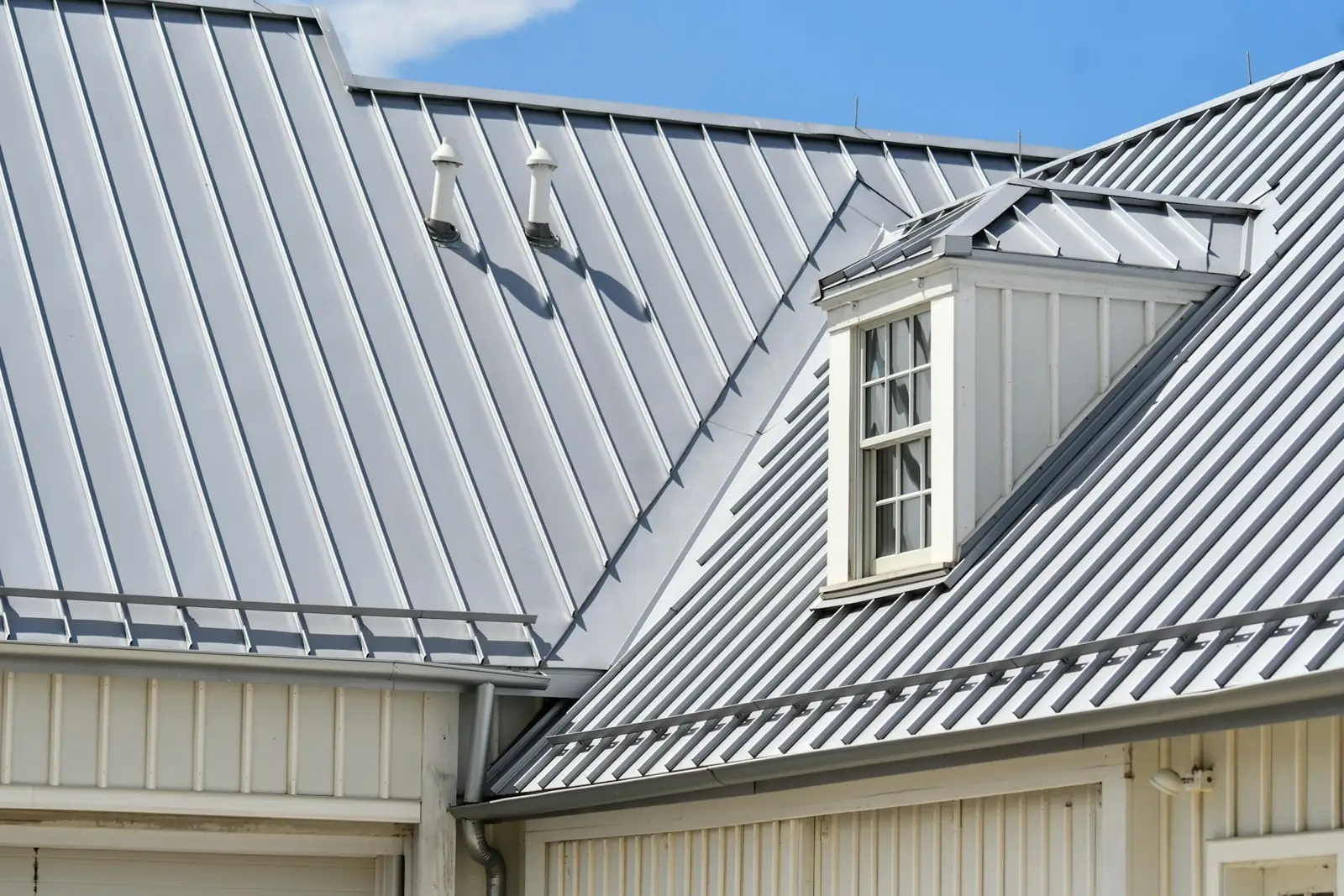
Metal Roofing in Long Island, Maine
Metal Roofing for Long Island homes from a family-owned Portland company. An owner measures on site and writes a fixed-price proposal.
- Google reviews
- Fully licensed & insured
- Free estimates
- 20+ years combined experience
Metal Roofing for Long Island homes
Standing seam metal is attractive on an island where roofs have to go years without attention. Concealed fasteners have nothing to back out in the wind, panels shed snow instead of holding it, and a well-installed metal roof can outlast two shingle roofs. Metal shingles offer a similar lifespan with a texture that suits older houses better, and both work well on sheds and outbuildings.
Salt air makes finish selection important. Coated steel with a marine-grade finish or aluminum panels resist corrosion near the water, and mixing incompatible metals in flashing or fasteners should be avoided. Metal roofs release snow suddenly, so snow guards belong above entries, walkways and decks. Long panels also make delivery a factor: roll-formed lengths for a full roof cannot travel on the passenger ferry, and the Casco Bay Lines car ferry limits vehicles to 5,500 pounds and 6 feet 6 inches in height, so metal typically goes over on the private barge from Portland. Planning panel lengths around that trip is part of the job, and so is ordering trim and flashing in the same finish so nothing has to follow on a second crossing.
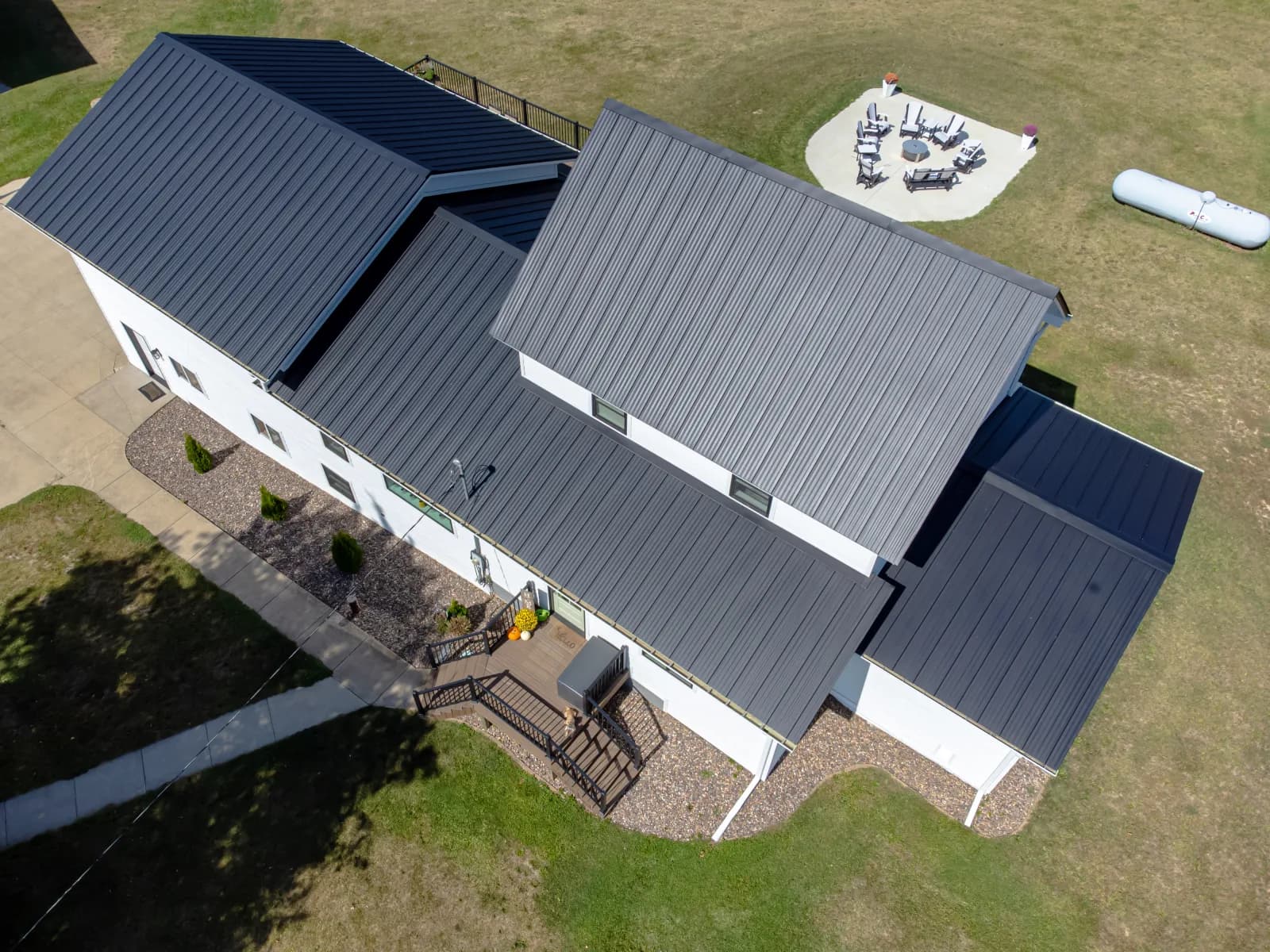
How a Standing-Seam Metal Roof Works
- Panels — long, factory-formed sheets running the full length of the slope
- Standing seam — the raised, interlocking joint between panels that keeps water from finding a way in
- Snow guard — holds a slab of snow on the roof instead of letting it release over an entry or walkway
- Eave edge — meltwater drains off cleanly here rather than backing up under the panels
- Held snow — releases gradually instead of sliding off in one sheet

Long Island housing at a glance
Census estimates count about 423 housing units, and the median year built is 1938. About 66 percent of units predate 1940, and about 68 percent predate 1960. Almost nothing was built between 1960 and 1979, only around 3 percent, and about 15 percent went up in 2000 or later. Roughly 95 percent of units are single-family detached houses, and about 88 percent of year-round households own their home. Seasonal use dominates: about 307 units, nearly three-quarters of the stock, are held for seasonal or occasional use. The town's comprehensive plan counts about 50 homes converted from year-round to summer-only use over a recent 25-year stretch and describes many summer houses as unheated or poorly heated. Many trace back to the summer-cottage boom of the 1890s and 1900s.
Weather and exposure in Long Island
Long Island lies about six miles out from Portland along Hussey Sound, a main passage into the inner bay. Wind reaches it from every direction, and the town's comprehensive plan notes that the first settlers built on the south side of the island to shelter from northerly winter winds. Portland International Jetport, the nearest long-term station, averages about 69 inches of snow a season under the 1991 to 2020 normals. A January 2022 winter storm badly damaged the wave break, floats and pilings at Mariner's Wharf, and the plan lists sea level rise, stronger storms and upkeep of the island's bluffs among the town's concerns.
Permits and design review in Long Island
The Code Enforcement Officer meets by appointment through the Town Clerk. The town's building permit application covers new structures, additions, alterations, replacements and repairs, and it must include a scaled site plan and proof that a construction debris container has been delivered to be barged off the island. Every job gets at least three inspections: foundation, framing and final. Height is capped at 35 feet, and several zones limit structures to 15 percent of the lot. In the shoreland zone, new structures sit at least 75 feet from the upland edge of a coastal wetland, and the permit form warns that shoreland work may also need a Maine DEP permit.
Long Island at a Glance
What the housing stock and local code enforcement mean for a siding, window, roofing or deck job here.
249
Population (ACS estimate)
Median year built: 1938
Original wood clapboard or shingle siding, wood-sash windows and multi-layered roofs are common here.
State Building & Energy Code (MUBEC)
Local option — population under 4,000
EPA Lead-Safe Rule (pre-1978 homes)
Applies to at least 68% of homes here
Shoreland Zoning
Applies, plus island delivery logistics
Permits
Town of Long Island Code Enforcement Officer (CEO business handled by appointment; contact via Town Clerk)
Codes & Permits for Metal Roofing in Long Island
In Long Island, exterior-work permits come from the Town of Long Island Code Enforcement Officer (CEO business handled by appointment; contact via Town Clerk). Long Island sits at or under the 4,000-resident line where MUBEC enforcement is a local option rather than a state mandate.
- Maine's adopted 2021 IRC (R905.10) requires metal roof panels to comply with Table R905.10.3(1)/(2) material standards (naturally corrosion-resistant materials or coatings), sets minimum slopes (3:12 for lapped non-soldered seams without sealant, 0.5:12 with sealant, 0.25:12 for standing-seam systems), and requires underlayment per R905.1.1 and manufacturer-specified corrosion-resistant fasteners. up.codes
- Snow-retention systems (snow guards/fences) on metal roofs are common practice in Maine to prevent sudden snow-slide off a slick metal roof onto walkways, decks, or neighboring property below — this is typically driven by local practice, insurer expectations, or a specific municipal/site condition rather than a numbered MUBEC/IRC mandate, so it should be presented to clients as a strongly recommended add-on rather than a code requirement, absent a specific local ordinance found stating otherwise. up.codes
- Maine's Shoreland Zoning Act creates a regulated shoreland zone extending 250 feet (horizontal distance) from the normal high-water line of any great pond, river, or coastal wetland, and 75 feet from certain streams; the Act's stated purposes include protecting buildings and land from flooding/erosion and controlling water pollution, and it governs deck and other structure setbacks and the expansion of nonconforming structures within that zone (specific setback/expansion rules are set at the municipal-ordinance level under the state's model guidelines). maine.gov
- By Maine law (25 M.R.S. §2373), 'the code must be enforced in a municipality that has more than 4,000 residents' (per the most recent federal census); municipalities at or below that population are not required to adopt/enforce MUBEC but may opt in locally, per the state's own program page: 'All municipalities with a population greater than 4,000 are required, by statute, to enforce the MUBEC. Municipalities with a population under 4,000 may choose to enforce the MUBEC.' mainelegislature.org
How Cardinal Exteriors Handles Metal Roofing in Long Island
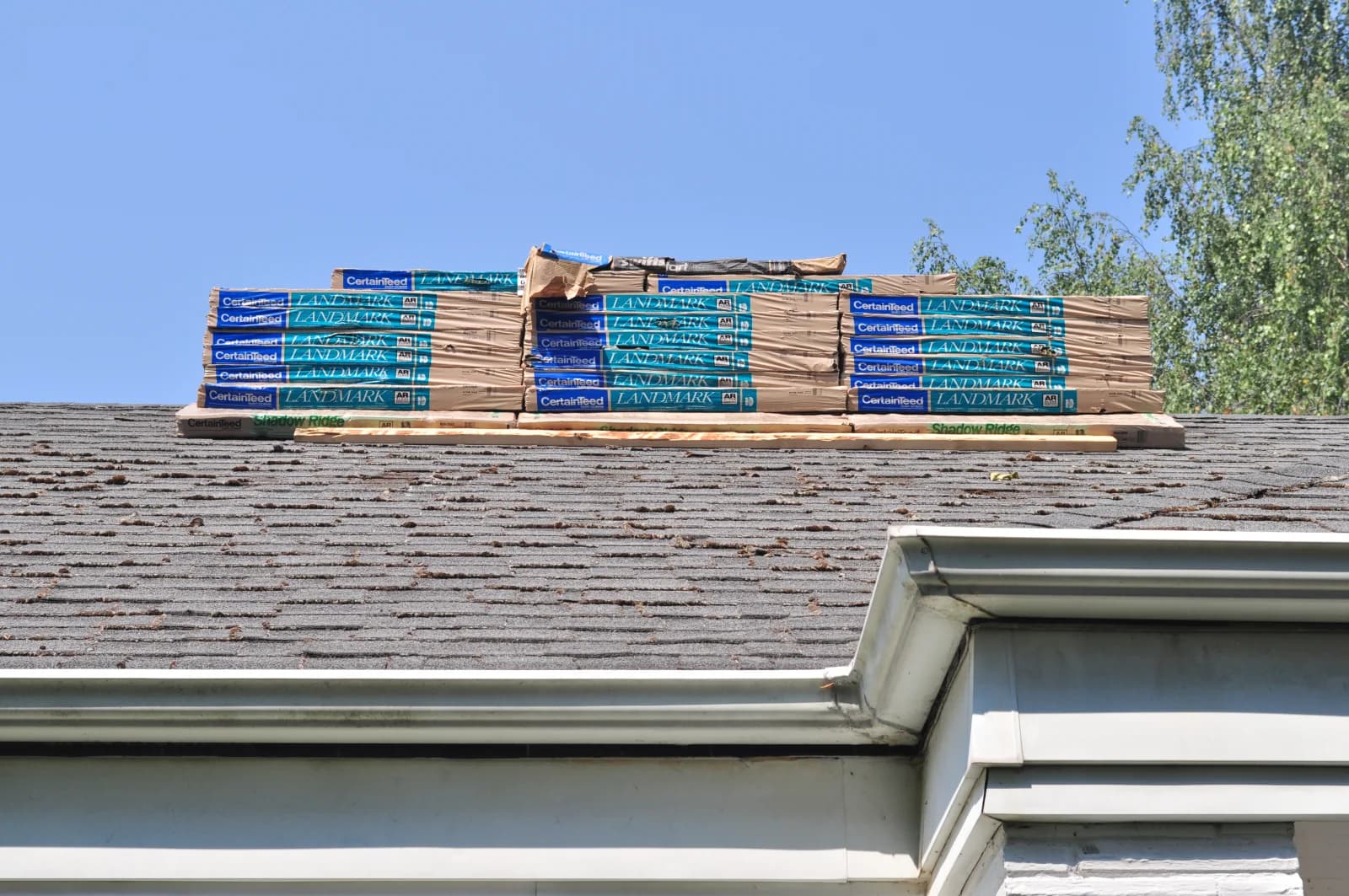
- Before quoting a metal roofing job in Long Island, we check how many roofing layers are already on the house — code allows a recover over one layer, never two.
- We install ice barrier membrane from the eave at least 24 inches inside the wall line on every Long Island roof, per Maine's adopted ice-damming rule.
- Materials and debris containers travel by private barge, plus the Casco Bay Lines passenger ferry from Portland. We build the schedule around that before ordering materials.
- With 249 residents, Long Island falls below the threshold for mandatory statewide code enforcement, but that doesn't change the permit and inspection Cardinal builds to on every job here.
- We file for metal roofing permits at the Town of Long Island Code Enforcement Officer (CEO business handled by appointment; contact via Town Clerk) before work starts, not after.
The Casco Bay Lines ferry terminal on Commercial Street in Portland — the mainland gateway used to reach Long Island, which has no Google Street View car coverage of its own.
Street View © Google
What metal roofing involves
Metal roofs shed snow, shrug off wind, and outlast most other roofing. Standing seam panels run from eave to ridge with raised, concealed-fastener seams; metal shingle systems give a more traditional look. The site lists metal roofing systems among its roofing options. Because snow slides off metal in sheets, planning where it lands, over doors, walks, decks and lower roofs, is part of the design.
- Tear-off to the deck and repair, or preparation of the existing deck as the system requires.
- High-temperature underlayment and ice and water protection where needed.
- Panels or metal shingles installed with clips or fasteners that allow thermal movement.
- Trim, ridge, eave and valley flashings formed and installed.
- Snow guards placed where sliding snow would land on entries, decks or lower roofs.
Signs it is time
- You want the last roof you put on the house
- Heavy snow loads and ice dams on a low-pitch or shaded roof
- A camp, barn or outbuilding where low upkeep matters most
- Repeated shingle blow-offs in wind
What affects the price of metal roofing
- Standing seam versus metal shingle, and gauge and finish
- Roof area, pitch and number of penetrations
- Tear-off and deck preparation
- Snow guard layout
- Trim, valley and flashing detail
Every job is priced from a free on-site visit. Typical ranges for the trade are on our roofing page, and the details of this service are on the metal roofing overview.
For a deeper walkthrough of materials, code details and photos, see our full Metal Roofing: Standing Seam, Snow Shedding, and Panel Lifespan in Maine guide.
More in Long Island and nearby
Back to the Long Island exterior services overview, or see every town on our service areas page.
Other exterior work in Long Island
- Deck Building in Long Island
- Composite & PVC Decks in Long Island
- Deck Replacement in Long Island
- Siding Replacement in Long Island
- Vinyl Siding Installation in Long Island
- James Hardie Fiber Cement Siding in Long Island
- Cedar Siding & Shingles in Long Island
- Window Replacement in Long Island
- Bay & Picture Windows in Long Island
- Roof Replacement in Long Island
- Asphalt Shingle Roofing in Long Island
Get a free metal roofing estimate in Long Island
Tell us about the house and what you want changed. One of the owners will call to set up a visit, measure, and write a fixed-price proposal. No pressure, no obligation.
Need it today?Call Mike (207) 408-5388
or Bob at (207) 252-0759
More ways we can help
Google reviewsServices
16You can also count on us for…
Service Areas
38Neighbors across the region trust us, including in…