

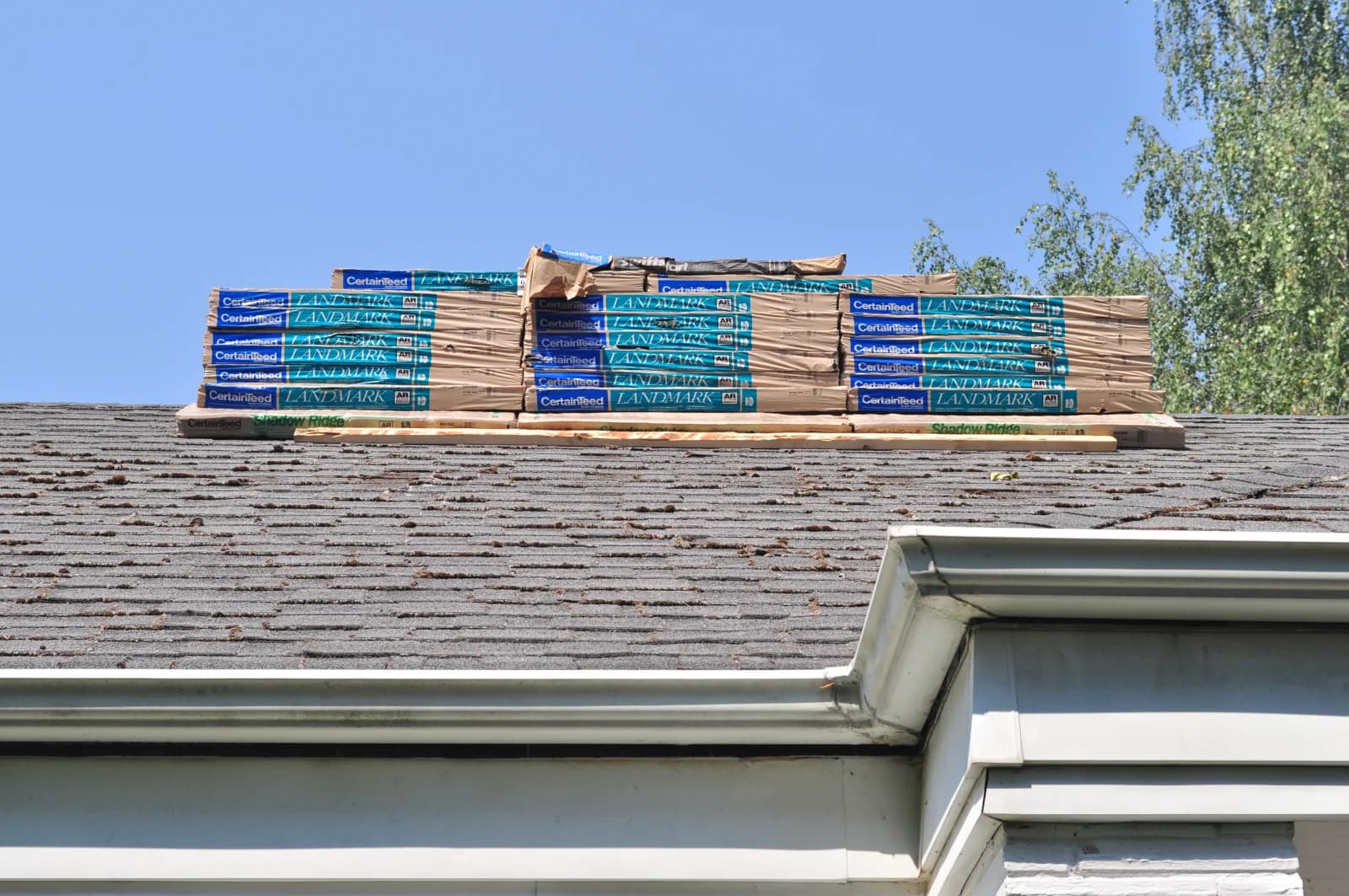
Asphalt Shingle Roofing in Yarmouth, Maine
Asphalt Shingle Roofing for Yarmouth homes from a family-owned Portland company. An owner measures on site and writes a fixed-price proposal.
- Google reviews
- Fully licensed & insured
- Free estimates
- 20+ years combined experience
Asphalt Shingle Roofing for Yarmouth homes
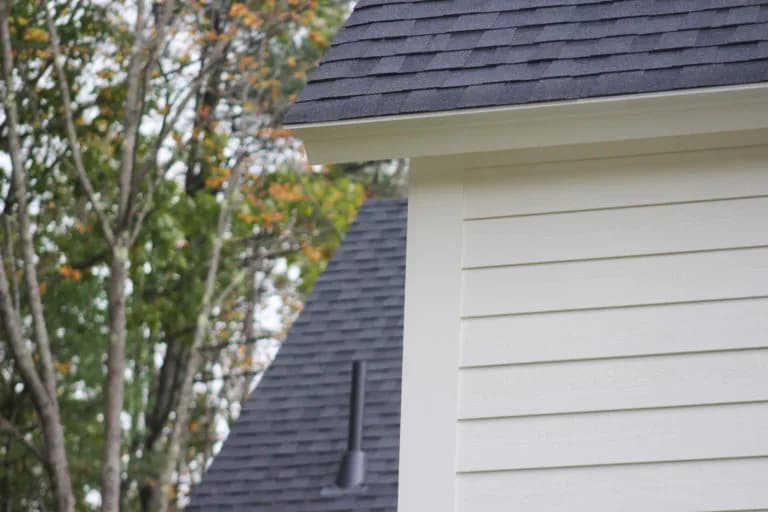
Architectural asphalt shingles cover most of the capes, colonials and split-levels in the subdivisions off North Road, East Elm Street, Bayview Street and Granite Street, and they remain the cost-effective choice for re-roofing those houses. Laminated shingles are heavier than the three-tab roofs many of them started with, lie flatter in wind and hide the uneven decking common on 50-year-old roofs.
Installation details are where Yarmouth's conditions matter. The town's building code marks ice shield underlayment as required, so self-adhered membrane goes on at the eaves and in valleys before any shingle is laid. With a 115 mph design wind speed on the books, shingles should be nailed to the manufacturer's high-wind pattern and sealed at rakes and ridges, especially on houses facing the open bay. Ridge vents paired with soffit intake keep the underside of the deck cold, which cuts the ice damming that shortens shingle life. For a village house in a historic district, a dark, low-profile architectural shingle usually reads closest to the original roofline, and the Historic Preservation Committee can advise before you choose a color.
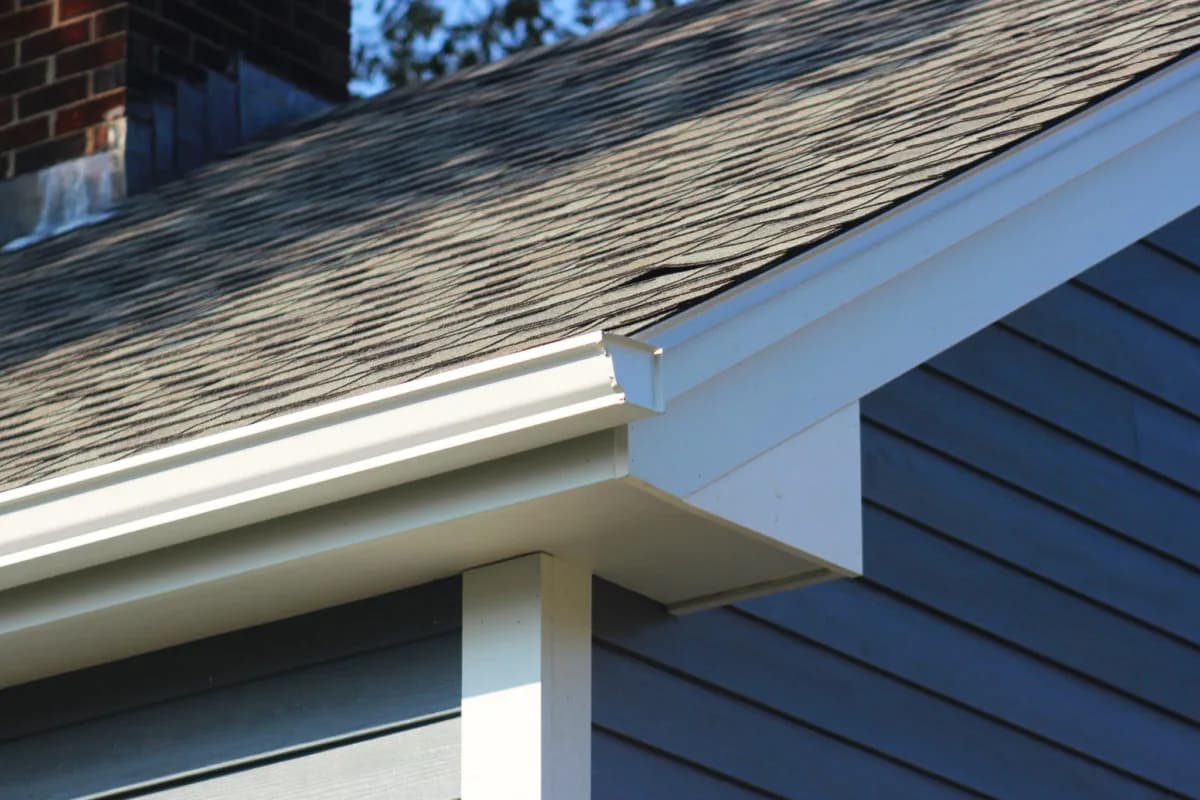
How an Asphalt Shingle Roof System Works
- Roof deck — plywood or OSB sheathing the whole system is fastened to
- Ice-and-water shield — a self-sealing membrane at the eave, the spot most likely to see an ice dam
- Synthetic underlayment — a water-resistant layer under the shingles across the rest of the field
- Shingles — the visible, weather-facing layer, lapped to shed water down the slope
- Ridge vent — exhausts warm, moist attic air while a soffit vent below draws in fresh air
Yarmouth housing at a glance
The Census Bureau's 2020-2024 American Community Survey estimates about 3,600 homes in Yarmouth, with a median year built of 1973. Roughly 17 percent predate 1940 and about 27 percent predate 1960, while the biggest share, about 39 percent, went up between 1960 and 1979; only about 11 percent date from 2000 or later. About 80 percent of occupied homes are owner-occupied and about 76 percent are single-family detached, with roughly 120 units held for seasonal use. The town's 2024 comprehensive plan describes the village core as mostly mid-19th-century wood-frame single-family homes, Greek Revival first and Italianate second. After the 1955 causeway to Cousins and Littlejohn islands and the 1961 arrival of I-295, conventional subdivisions spread along North Road, East Elm Street, Bayview Street, Princes Point Road and Granite Street, with condominium clusters following in the 1980s.
Weather and exposure in Yarmouth
Yarmouth's building code writes its design conditions straight into the ordinance: a ground snow load of 60 pounds per square foot, a design wind speed of 115 mph, weathering rated severe, a 48-inch frost line, a winter design temperature of minus 5 degrees and ice shield underlayment required. The town fronts Casco Bay along White's Cove and Broad Cove, so houses on Cousins Island, Littlejohn Island, Princes Point and the points along the shore take salt spray and open-water wind during nor'easters. Portland, the nearest long-term weather record, averages about 69 inches of snow a year. The comprehensive plan flags sea level rise along the shoreline, including stretches of the Talbot Road connector on the islands, and the town publishes flood and coastal bluff maps.
Permits and design review in Yarmouth
Building permits go through the Yarmouth Code Enforcement Office at Town Hall, 200 Main Street. Chapter 301 requires a permit before any building or structure is erected, remodeled, demolished or relocated, and work started without one pays double the fee. The town notes that applications take about 30 days on average to review, and building permits must be mailed or dropped off rather than emailed. Inside the Upper Village, Lower Village and Royal River Manufacturing historic districts, all exterior changes go to the Historic Preservation Committee, whose review is mandatory but advisory. Shoreland permits apply near Casco Bay and the Royal River.
Yarmouth at a Glance
What the housing stock and local code enforcement mean for a siding, window, roofing or deck job here.
8,990
Population (ACS estimate)
Median year built: 1973
A mix of eras — original materials on some houses, postwar replacements on others.
State Building & Energy Code (MUBEC)
Enforced — population over 4,000
EPA Lead-Safe Rule (pre-1978 homes)
Applies to at least 27% of homes here
Shoreland Zoning
Applies near the water
Permits
Yarmouth Planning and Development / Building Permits & Codes
Codes & Permits for Asphalt Shingle Roofing in Yarmouth
In Yarmouth, exterior-work permits come from the Yarmouth Planning and Development / Building Permits & Codes (200 Main Street, Yarmouth, ME 04096, 207-846-2401). With 8,990 residents, over 4,000, Yarmouth is required to enforce the Maine Uniform Building and Energy Code (MUBEC).
- Maine's adopted 2021 IRC ice-barrier rule (R905.1.2) specifically names asphalt shingles among the roof coverings requiring an ice barrier extending from the lowest roof edge to at least 24 inches inside the exterior wall line (36 inches along the slope on roofs 8:12 or steeper), using two cemented underlayment layers or a self-adhering polymer-modified bitumen sheet. up.codes
- Reroofing over existing asphalt shingles in Maine is capped at one existing layer before a full tear-off is required, per R908.3. up.codes
- Maine's Shoreland Zoning Act creates a regulated shoreland zone extending 250 feet (horizontal distance) from the normal high-water line of any great pond, river, or coastal wetland, and 75 feet from certain streams; the Act's stated purposes include protecting buildings and land from flooding/erosion and controlling water pollution, and it governs deck and other structure setbacks and the expansion of nonconforming structures within that zone (specific setback/expansion rules are set at the municipal-ordinance level under the state's model guidelines). maine.gov
- By Maine law (25 M.R.S. §2373), 'the code must be enforced in a municipality that has more than 4,000 residents' (per the most recent federal census); municipalities at or below that population are not required to adopt/enforce MUBEC but may opt in locally, per the state's own program page: 'All municipalities with a population greater than 4,000 are required, by statute, to enforce the MUBEC. Municipalities with a population under 4,000 may choose to enforce the MUBEC.' mainelegislature.org
How Cardinal Exteriors Handles Asphalt Shingle Roofing in Yarmouth
- Before quoting an architectural asphalt shingle roofing job in Yarmouth, we check how many roofing layers are already on the house — code allows a recover over one layer, never two.
- Maine's ice barrier rule (R905.1.2) applies in areas with a history of ice damming, which covers Yarmouth — the membrane runs from the eave to at least 24 inches inside the exterior wall line on every roof we do here.
- Because Yarmouth has coastal, lake or river frontage, Maine's Mandatory Shoreland Zoning Act may apply to work close to the water, which can affect setbacks on a rebuild.
- Yarmouth's population (8,990) puts it above the threshold where Maine law requires full MUBEC enforcement, so this job is inspected against that code as well as the local permit.
- Anything that needs a permit for architectural asphalt shingle roofing goes through the Yarmouth Planning and Development / Building Permits & Codes.
A home along Oakwood Drive in a residential neighborhood of Yarmouth.
Street View © Google
What architectural asphalt shingle roofing involves
Architectural (dimensional) asphalt shingles are the most common roof in Maine for good reason: they are affordable, they come in many colors and textures, and a good system handles snow, ice and wind well. Several projects on this site used CertainTeed Landmark shingles. What separates a long-lived shingle roof from a short-lived one is mostly underneath: ice and water protection at the eaves, correct nailing, and balanced ventilation.
- Tear-off to the deck and sheathing repair where needed.
- Ice and water shield at eaves, valleys and around penetrations; underlayment over the rest.
- Starter strip and drip edge at the edges, then shingles nailed in the manufacturer's nail zone.
- Step flashing at walls, new pipe boots, and chimney flashing as needed.
- Hip and ridge caps over a ridge vent, balanced with intake at the soffits.
Signs it is time
- Granules washing into the gutters and bald patches on the shingles
- Shingles that curl, cup, or lift in wind
- Leaks around chimneys, vents or skylights
- Moss or dark streaking on shaded slopes
What affects the price of architectural asphalt shingle roofing
- Roof area and pitch
- Shingle line and color
- Layers to tear off and deck repairs
- Flashing and ventilation work
- Number of valleys, dormers and penetrations
Every job is priced from a free on-site visit. Typical ranges for the trade are on our roofing page, and the details of this service are on the architectural asphalt shingle roofing overview.
For a deeper walkthrough of materials, code details and photos, see our full Asphalt Shingle Roofing: Underlayment, Shingle Types, and What Voids a Warranty guide.
Cardinal Exteriors projects in Yarmouth
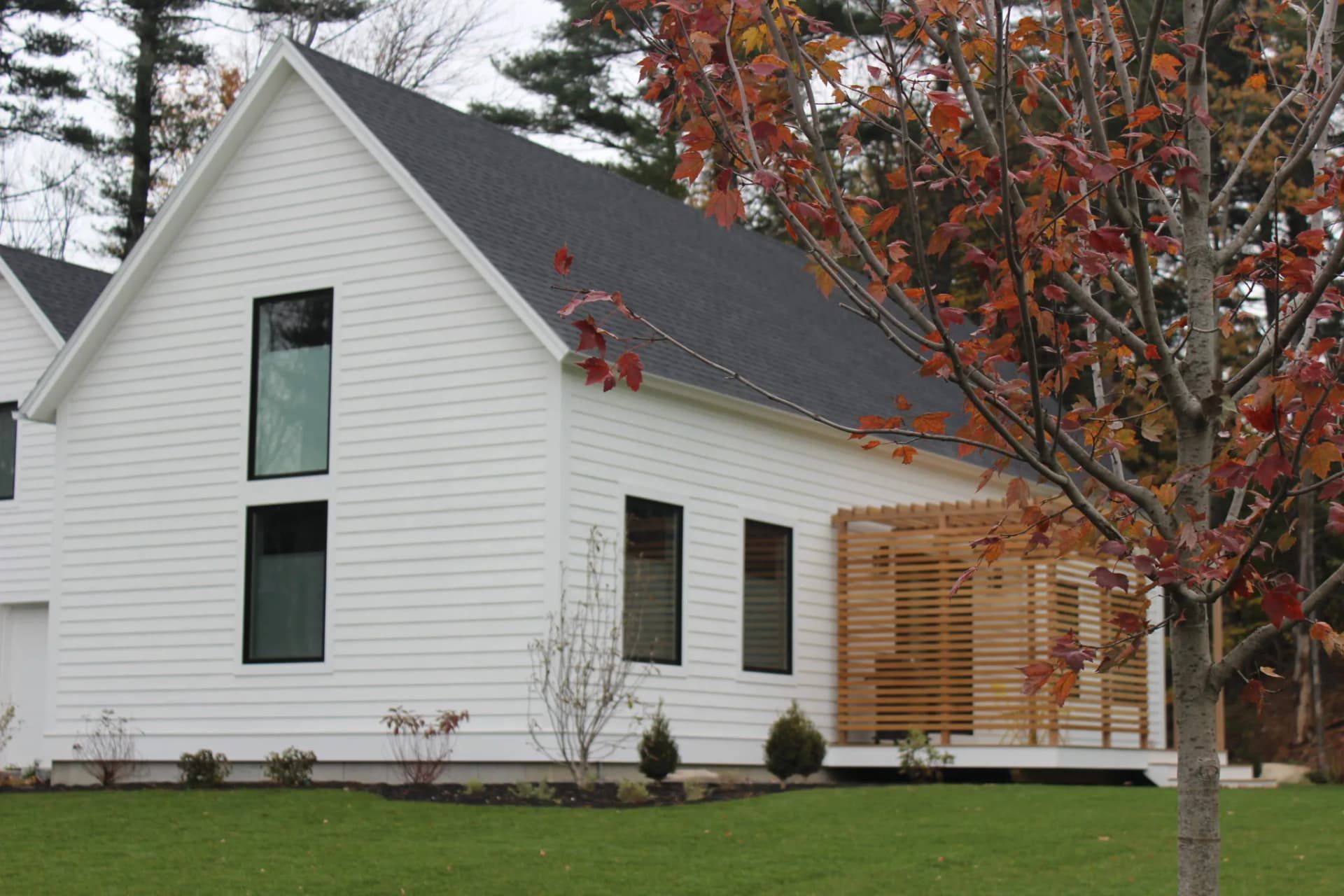
More in Yarmouth and nearby
Back to the Yarmouth exterior services overview, or see every town on our service areas page.
Other exterior work in Yarmouth
- Metal Roofing in Yarmouth
- Deck Building in Yarmouth
- Composite & PVC Decks in Yarmouth
- Deck Replacement in Yarmouth
- Siding Replacement in Yarmouth
- Vinyl Siding Installation in Yarmouth
- James Hardie Fiber Cement Siding in Yarmouth
- Cedar Siding & Shingles in Yarmouth
- Window Replacement in Yarmouth
- Bay & Picture Windows in Yarmouth
- Roof Replacement in Yarmouth
Get a free architectural asphalt shingle roofing estimate in Yarmouth
Tell us about the house and what you want changed. One of the owners will call to set up a visit, measure, and write a fixed-price proposal. No pressure, no obligation.
Need it today?Call Mike (207) 408-5388
or Bob at (207) 252-0759
More ways we can help
Google reviewsService Areas
38We proudly serve 38 towns from Cumberland County to Saco Bay and Bath, including…
Services
16Explore the rest of what we do, from…