
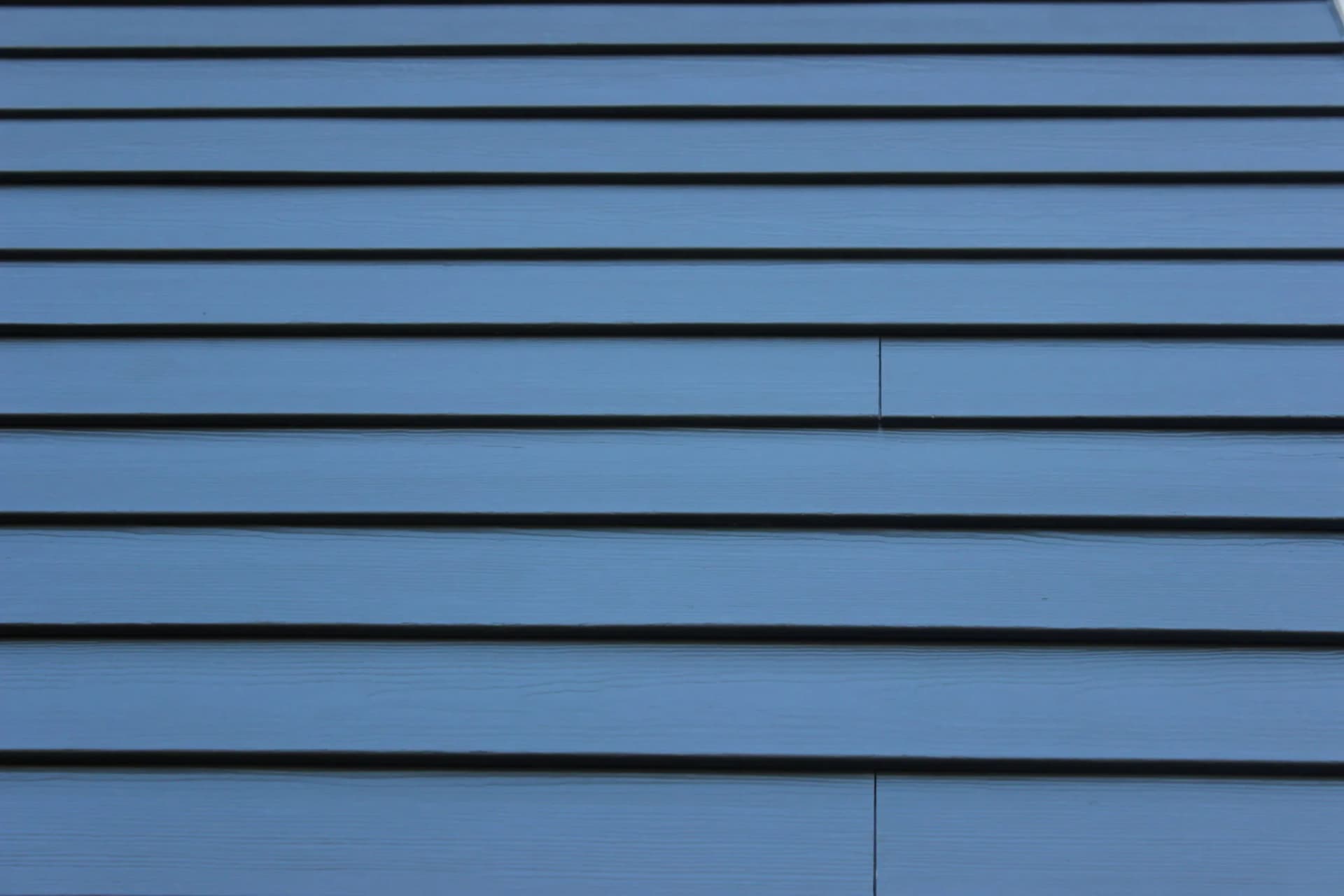
James Hardie Fiber Cement Siding in Yarmouth, Maine
James Hardie Fiber Cement Siding for Yarmouth homes from a family-owned Portland company. An owner measures on site and writes a fixed-price proposal.
- 5.0 · 8 Google reviews
- Fully licensed & insured
- Free estimates
- 20+ years combined experience
James Hardie Fiber Cement Siding for Yarmouth homes
James Hardie fiber cement is the closest modern match to the painted clapboard on Yarmouth's 19th-century village houses. It comes in narrow exposures and smooth or lightly textured faces, it takes the crisp corner boards and frieze trim a Greek Revival needs, and it does not rot or feed insects. For owners in the Upper Village, Lower Village or Royal River Manufacturing districts who want durability without losing the look, it is usually the material the conversation starts with.
The town's own building code rates weathering here as severe and puts the air freezing index at 1500, which means years of freeze-thaw cycles on anything that holds water. Fiber cement is dimensionally stable through those swings, and its factory-applied finish holds color longer than site paint on salt-exposed walls on Cousins Island, Littlejohn Island and the shore points off Princes Point Road. It is also noncombustible, a real consideration on wooded lots off Sligo Road and North Road. Installation is where it succeeds or fails: boards need clearance above roofs and grade, sealed cut ends and flashing at every butt joint, and the heavier planks need two installers on the ladder.
Yarmouth housing at a glance
The Census Bureau's 2020-2024 American Community Survey estimates about 3,600 homes in Yarmouth, with a median year built of 1973. Roughly 17 percent predate 1940 and about 27 percent predate 1960, while the biggest share, about 39 percent, went up between 1960 and 1979; only about 11 percent date from 2000 or later. About 80 percent of occupied homes are owner-occupied and about 76 percent are single-family detached, with roughly 120 units held for seasonal use. The town's 2024 comprehensive plan describes the village core as mostly mid-19th-century wood-frame single-family homes, Greek Revival first and Italianate second. After the 1955 causeway to Cousins and Littlejohn islands and the 1961 arrival of I-295, conventional subdivisions spread along North Road, East Elm Street, Bayview Street, Princes Point Road and Granite Street, with condominium clusters following in the 1980s.
Weather and exposure in Yarmouth
Yarmouth's building code writes its design conditions straight into the ordinance: a ground snow load of 60 pounds per square foot, a design wind speed of 115 mph, weathering rated severe, a 48-inch frost line, a winter design temperature of minus 5 degrees and ice shield underlayment required. The town fronts Casco Bay along White's Cove and Broad Cove, so houses on Cousins Island, Littlejohn Island, Princes Point and the points along the shore take salt spray and open-water wind during nor'easters. Portland, the nearest long-term weather record, averages about 69 inches of snow a year. The comprehensive plan flags sea level rise along the shoreline, including stretches of the Talbot Road connector on the islands, and the town publishes flood and coastal bluff maps.
Permits and design review in Yarmouth
Building permits go through the Yarmouth Code Enforcement Office at Town Hall, 200 Main Street. Chapter 301 requires a permit before any building or structure is erected, remodeled, demolished or relocated, and work started without one pays double the fee. The town notes that applications take about 30 days on average to review, and building permits must be mailed or dropped off rather than emailed. Inside the Upper Village, Lower Village and Royal River Manufacturing historic districts, all exterior changes go to the Historic Preservation Committee, whose review is mandatory but advisory. Shoreland permits apply near Casco Bay and the Royal River.
What James Hardie fiber cement siding involves
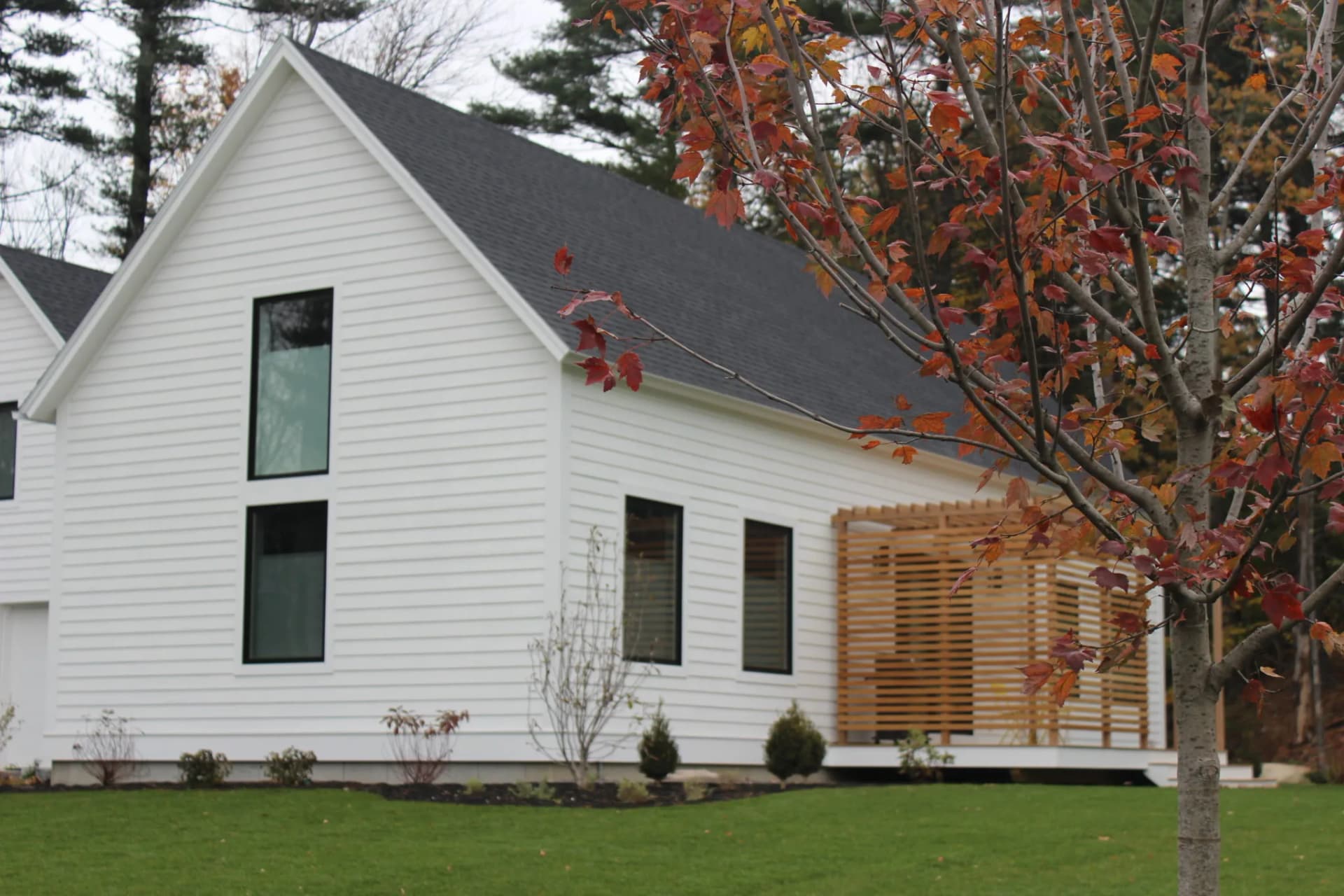
Fiber cement is a mix of cement, sand and cellulose fiber pressed into planks, shingles and panels. It does not rot, insects do not eat it, it will not burn, and factory-applied finishes hold color far longer than site-painted wood. It is heavier and more exacting to install than vinyl, which is exactly why installation quality shows. The Back Cove home on this site was re-sided with a complete James Hardie package of wood-grain plank.
- Walls are stripped, repaired and wrapped, with flashing at every opening and roof-to-wall joint.
- Boards are cut with dust-controlled tools and fastened to the manufacturer's nailing schedule.
- Required clearances are held above roofs, decks and grade so the ends never sit in water or snow.
- Butt joints get flashing behind them, and cut ends are sealed or primed as the manufacturer specifies.
- Trim, caulk lines and touch-up are finished so the pre-finished color stays uniform.
Signs it is time
- You want the look of painted clapboard without the paint cycle
- Wood siding keeps rotting at the bottom courses and around trim
- The house sits in wind and salt exposure that punishes other materials
- You want a non-combustible exterior
What affects the price of James Hardie fiber cement siding
- Product line and profile: lap plank, shingle, panel or board-and-batten
- Pre-finished color versus site painting
- Trim package and detailing
- Tear-off, sheathing repair and house height
- Number of windows, doors and corners to flash and trim
Every job is priced from a free on-site visit. Typical ranges for the trade are on our siding page, and the details of this service are on the James Hardie fiber cement siding overview.
Cardinal Exteriors projects in Yarmouth
More in Yarmouth and nearby
Back to the Yarmouth exterior services overview, or see every town on our Cumberland County service areas page.
Other exterior work in Yarmouth
- Cedar Siding & Shingles in Yarmouth
- Window Replacement in Yarmouth
- Bay & Picture Windows in Yarmouth
- Roof Replacement in Yarmouth
- Asphalt Shingle Roofing in Yarmouth
- Metal Roofing in Yarmouth
- Deck Building in Yarmouth
- Composite & PVC Decks in Yarmouth
- Deck Replacement in Yarmouth
- Siding Replacement in Yarmouth
- Vinyl Siding Installation in Yarmouth
Fiber Cement Siding in nearby towns
Get a free James Hardie fiber cement siding estimate in Yarmouth
Tell us about the house and what you want changed. One of the owners will call to set up a visit, measure, and write a fixed-price proposal. No pressure, no obligation.
Need it today?Call Mike (207) 408-5388
or Bob at (207) 252-0759