
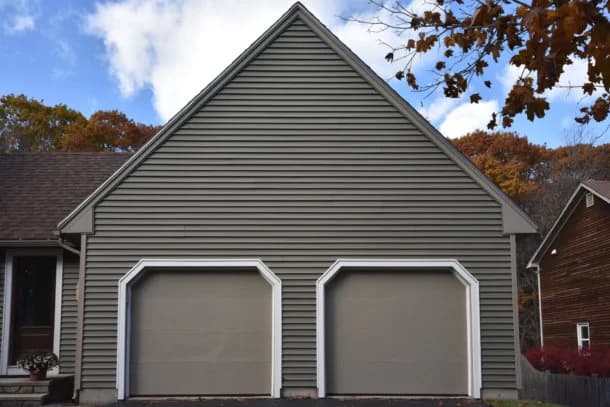
Asphalt Shingle Roofing in Portland, Maine
Asphalt Shingle Roofing for Portland homes from a family-owned Portland company. An owner measures on site and writes a fixed-price proposal.
- 5.0 · 8 Google reviews
- Fully licensed & insured
- Free estimates
- 20+ years combined experience
Asphalt Shingle Roofing for Portland homes
Architectural asphalt shingles are the default on most Portland houses outside the flat-roofed triple-decker stock. They are cost-effective on the capes, colonials and mid-century homes of Deering, Rosemont and Riverton, and their dimensional profile looks right on older houses where a flat three-tab shingle would not. On exposed lots near the harbor or on the islands, choose a shingle with a high wind rating and install it with the manufacturer's full nailing pattern and sealed starter courses at the eaves and rakes.
Maine's building code, based on the 2021 International Residential Code, requires an ice barrier under asphalt shingles in areas with a history of ice forming at the eaves, running from the roof edge to at least 24 inches inside the exterior wall line. With about 69 inches of snow in an average Portland winter, that membrane matters, especially over older, poorly insulated attics where heat loss melts snow. Valleys, dormer cheeks and chimney flashing are where Portland roofs usually leak, so those details get new flashing rather than reused metal. A new shingle roof over a sound deck with proper ventilation is the practical fix for most homes in the city.
Portland housing at a glance
Portland has roughly 36,600 housing units, and the American Community Survey estimates a median year built of 1946. About 46 percent predate 1940 and about 61 percent predate 1960, while only about 16 percent date from 1960 to 1979 and about 11 percent from 2000 or later. Owners occupy about 47 percent of occupied homes, and single-family detached houses make up only about 36 percent of the stock, so multi-unit buildings are the norm rather than the exception. After the Great Fire of 1866 the peninsula was rebuilt largely in Victorian and Italianate styles, and wood-framed triple-deckers fill much of the older residential grid. Off the peninsula, Deering and the outer neighborhoods run to capes, colonials and mid-century houses. The census also counts nearly 1,900 seasonal units, many of them island cottages in Casco Bay.
Weather and exposure in Portland
Portland sits on a peninsula in Casco Bay, and exposure changes block to block. Houses on the eastern and western ends of the peninsula, along the harbor and on the islands take wind straight off the water, while inland neighborhoods such as Deering and Stroudwater are more sheltered. Snowfall averages about 69 inches a year, but the city has seen seasons as light as 30 inches and as heavy as 150. Severe nor'easters arrive in winter with wind-driven rain and snow that finds any gap in old clapboard, trim or window casing. Repeated freeze and thaw works on paint, caulk and shingles, and salt air on the waterfront and islands speeds corrosion of fasteners, flashing and exposed metal.
Permits and design review in Portland
Building permits in Portland go through the city's Permitting and Inspections Department, which handles permits, licensing and inspections in one office. A new deck is structural work and needs a building permit; ask the department whether a given roof, siding or window job needs one before work starts. Portland also has a strong historic preservation ordinance. Properties in local districts including the West End, India Street, Congress Street, Deering Street, Stroudwater and the Old Port waterfront need a certificate of appropriateness for exterior alterations, reviewed by preservation staff or the Historic Preservation Board. Waterfront and island lots may also fall under shoreland zoning.
What architectural asphalt shingle roofing involves
Architectural (dimensional) asphalt shingles are the most common roof in Maine for good reason: they are affordable, they come in many colors and textures, and a good system handles snow, ice and wind well. Several projects on this site used CertainTeed Landmark shingles. What separates a long-lived shingle roof from a short-lived one is mostly underneath: ice and water protection at the eaves, correct nailing, and balanced ventilation.
- Tear-off to the deck and sheathing repair where needed.
- Ice and water shield at eaves, valleys and around penetrations; underlayment over the rest.
- Starter strip and drip edge at the edges, then shingles nailed in the manufacturer's nail zone.
- Step flashing at walls, new pipe boots, and chimney flashing as needed.
- Hip and ridge caps over a ridge vent, balanced with intake at the soffits.
Signs it is time
- Granules washing into the gutters and bald patches on the shingles
- Shingles that curl, cup, or lift in wind
- Leaks around chimneys, vents or skylights
- Moss or dark streaking on shaded slopes
What affects the price of architectural asphalt shingle roofing
- Roof area and pitch
- Shingle line and color
- Layers to tear off and deck repairs
- Flashing and ventilation work
- Number of valleys, dormers and penetrations
Every job is priced from a free on-site visit. Typical ranges for the trade are on our roofing page, and the details of this service are on the architectural asphalt shingle roofing overview.
More in Portland and nearby
Back to the Portland exterior services overview, or see every town on our Cumberland County service areas page.
Other exterior work in Portland
- Metal Roofing in Portland
- Deck Building in Portland
- Composite & PVC Decks in Portland
- Deck Replacement in Portland
- Siding Replacement in Portland
- Vinyl Siding Installation in Portland
- James Hardie Fiber Cement Siding in Portland
- Cedar Siding & Shingles in Portland
- Window Replacement in Portland
- Bay & Picture Windows in Portland
- Roof Replacement in Portland
Get a free architectural asphalt shingle roofing estimate in Portland
Tell us about the house and what you want changed. One of the owners will call to set up a visit, measure, and write a fixed-price proposal. No pressure, no obligation.
Need it today?Call Mike (207) 408-5388
or Bob at (207) 252-0759