


James Hardie Fiber Cement Siding in Portland, Maine
James Hardie Fiber Cement Siding for Portland homes from a family-owned Portland company. An owner measures on site and writes a fixed-price proposal.
- Google reviews
- Fully licensed & insured
- Free estimates
- 20+ years combined experience
James Hardie Fiber Cement Siding for Portland homes
James Hardie fiber cement suits Portland's older housing because it reads like painted wood. Its lap siding and shingle profiles fit Victorian, Italianate and colonial houses in a way plastic cladding rarely does, which can matter when a design is reviewed for a historic district or when neighbors care about the streetscape. It does not rot, does not feed insects, and holds up well to the freeze and thaw cycles that open joints in wood clapboard every winter.
Fiber cement is also noncombustible, a real consideration on the peninsula where triple-deckers and row houses sit close together. Near the harbor and on the islands, it stands up to salt air better than wood, provided the trim, flashing and fasteners are chosen for the exposure. It is heavier than vinyl and has to be cut with dust control, and every butt joint and window head needs proper flashing, so installation quality decides how long it lasts. The factory finish comes in a range of colors, which means far longer between repaints than a sun-facing wall of painted wood usually gets in Portland.

How a Siding Wall Assembly Works
- Sheathing — the structural wall surface everything else attaches to
- Weather-resistive barrier — a wrapped membrane that stops bulk water while letting vapor escape
- Rainscreen gap — a drainage and drying space between the barrier and the siding
- Siding — the visible cladding, fastened over the furring strips
- Window flashing — tucked under the barrier above and lapped over the siding below, so water never gets behind it
Portland housing at a glance
Portland has roughly 36,600 housing units, and the American Community Survey estimates a median year built of 1946. About 46 percent predate 1940 and about 61 percent predate 1960, while only about 16 percent date from 1960 to 1979 and about 11 percent from 2000 or later. Owners occupy about 47 percent of occupied homes, and single-family detached houses make up only about 36 percent of the stock, so multi-unit buildings are the norm rather than the exception. After the Great Fire of 1866 the peninsula was rebuilt largely in Victorian and Italianate styles, and wood-framed triple-deckers fill much of the older residential grid. Off the peninsula, Deering and the outer neighborhoods run to capes, colonials and mid-century houses. The census also counts nearly 1,900 seasonal units, many of them island cottages in Casco Bay.
Weather and exposure in Portland
Portland sits on a peninsula in Casco Bay, and exposure changes block to block. Houses on the eastern and western ends of the peninsula, along the harbor and on the islands take wind straight off the water, while inland neighborhoods such as Deering and Stroudwater are more sheltered. Snowfall averages about 69 inches a year, but the city has seen seasons as light as 30 inches and as heavy as 150. Severe nor'easters arrive in winter with wind-driven rain and snow that finds any gap in old clapboard, trim or window casing. Repeated freeze and thaw works on paint, caulk and shingles, and salt air on the waterfront and islands speeds corrosion of fasteners, flashing and exposed metal.
Permits and design review in Portland
Building permits in Portland go through the city's Permitting and Inspections Department, which handles permits, licensing and inspections in one office. A new deck is structural work and needs a building permit; ask the department whether a given roof, siding or window job needs one before work starts. Portland also has a strong historic preservation ordinance. Properties in local districts including the West End, India Street, Congress Street, Deering Street, Stroudwater and the Old Port waterfront need a certificate of appropriateness for exterior alterations, reviewed by preservation staff or the Historic Preservation Board. Waterfront and island lots may also fall under shoreland zoning.
Portland at a Glance
What the housing stock and local code enforcement mean for a siding, window, roofing or deck job here.
68,408
Population (ACS estimate)
Median year built: 1945
Original wood clapboard or shingle siding, wood-sash windows and multi-layered roofs are common here.
State Building & Energy Code (MUBEC)
Enforced — population over 4,000
EPA Lead-Safe Rule (pre-1978 homes)
Applies to at least 60% of homes here
Historic District
Exterior work may need design review
Shoreland Zoning
Applies near the water
Permits
Permitting and Inspections Department, City of Portland
Codes & Permits for Fiber Cement Siding in Portland
In Portland, exterior-work permits come from the Permitting and Inspections Department, City of Portland (389 Congress St, Room 315, Portland, ME 04101, 207-874-8703). With 68,408 residents, over 4,000, Portland is required to enforce the Maine Uniform Building and Energy Code (MUBEC). The West End, India Street, Congress Street, Deering Street and Stroudwater local historic districts require a certificate of appropriateness for exterior alterations, reviewed by the Historic Preservation Board.
- Maine's adopted 2021 IRC (R703.10) requires fiber-cement siding products to be installed per the manufacturer's instructions, with fasteners penetrating a minimum of 1.5 inches into framing when installed over foam sheathing, per R703.3.4. up.codes
- General weep-screed/clearance drainage language elsewhere in R703 calls for a minimum 4-inch clearance above earth (2 inches above paved areas) for water-resistive assemblies — the same drainage principle commonly applied to keep fiber-cement board clear of grade/splash-back moisture, though this is a general R703 drainage provision rather than a fiber-cement-specific clearance number. up.codes
- Maine's Shoreland Zoning Act creates a regulated shoreland zone extending 250 feet (horizontal distance) from the normal high-water line of any great pond, river, or coastal wetland, and 75 feet from certain streams; the Act's stated purposes include protecting buildings and land from flooding/erosion and controlling water pollution, and it governs deck and other structure setbacks and the expansion of nonconforming structures within that zone (specific setback/expansion rules are set at the municipal-ordinance level under the state's model guidelines). maine.gov
- By Maine law (25 M.R.S. §2373), 'the code must be enforced in a municipality that has more than 4,000 residents' (per the most recent federal census); municipalities at or below that population are not required to adopt/enforce MUBEC but may opt in locally, per the state's own program page: 'All municipalities with a population greater than 4,000 are required, by statute, to enforce the MUBEC. Municipalities with a population under 4,000 may choose to enforce the MUBEC.' mainelegislature.org
How Cardinal Exteriors Handles Fiber Cement Siding in Portland
- Portland's population (68,408) puts it above the threshold where Maine law requires full MUBEC enforcement, so this job is inspected against that code as well as the local permit.
- At least 60% of Portland's homes predate 1960 — well ahead of 1978, when the EPA's lead-safe renovation rule kicks in — so we plan for lead-safe work practices on James Hardie fiber cement siding whenever painted surfaces come off an older house here.
- The West End, India Street, Congress Street, Deering Street and Stroudwater local historic districts require a certificate of appropriateness for exterior alterations, reviewed by the Historic Preservation Board. We check whether a property falls inside that boundary before finalizing material and color.
- Because Portland has coastal, lake or river frontage, Maine's Mandatory Shoreland Zoning Act may apply to work close to the water, which can affect setbacks on a rebuild.
- Anything that needs a permit for James Hardie fiber cement siding goes through the Permitting and Inspections Department, City of Portland.
A Victorian home on Neal Street in Portland's Western Promenade Historic District, developed in the late 1800s with Second Empire, Italianate, Queen Anne and Shingle-style houses.
Street View © Google
What James Hardie fiber cement siding involves
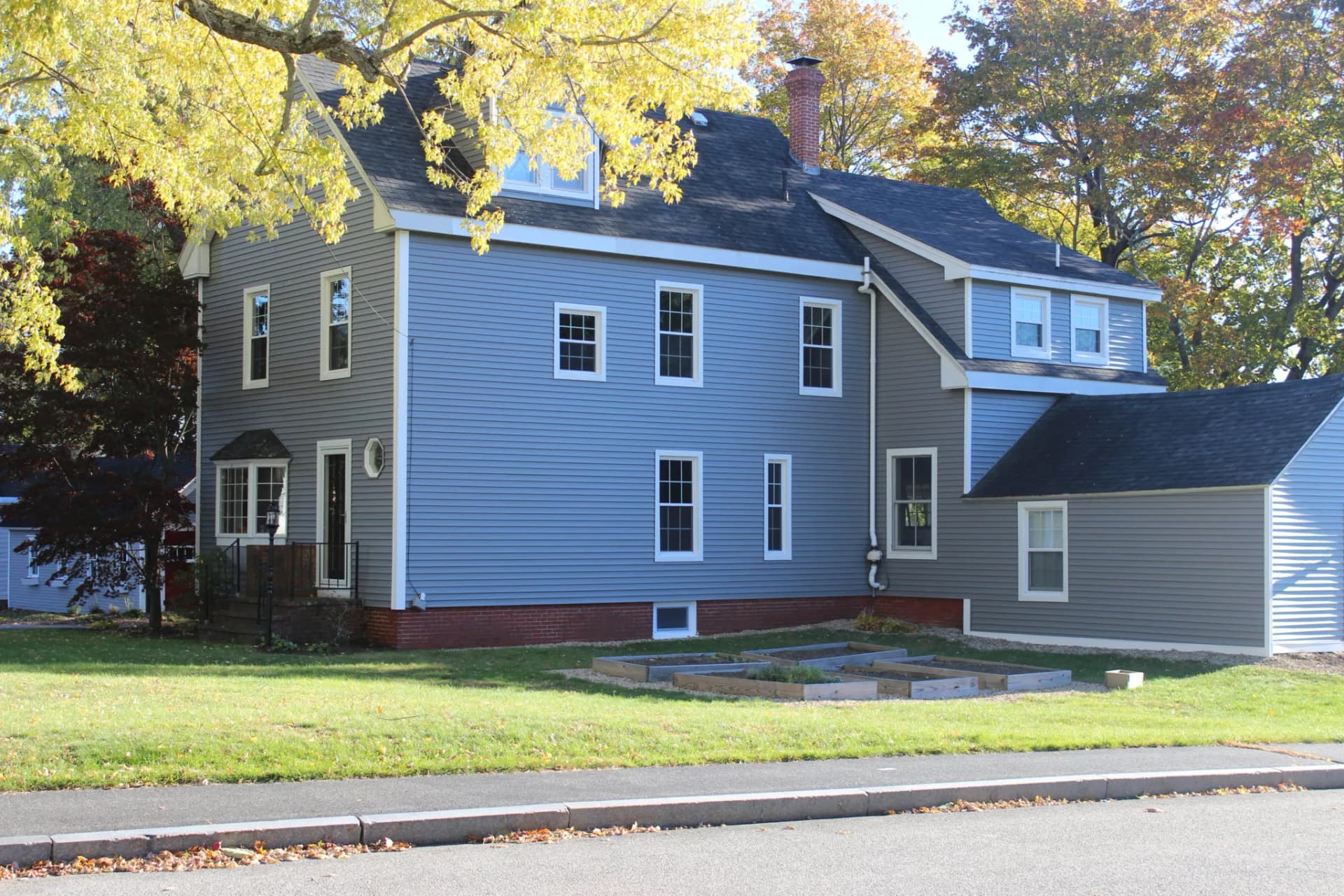
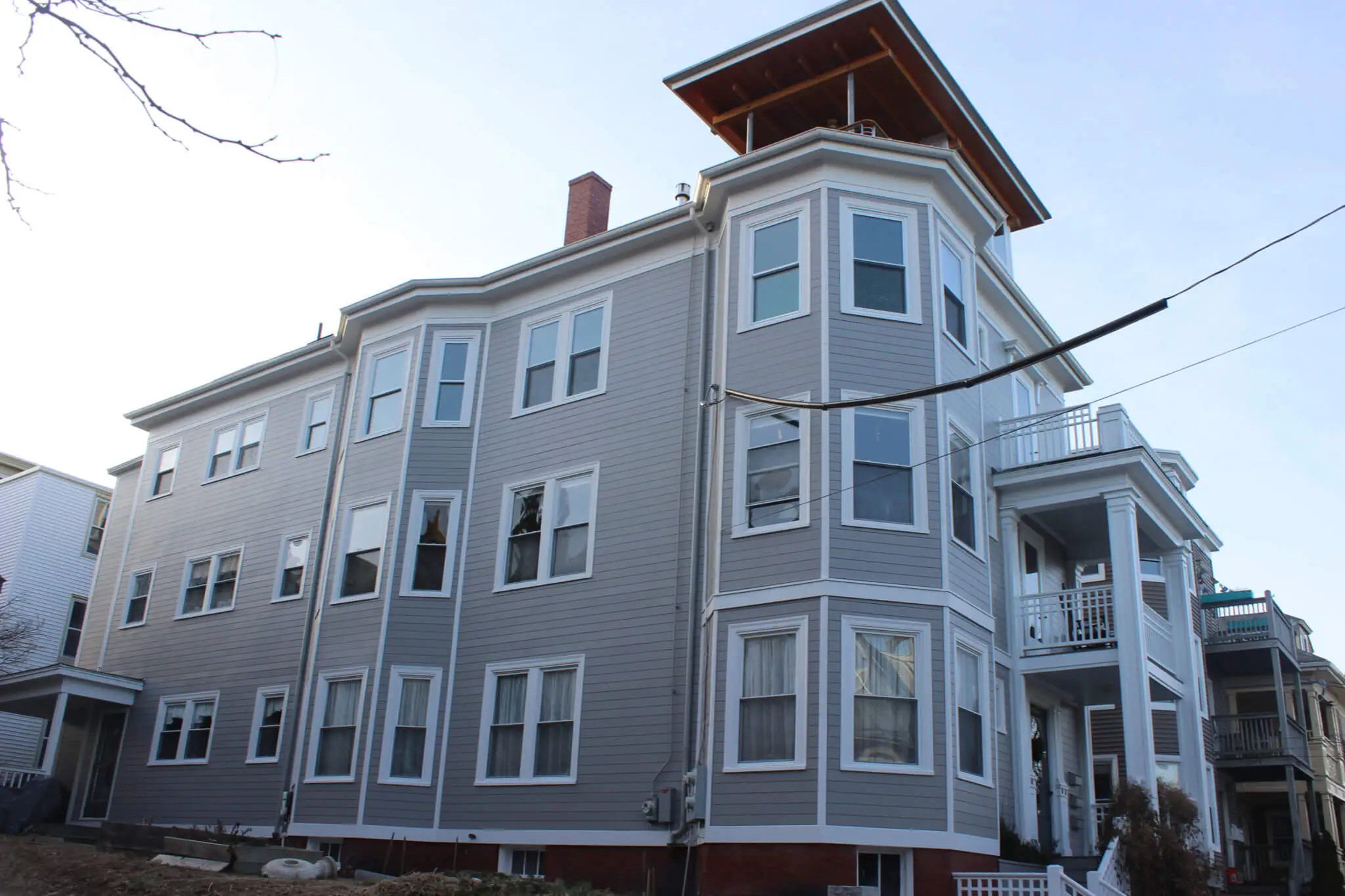
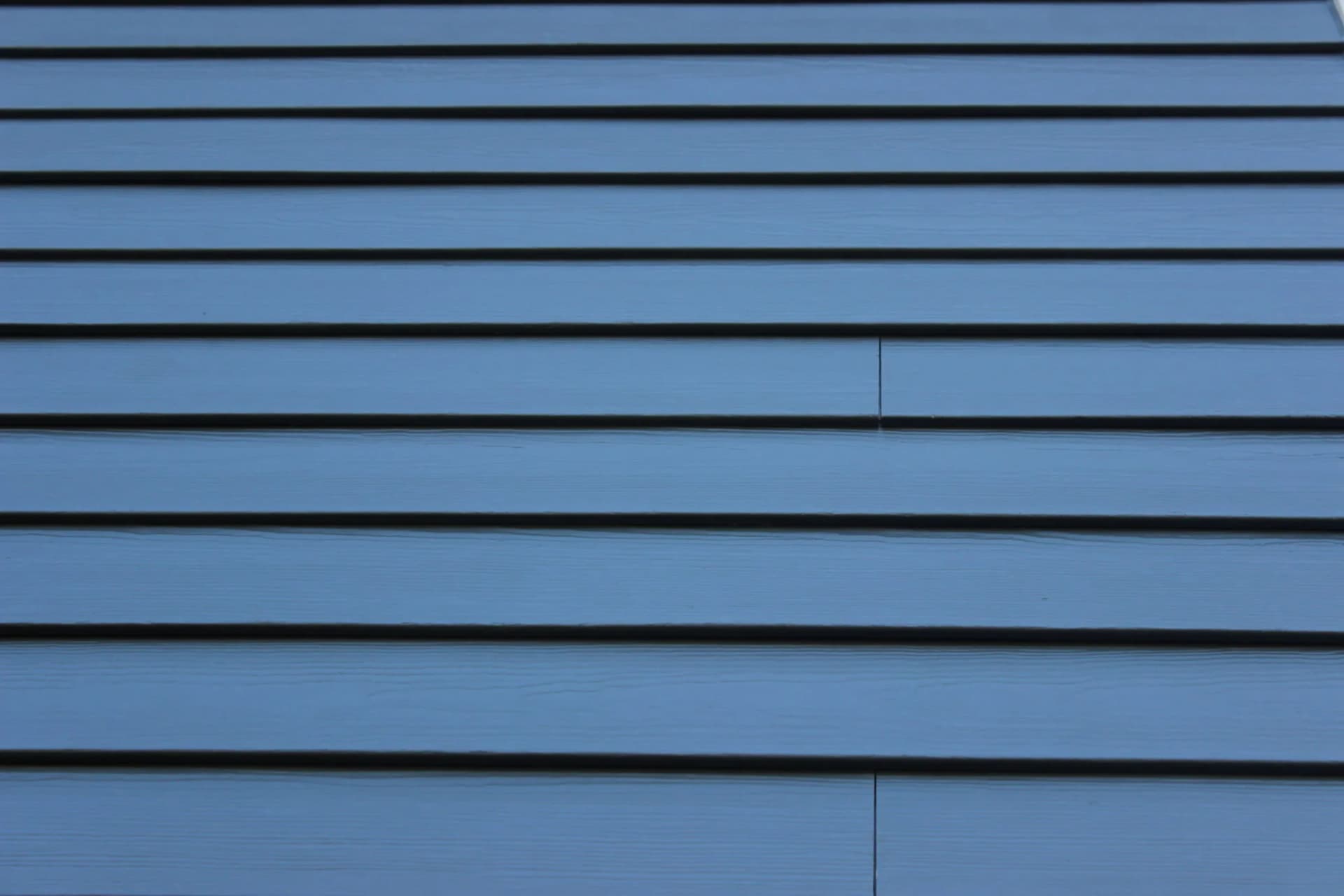
Fiber cement is a mix of cement, sand and cellulose fiber pressed into planks, shingles and panels. It does not rot, insects do not eat it, it will not burn, and factory-applied finishes hold color far longer than site-painted wood. It is heavier and more exacting to install than vinyl, which is exactly why installation quality shows. The Back Cove home on this site was re-sided with a complete James Hardie package of wood-grain plank.
- Walls are stripped, repaired and wrapped, with flashing at every opening and roof-to-wall joint.
- Boards are cut with dust-controlled tools and fastened to the manufacturer's nailing schedule.
- Required clearances are held above roofs, decks and grade so the ends never sit in water or snow.
- Butt joints get flashing behind them, and cut ends are sealed or primed as the manufacturer specifies.
- Trim, caulk lines and touch-up are finished so the pre-finished color stays uniform.
Signs it is time
- You want the look of painted clapboard without the paint cycle
- Wood siding keeps rotting at the bottom courses and around trim
- The house sits in wind and salt exposure that punishes other materials
- You want a non-combustible exterior
What affects the price of James Hardie fiber cement siding
- Product line and profile: lap plank, shingle, panel or board-and-batten
- Pre-finished color versus site painting
- Trim package and detailing
- Tear-off, sheathing repair and house height
- Number of windows, doors and corners to flash and trim
Every job is priced from a free on-site visit. Typical ranges for the trade are on our siding page, and the details of this service are on the James Hardie fiber cement siding overview.
For a deeper walkthrough of materials, code details and photos, see our full James Hardie Fiber Cement Siding: Why It Holds Up Through a Maine Freeze-Thaw Cycle guide.
More in Portland and nearby
Back to the Portland exterior services overview, or see every town on our service areas page.
Other exterior work in Portland
- Cedar Siding & Shingles in Portland
- Window Replacement in Portland
- Bay & Picture Windows in Portland
- Roof Replacement in Portland
- Asphalt Shingle Roofing in Portland
- Metal Roofing in Portland
- Deck Building in Portland
- Composite & PVC Decks in Portland
- Deck Replacement in Portland
- Siding Replacement in Portland
- Vinyl Siding Installation in Portland
Fiber Cement Siding in nearby towns
Get a free James Hardie fiber cement siding estimate in Portland
Tell us about the house and what you want changed. One of the owners will call to set up a visit, measure, and write a fixed-price proposal. No pressure, no obligation.
Need it today?Call Mike (207) 408-5388
or Bob at (207) 252-0759
More ways we can help
Google reviewsCompany
6Learn more about how we work, starting with…
Services
16We also cover related services across Greater Portland, such as…
Service Areas
38You will find our crews working in towns including…