
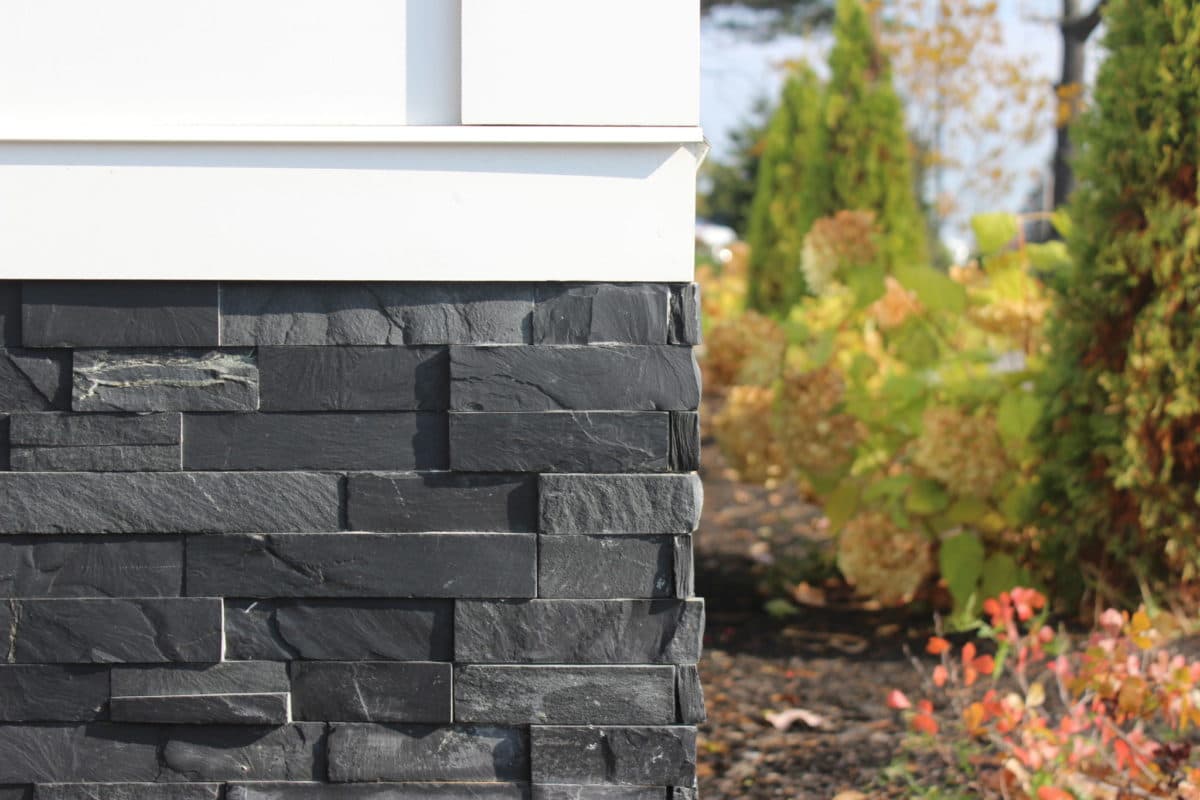
Siding Replacement in Portland, Maine
Siding Replacement for Portland homes from a family-owned Portland company. An owner measures on site and writes a fixed-price proposal.
- 5.0 · 8 Google reviews
- Fully licensed & insured
- Free estimates
- 20+ years combined experience
Siding Replacement for Portland homes
Most of Portland's siding problems start with age. With nearly half the housing stock built before 1940, a typical peninsula house has original wood clapboard that has been painted many times over, and sometimes covered later with asbestos-cement shingles, aluminum or early vinyl. Paint buildup traps moisture, clapboards split along the grain, and the sheathing behind the corner boards and window casings is where rot usually shows up first. On triple-deckers, the tall flat walls take the brunt of nor'easter rain, and the upper stories are the hardest part to keep painted.
A full replacement means stripping back to the sheathing, repairing what is soft, adding a weather-resistant barrier and new flashing at every window and roof line, then installing new cladding. On a multi-family building, staging and neighbor clearance on tight lots matter as much as material choice, since many Portland houses sit a few feet from the next one. If the house is inside a local historic district, the new siding and its profile need approval before the old material comes off. One of the owners measures the building and writes a fixed-price proposal so the scope is clear from the start.
Portland housing at a glance
Portland has roughly 36,600 housing units, and the American Community Survey estimates a median year built of 1946. About 46 percent predate 1940 and about 61 percent predate 1960, while only about 16 percent date from 1960 to 1979 and about 11 percent from 2000 or later. Owners occupy about 47 percent of occupied homes, and single-family detached houses make up only about 36 percent of the stock, so multi-unit buildings are the norm rather than the exception. After the Great Fire of 1866 the peninsula was rebuilt largely in Victorian and Italianate styles, and wood-framed triple-deckers fill much of the older residential grid. Off the peninsula, Deering and the outer neighborhoods run to capes, colonials and mid-century houses. The census also counts nearly 1,900 seasonal units, many of them island cottages in Casco Bay.
Weather and exposure in Portland
Portland sits on a peninsula in Casco Bay, and exposure changes block to block. Houses on the eastern and western ends of the peninsula, along the harbor and on the islands take wind straight off the water, while inland neighborhoods such as Deering and Stroudwater are more sheltered. Snowfall averages about 69 inches a year, but the city has seen seasons as light as 30 inches and as heavy as 150. Severe nor'easters arrive in winter with wind-driven rain and snow that finds any gap in old clapboard, trim or window casing. Repeated freeze and thaw works on paint, caulk and shingles, and salt air on the waterfront and islands speeds corrosion of fasteners, flashing and exposed metal.
Permits and design review in Portland
Building permits in Portland go through the city's Permitting and Inspections Department, which handles permits, licensing and inspections in one office. A new deck is structural work and needs a building permit; ask the department whether a given roof, siding or window job needs one before work starts. Portland also has a strong historic preservation ordinance. Properties in local districts including the West End, India Street, Congress Street, Deering Street, Stroudwater and the Old Port waterfront need a certificate of appropriateness for exterior alterations, reviewed by preservation staff or the Historic Preservation Board. Waterfront and island lots may also fall under shoreland zoning.
What siding replacement involves
Siding replacement is more than new cladding. The old siding comes off, the sheathing underneath is inspected and repaired where it has gone soft, a new weather-resistive barrier and flashing go on around every opening, and the new siding and trim are installed as one system. In Maine, where wind-driven rain, freeze-thaw cycles and long winters test every seam, the layers you never see decide how long the wall lasts.
- An owner walks the house, measures every wall, and notes rot, past leaks, and how many layers of old siding are on it.
- Old siding and trim are stripped to the sheathing, and damaged boards are cut out and replaced before anything new goes on.
- A house wrap or other weather-resistive barrier is lapped shingle-style, with flashing tape and head flashing at windows and doors.
- New corner boards, window and door casing, and frieze trim go up, then the siding itself, fastened to the manufacturer's spacing.
- Debris is hauled away, magnetic sweeps pick up nails, and the job is walked with you before the last crew leaves.
Signs it is time
- Clapboards or shingles that are cupped, split, or soft when pressed
- Paint that peels within a few seasons of being painted
- Stains, mold, or bubbling paint on interior walls after storms
- Dated aluminum, asbestos-cement or 1970s metal siding you want gone
- Rooms that feel drafty along exterior walls
What affects the price of siding replacement
- Wall area and how many stories need staging or lifts
- How many layers of old siding come off, and whether any need special handling
- Sheathing repairs found once the old siding is off
- The siding material chosen: vinyl, fiber cement, cedar or composite
- Trim detail: corner boards, window casing, frieze boards and brackets
- Whether windows or the roof are replaced in the same visit
Every job is priced from a free on-site visit. Typical ranges for the trade are on our siding page, and the details of this service are on the siding replacement overview.
More in Portland and nearby
Back to the Portland exterior services overview, or see every town on our Cumberland County service areas page.
Other exterior work in Portland
- Vinyl Siding Installation in Portland
- James Hardie Fiber Cement Siding in Portland
- Cedar Siding & Shingles in Portland
- Window Replacement in Portland
- Bay & Picture Windows in Portland
- Roof Replacement in Portland
- Asphalt Shingle Roofing in Portland
- Metal Roofing in Portland
- Deck Building in Portland
- Composite & PVC Decks in Portland
- Deck Replacement in Portland
Get a free siding replacement estimate in Portland
Tell us about the house and what you want changed. One of the owners will call to set up a visit, measure, and write a fixed-price proposal. No pressure, no obligation.
Need it today?Call Mike (207) 408-5388
or Bob at (207) 252-0759