


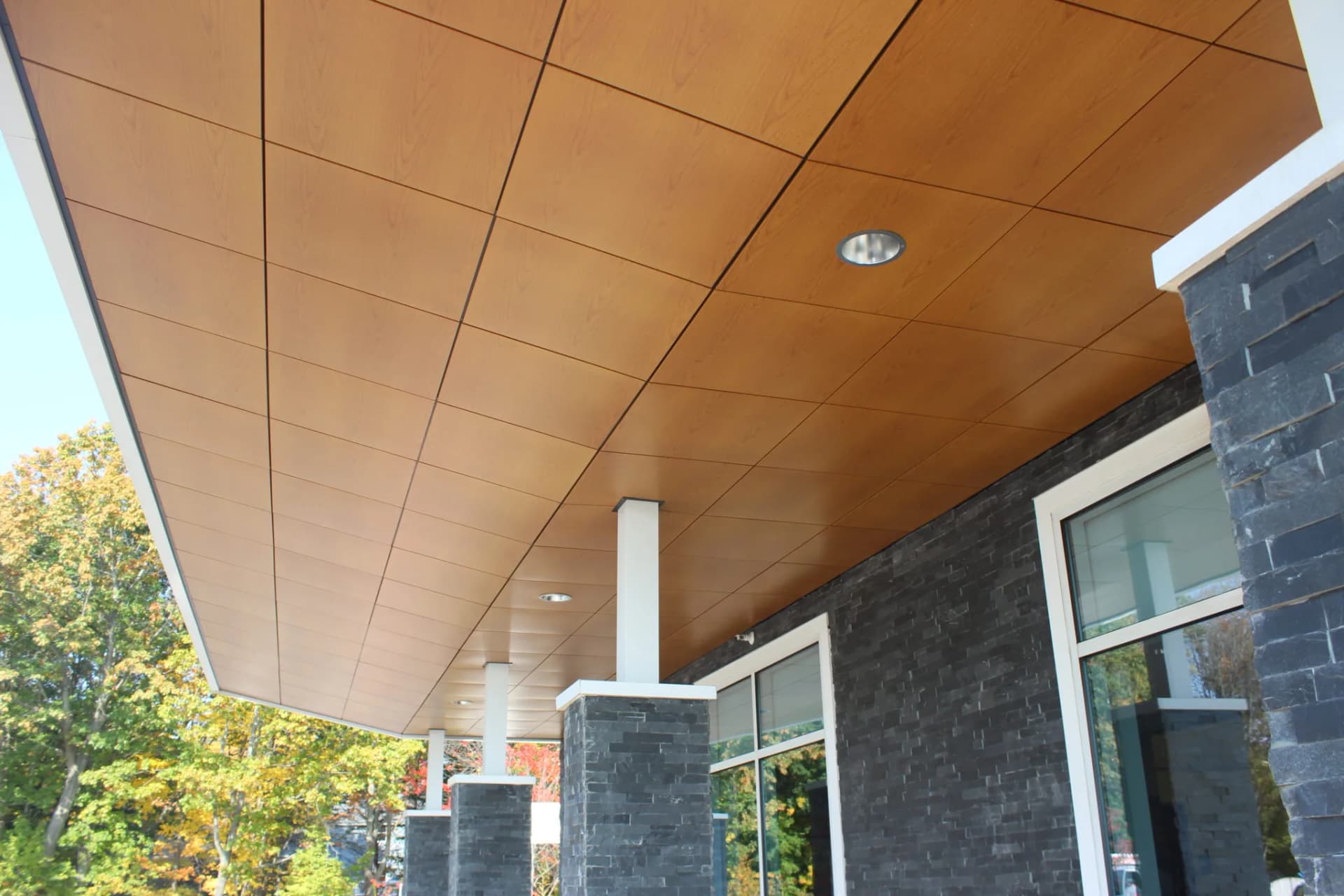
Cedar Siding & Shingles in Raymond, Maine
Cedar Siding & Shingles for Raymond homes from a family-owned Portland company. An owner measures on site and writes a fixed-price proposal.
- Google reviews
- Fully licensed & insured
- Free estimates
- 20+ years combined experience
Cedar Siding & Shingles for Raymond homes
Cedar has a long history on Raymond's shoreline. The comprehensive plan describes summer camps, cottages and lodges from the early and mid 20th century along the lakes, and many of those buildings were sheathed in wood shingles or boards that have weathered for decades. Replacing them in cedar keeps the character of a camp on Raymond Cape or Panther Pond intact, and a new shingle wall can be left to weather naturally or ordered with a factory-applied finish.
Cedar asks more of an owner than the other siding choices. On wooded lots, the shade and damp slow drying, so walls there benefit from an open rainscreen gap behind the shingles and from trimming back branches that brush the house. Lakefront walls that take wind-driven rain off Sebago dry faster but weather quicker. Keeping the bottom course well above grade and snow line helps, given how much snow piles against walls in a winter here. Cardinal installs new cedar as part of a siding job; it does not offer staining or patch repairs, so plan for ongoing care as part of choosing cedar.
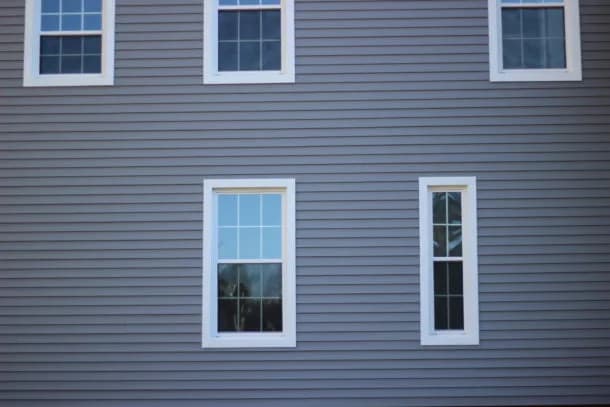
How a Siding Wall Assembly Works
- Sheathing — the structural wall surface everything else attaches to
- Weather-resistive barrier — a wrapped membrane that stops bulk water while letting vapor escape
- Rainscreen gap — a drainage and drying space between the barrier and the siding
- Siding — the visible cladding, fastened over the furring strips
- Window flashing — tucked under the barrier above and lapped over the siding below, so water never gets behind it
Raymond housing at a glance
Census estimates put Raymond at about 3,050 housing units with a median year built of 1976. About 15 percent predate 1940 and roughly 31 percent predate 1960, while another 23 percent went up between 1960 and 1979 and about 22 percent date from 2000 or later. Around 94 percent are single-family detached houses, and roughly 90 percent of occupied homes are owner-occupied. The standout figure is seasonal use: about 1,010 units are held for seasonal or recreational occupancy, and the town comprehensive plan puts seasonal homes at over a third of the stock. That plan also notes the summer camps, cottages and lodges built along the lakes in the early and mid 20th century, older farmhouses at rural crossroads, and a wave of summer residents who began making Raymond their permanent home in the 1950s, which is why so many camps have been winterized and enlarged.
Weather and exposure in Raymond
Raymond is inland lake country, not coast, so salt spray is not the issue. Snow and cold are. The National Weather Service forecast office sits in neighboring Gray, and its 1991-2020 normals show about 84 inches of snow a year, well above the roughly 69 inches recorded at the Portland Jetport. Much of that arrives from December through March, with repeated thaws and refreezes in between. Houses on the shore of Sebago Lake take the wind that builds across miles of open water, and because Sebago does not reliably freeze over, that open water stays exposed deep into winter. Wooded lots elsewhere in town stay damp and shaded, so north walls, roof valleys and deck boards are slow to dry after rain or melt.
Permits and design review in Raymond
Permits run through the Raymond Code Enforcement Office at the town office on Webbs Mills Road, which uses an online permitting system and books meetings by appointment. The town building code page lists building a deck as work that needs a permit, and says residing, reroofing and same-size window replacement do not, as long as no structure or required egress is changed. Allow about 48 hours for processing. Raymond enforces the Maine Uniform Building and Energy Code, including the 2021 IRC. Work within 100 feet of the high water mark should start with a call to the Code Enforcement Officer, since shoreland rules, and sometimes a state DEP permit, apply.
Raymond at a Glance
What the housing stock and local code enforcement mean for a siding, window, roofing or deck job here.
4,605
Population (ACS estimate)
Median year built: 1976
A mix of eras — original materials on some houses, postwar replacements on others.
State Building & Energy Code (MUBEC)
Enforced — population over 4,000
EPA Lead-Safe Rule (pre-1978 homes)
Applies to at least 31% of homes here
Shoreland Zoning
Applies near the water
Permits
Town of Raymond Code Enforcement Office
Codes & Permits for Cedar Siding in Raymond
In Raymond, exterior-work permits come from the Town of Raymond Code Enforcement Office. With 4,605 residents, over 4,000, Raymond is required to enforce the Maine Uniform Building and Energy Code (MUBEC).
- Maine's adopted 2021 IRC (R703.5) covers wood siding: a water-resistive barrier is required per R703.2, fasteners must penetrate a minimum of 1.5 inches into studs or blocking (R703.3.4), and horizontal lap siding needs a minimum 1-inch overlap (0.5 inch if rabbeted) per R703.5.3. up.codes
- Beyond the code minimums, a vented rainscreen gap behind wood/cedar siding is common installation practice in Maine's cold, wet coastal climate to let cladding dry and reduce moisture-driven rot — this is standard trade practice referenced in building-science guidance, not itself a numbered MUBEC/IRC mandate, so it should be described to clients as a recommended practice rather than a code requirement. up.codes
- Maine's Shoreland Zoning Act creates a regulated shoreland zone extending 250 feet (horizontal distance) from the normal high-water line of any great pond, river, or coastal wetland, and 75 feet from certain streams; the Act's stated purposes include protecting buildings and land from flooding/erosion and controlling water pollution, and it governs deck and other structure setbacks and the expansion of nonconforming structures within that zone (specific setback/expansion rules are set at the municipal-ordinance level under the state's model guidelines). maine.gov
- By Maine law (25 M.R.S. §2373), 'the code must be enforced in a municipality that has more than 4,000 residents' (per the most recent federal census); municipalities at or below that population are not required to adopt/enforce MUBEC but may opt in locally, per the state's own program page: 'All municipalities with a population greater than 4,000 are required, by statute, to enforce the MUBEC. Municipalities with a population under 4,000 may choose to enforce the MUBEC.' mainelegislature.org
How Cardinal Exteriors Handles Cedar Siding in Raymond
- With 4,605 residents, Raymond is over Maine's 4,000-resident line, so the town enforces the statewide Uniform Building and Energy Code (MUBEC) on top of its own permit process.
- With 31% of Raymond's housing built before 1960, a real share of that stock predates 1978 as well, which means EPA lead-safe containment is part of cedar siding and shingles on an older Raymond home more often than not.
- Because Raymond has coastal, lake or river frontage, Maine's Mandatory Shoreland Zoning Act may apply to work close to the water, which can affect setbacks on a rebuild.
- We file for cedar siding and shingles permits at the Town of Raymond Code Enforcement Office before work starts, not after.
A wooded stretch of Raymond Cape Road on the Raymond Cape peninsula in Raymond, on Sebago Lake.
Street View © Google
What cedar siding and shingles involves
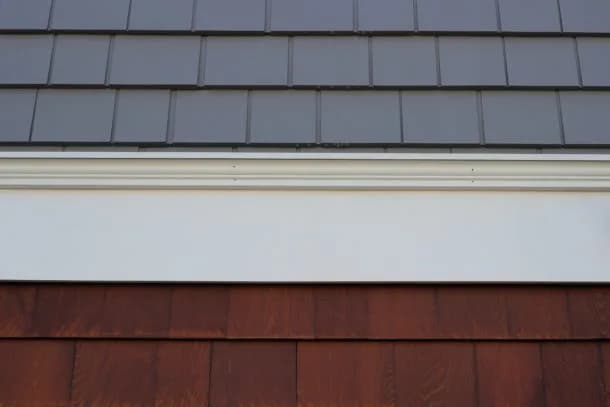
Cedar clapboards and shingles are the original New England exterior, and for shingle-style cottages, capes and historic homes nothing else looks quite right. Cedar is naturally rot-resistant and light, but it is wood: it needs airflow behind it and a finish that suits the exposure. Pre-finished shingles, such as the Maibec shingles on several projects shown on this site, arrive stained or primed on all sides, which cuts the upkeep and evens out the color.
- Walls are stripped, repaired and wrapped; where it helps drying, a ventilated or drainage layer goes behind the cedar.
- Shingles are coursed and laid out so exposure lines up at windows, doors and corners.
- Stainless or hot-dipped galvanized fasteners are used so they do not stain or corrode.
- Corners are woven or finished with boards, and trim is detailed to shed water.
- Pre-finished product is touched up at cuts; natural cedar is left to weather or finished as you choose.
Signs it is time
- The house is a cape, shingle-style cottage or historic home where cedar belongs
- Existing shingles are cupped, split, missing or black with mildew
- A historic district or your own taste calls for real wood
- You want a natural finish that weathers to silver-gray
What affects the price of cedar siding and shingles
- Clapboard versus shingle, and grade of cedar
- Pre-finished versus natural or site-finished
- Coursing detail, corner treatment and trim
- Wall area, height and tear-off
- Any rainscreen or drainage layer behind the siding
Every job is priced from a free on-site visit. Typical ranges for the trade are on our siding page, and the details of this service are on the cedar siding and shingles overview.
For a deeper walkthrough of materials, code details and photos, see our full Cedar Siding & Shingles: A Traditional Maine Look That Needs the Right Prep Underneath guide.
More in Raymond and nearby
Back to the Raymond exterior services overview, or see every town on our service areas page.
Other exterior work in Raymond
- Window Replacement in Raymond
- Bay & Picture Windows in Raymond
- Roof Replacement in Raymond
- Asphalt Shingle Roofing in Raymond
- Metal Roofing in Raymond
- Deck Building in Raymond
- Composite & PVC Decks in Raymond
- Deck Replacement in Raymond
- Siding Replacement in Raymond
- Vinyl Siding Installation in Raymond
- James Hardie Fiber Cement Siding in Raymond
Get a free cedar siding and shingles estimate in Raymond
Tell us about the house and what you want changed. One of the owners will call to set up a visit, measure, and write a fixed-price proposal. No pressure, no obligation.
Need it today?Call Mike (207) 408-5388
or Bob at (207) 252-0759
More ways we can help
Google reviewsService Areas
38We bring the same fixed-price estimates to nearby towns, such as…
Services
16Cardinal Exteriors handles the full range of exterior work, including…