
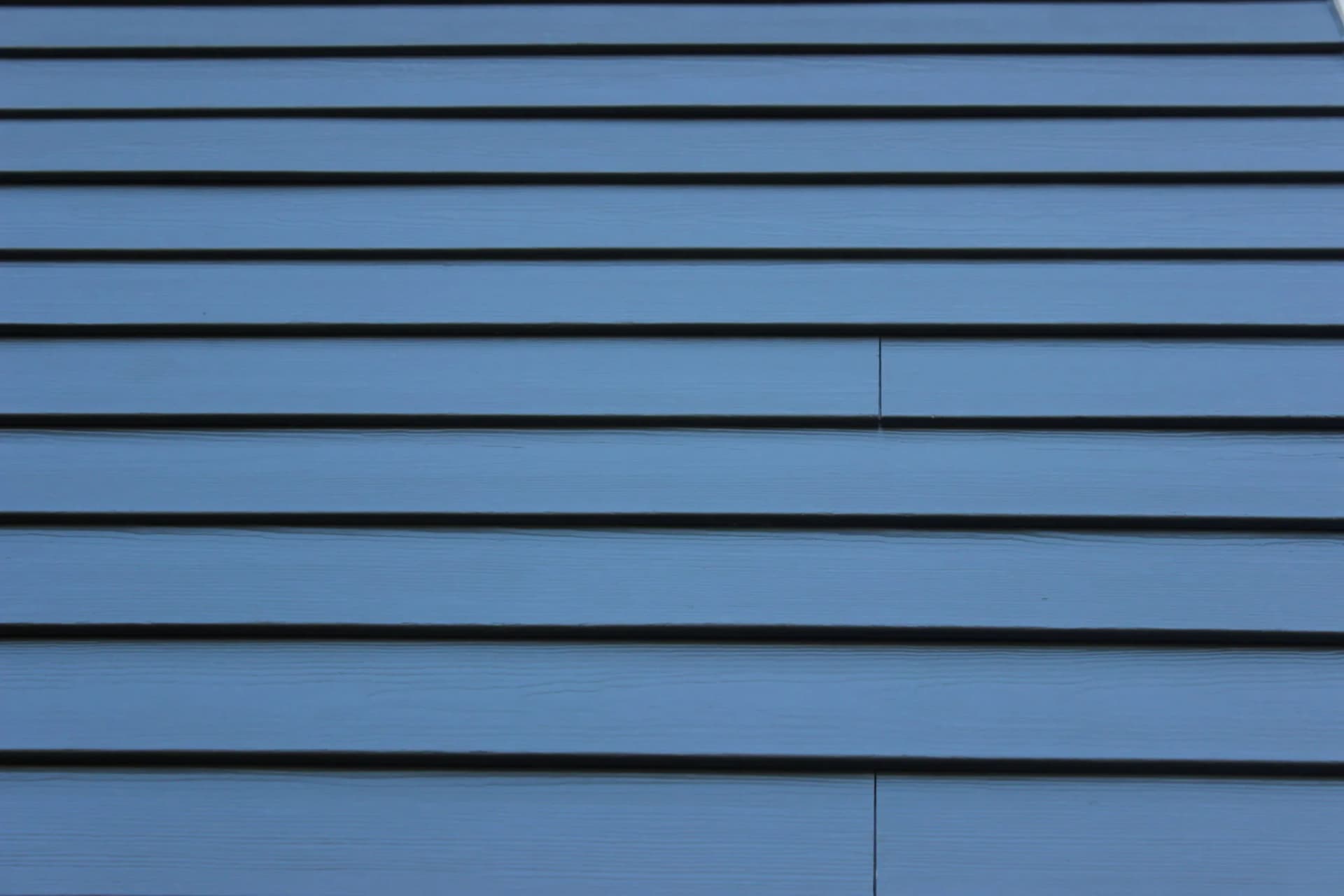
James Hardie Fiber Cement Siding in Pownal, Maine
James Hardie Fiber Cement Siding for Pownal homes from a family-owned Portland company. An owner measures on site and writes a fixed-price proposal.
- 5.0 · 8 Google reviews
- Fully licensed & insured
- Free estimates
- 20+ years combined experience
James Hardie Fiber Cement Siding for Pownal homes
Fiber cement has a clear case in Pownal, where many homes sit on wooded lots with brush and pines growing close to the walls. James Hardie boards are rated noncombustible, do not rot, and give woodpeckers and carpenter ants nothing to work on. The company's product line for cold climates is engineered for repeated freezing and thawing, and ColorPlus factory paint lasts far longer than site-applied paint on wood.
It also suits the look of the town's oldest houses. Smooth lap siding reads as painted clapboard, the cladding of the 1886 Mallett Hall, so a Federal or Greek Revival farmhouse can be re-sided without looking re-sided. Shingle panels work on a newer colonial that wants texture. Fiber cement is heavy and brittle before it is fastened, so it is cut with dust control, carried flat, and installed with the clearances the manufacturer requires above roofs, decks and grade, plus flashing behind butt joints. That grade clearance matters on farmhouses whose sills sit close to the ground, where the fix may involve regrading or raising the bottom course rather than hiding rot.
Pownal housing at a glance
Census estimates (ACS 2020-2024) count roughly 740 housing units in Pownal, with a median year built of 1971. The stock is older than the county's suburbs suggest: about 32 percent of homes predate 1940 and about 40 percent predate 1960, while roughly 21 percent were built between 1960 and 1979 and about 20 percent in 2000 or later. About 87 percent are single-family detached houses, some 89 percent of occupied homes are owner-occupied, and seasonal units are nearly absent, only about nine. Zoning keeps the pattern rural: the town's V, RA and RB districts each call for about 2.07 acres and 300 feet of road frontage per dwelling. The oldest buildings include the c. 1800 brick Federal Jacob Randall House on Lawrence Road and the 1886 clapboard Mallett Hall in Pownal Center.
Weather and exposure in Pownal
Pownal lies inland, west of Freeport's tidal shore, so houses here are spared direct salt spray but lack the ocean's softening effect on winter cold. The town sits at about 207 feet, and Bradbury Mountain, a granite knob of 486 feet, rises north of Pownal Center. Homes on open fields catch wind with little to break it, while those tucked into woods stay shaded, damp and slow to shed snow and moss. The nearest long-record weather station, Portland International Jetport, averages about 69 inches of snow a season under the 1991-2020 normals, with December through March carrying most of it. Repeated freeze-thaw cycles drive water into any open joint in siding, trim or roofing, and poorly insulated older roofs grow ice dams along their eaves.
Permits and design review in Pownal
Permits are handled by the Code Enforcement Office at the Pownal Town Office on Hallowell Road. The Code Enforcement Officer is also the town's building, plumbing and electrical inspector, issues every permit tied to a construction project, and enforces the land use and zoning ordinances. Pownal builds to the Maine Uniform Building and Energy Code, and the office posts a building permit inspection checklist. In the V, RA and RB zones, structures sit at least 40 feet from the front line and 25 feet from side and rear lines, with lot coverage capped at 20 percent. Land near rivers and certain streams falls under state shoreland zoning.
What James Hardie fiber cement siding involves
Fiber cement is a mix of cement, sand and cellulose fiber pressed into planks, shingles and panels. It does not rot, insects do not eat it, it will not burn, and factory-applied finishes hold color far longer than site-painted wood. It is heavier and more exacting to install than vinyl, which is exactly why installation quality shows. The Back Cove home on this site was re-sided with a complete James Hardie package of wood-grain plank.
- Walls are stripped, repaired and wrapped, with flashing at every opening and roof-to-wall joint.
- Boards are cut with dust-controlled tools and fastened to the manufacturer's nailing schedule.
- Required clearances are held above roofs, decks and grade so the ends never sit in water or snow.
- Butt joints get flashing behind them, and cut ends are sealed or primed as the manufacturer specifies.
- Trim, caulk lines and touch-up are finished so the pre-finished color stays uniform.
Signs it is time
- You want the look of painted clapboard without the paint cycle
- Wood siding keeps rotting at the bottom courses and around trim
- The house sits in wind and salt exposure that punishes other materials
- You want a non-combustible exterior
What affects the price of James Hardie fiber cement siding
- Product line and profile: lap plank, shingle, panel or board-and-batten
- Pre-finished color versus site painting
- Trim package and detailing
- Tear-off, sheathing repair and house height
- Number of windows, doors and corners to flash and trim
Every job is priced from a free on-site visit. Typical ranges for the trade are on our siding page, and the details of this service are on the James Hardie fiber cement siding overview.
More in Pownal and nearby
Back to the Pownal exterior services overview, or see every town on our Cumberland County service areas page.
Other exterior work in Pownal
- Cedar Siding & Shingles in Pownal
- Window Replacement in Pownal
- Bay & Picture Windows in Pownal
- Roof Replacement in Pownal
- Asphalt Shingle Roofing in Pownal
- Metal Roofing in Pownal
- Deck Building in Pownal
- Composite & PVC Decks in Pownal
- Deck Replacement in Pownal
- Siding Replacement in Pownal
- Vinyl Siding Installation in Pownal
Fiber Cement Siding in nearby towns
Get a free James Hardie fiber cement siding estimate in Pownal
Tell us about the house and what you want changed. One of the owners will call to set up a visit, measure, and write a fixed-price proposal. No pressure, no obligation.
Need it today?Call Mike (207) 408-5388
or Bob at (207) 252-0759