
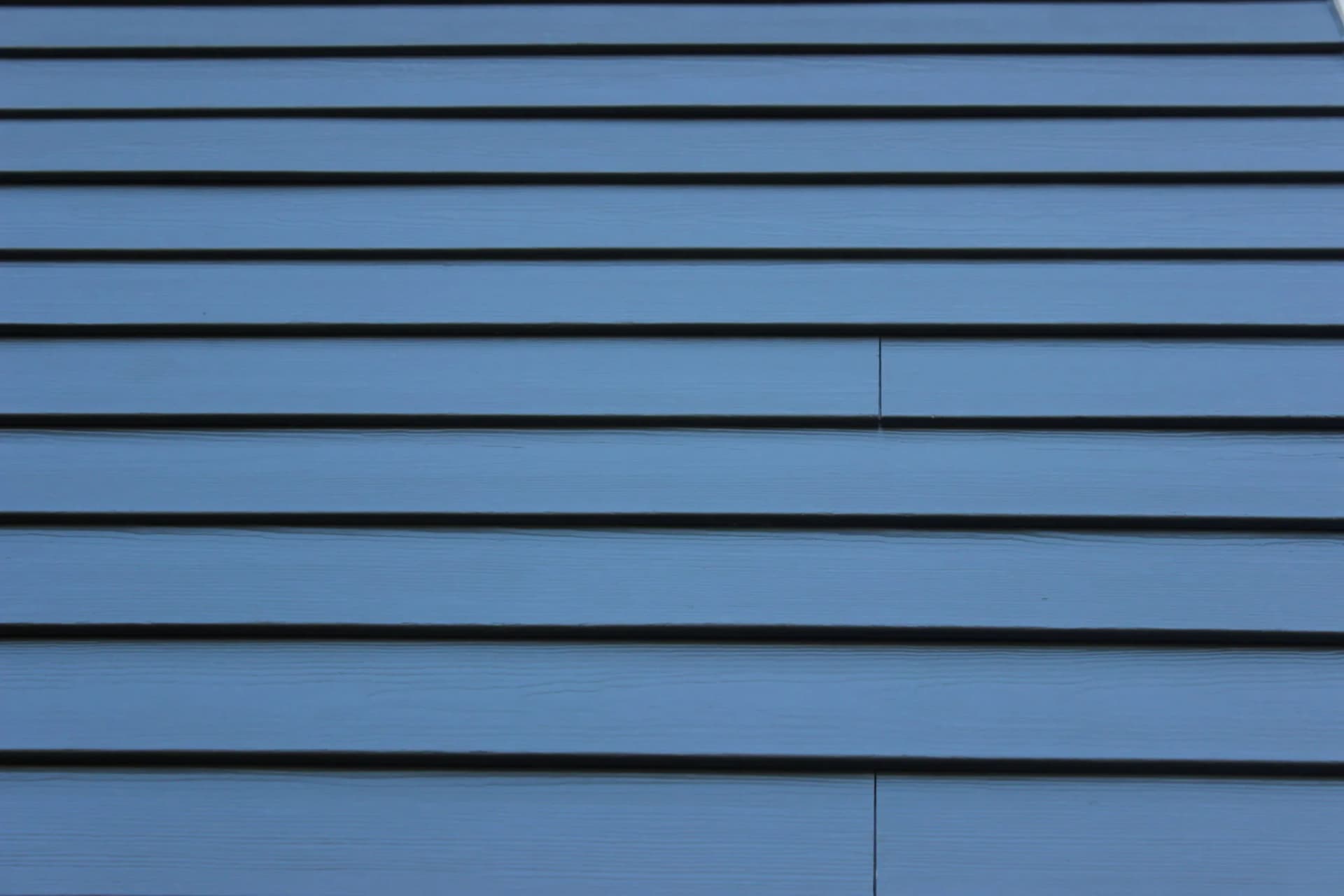
James Hardie Fiber Cement Siding in North Yarmouth, Maine
James Hardie Fiber Cement Siding for North Yarmouth homes from a family-owned Portland company. An owner measures on site and writes a fixed-price proposal.
- 5.0 · 8 Google reviews
- Fully licensed & insured
- Free estimates
- 20+ years combined experience
James Hardie Fiber Cement Siding for North Yarmouth homes
James Hardie fiber cement gives North Yarmouth's older farmhouses back the look of painted clapboard without the scraping cycle. More than 135 houses shown on the 1871 town map are still standing, and many of them have simple, flat walls where a narrow-exposure smooth board and wide corner trim read as original. On newer colonials, fiber cement is the step up from vinyl for owners who want deeper color and a wall that will not dent.
Inland conditions suit it. Wet snow, spring melt and freeze-thaw cycles are the main stress here rather than salt, and fiber cement does not swell, rot or give carpenter ants a way in. It is noncombustible, which matters on lots backed by the forest that covers about 63 percent of the town. The factory finish holds color on south-facing walls that bake in open fields. Installation has to respect the details that make it last: clearance above grade and roofs, sealed cut edges, flashed butt joints and proper blind nailing. Full-length planks are heavy and take two people to hang straight.
North Yarmouth housing at a glance
The Census Bureau's 2020-2024 American Community Survey estimates about 1,600 homes in North Yarmouth, with a median year built of 1983, a decade newer than Yarmouth next door. About 94 percent are single-family detached and about 87 percent of occupied homes are owner-occupied, and only about a dozen units are held for seasonal use. Roughly 13 percent of homes predate 1940 and about 21 percent predate 1960, while about 24 percent date from 1960 to 1979 and about 23 percent from 2000 or later. The 2018 comprehensive plan counts 319 homes built in the 1990s alone, the town's peak decade, and notes that more than 135 houses shown on an 1871 town map are still standing, many of them restored farmhouses and capes along the old roads.
Weather and exposure in North Yarmouth
This is an inland town, out of reach of the salt spray that works on houses along the Casco Bay shore in Yarmouth. Weather here comes instead from elevation and open ground. The 2018 comprehensive plan puts elevations between 60 feet, where Pratt's Brook leaves town, and 400 to 440 feet at the top of Walnut Hill and the upper slopes of Bruce Hill. About 17 percent of the town is open field, so hilltop houses facing hayfields take full wind in winter storms, while the 63 percent that is forest keeps other lots shaded and damp. Portland, the nearest long-term weather record, averages about 69 inches of snow a year, and freeze-thaw cycles run from November into April.
Permits and design review in North Yarmouth
The North Yarmouth Code Enforcement Office at the Town Office, 10 Village Square Road, issues building permits and runs an online permitting portal. The town's permit guide lists a building permit as required for a deck, an addition, demolition and any structural change, and asks owners to call the office about work not on the list. Demolishing a building constructed before 1900 requires written notice to the North Yarmouth Historical Society at least 30 days ahead. Near the Royal River, Chandler Brook, Knight's Pond and the Deer Brook wetland, the Land Use Ordinance's Residential Shoreland and Resource Protection districts add structure setbacks.
What James Hardie fiber cement siding involves
Fiber cement is a mix of cement, sand and cellulose fiber pressed into planks, shingles and panels. It does not rot, insects do not eat it, it will not burn, and factory-applied finishes hold color far longer than site-painted wood. It is heavier and more exacting to install than vinyl, which is exactly why installation quality shows. The Back Cove home on this site was re-sided with a complete James Hardie package of wood-grain plank.
- Walls are stripped, repaired and wrapped, with flashing at every opening and roof-to-wall joint.
- Boards are cut with dust-controlled tools and fastened to the manufacturer's nailing schedule.
- Required clearances are held above roofs, decks and grade so the ends never sit in water or snow.
- Butt joints get flashing behind them, and cut ends are sealed or primed as the manufacturer specifies.
- Trim, caulk lines and touch-up are finished so the pre-finished color stays uniform.
Signs it is time
- You want the look of painted clapboard without the paint cycle
- Wood siding keeps rotting at the bottom courses and around trim
- The house sits in wind and salt exposure that punishes other materials
- You want a non-combustible exterior
What affects the price of James Hardie fiber cement siding
- Product line and profile: lap plank, shingle, panel or board-and-batten
- Pre-finished color versus site painting
- Trim package and detailing
- Tear-off, sheathing repair and house height
- Number of windows, doors and corners to flash and trim
Every job is priced from a free on-site visit. Typical ranges for the trade are on our siding page, and the details of this service are on the James Hardie fiber cement siding overview.
More in North Yarmouth and nearby
Back to the North Yarmouth exterior services overview, or see every town on our Cumberland County service areas page.
Other exterior work in North Yarmouth
- Cedar Siding & Shingles in North Yarmouth
- Window Replacement in North Yarmouth
- Bay & Picture Windows in North Yarmouth
- Roof Replacement in North Yarmouth
- Asphalt Shingle Roofing in North Yarmouth
- Metal Roofing in North Yarmouth
- Deck Building in North Yarmouth
- Composite & PVC Decks in North Yarmouth
- Deck Replacement in North Yarmouth
- Siding Replacement in North Yarmouth
- Vinyl Siding Installation in North Yarmouth
Fiber Cement Siding in nearby towns
Get a free James Hardie fiber cement siding estimate in North Yarmouth
Tell us about the house and what you want changed. One of the owners will call to set up a visit, measure, and write a fixed-price proposal. No pressure, no obligation.
Need it today?Call Mike (207) 408-5388
or Bob at (207) 252-0759